

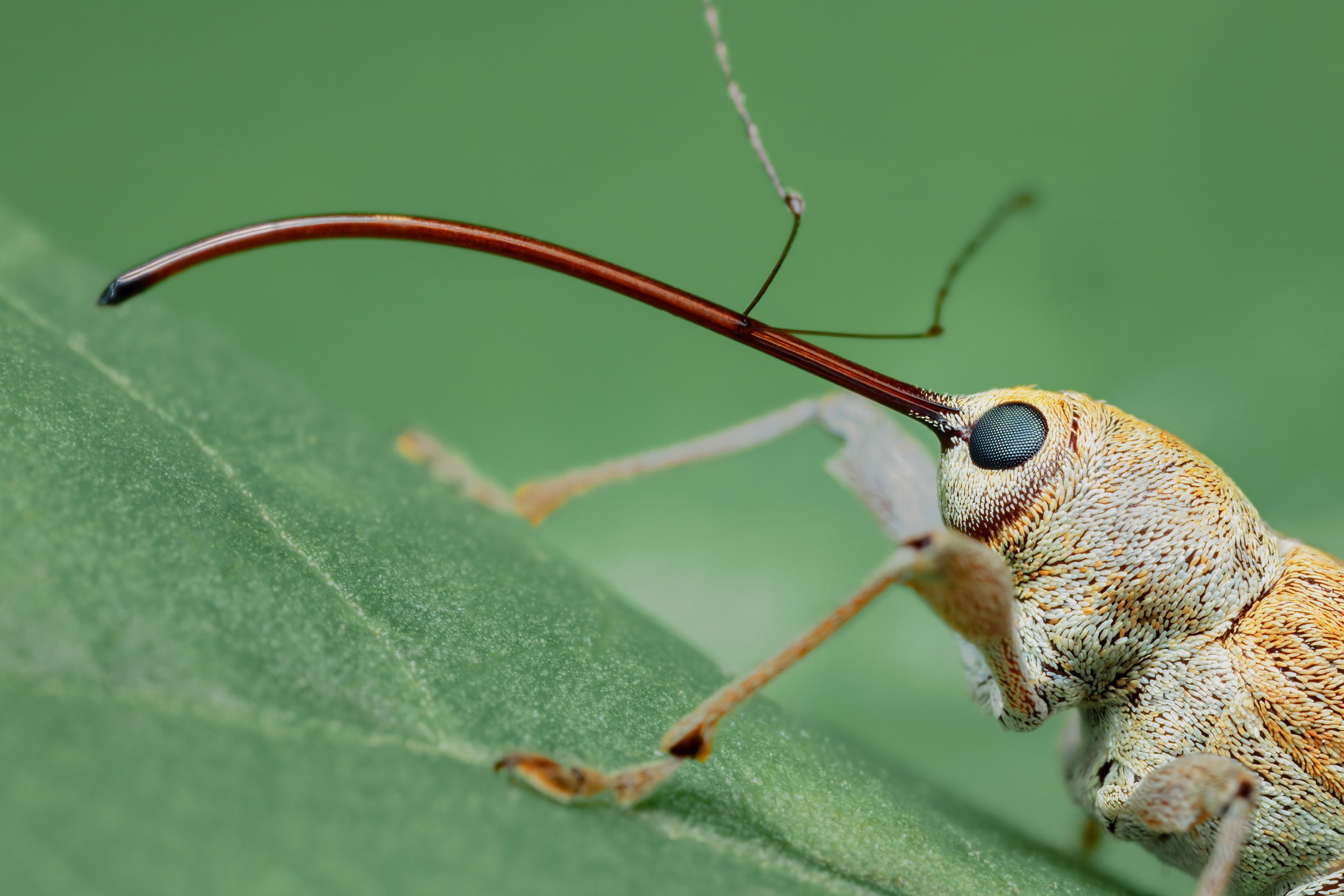
Chestnut Weevil
(Curculio elephas)
Quick Facts
It loves chestnuts.
About 60,000 of weevil species exist.
Its nose is longer than its body.
Why This Tiny Insect Matters
The Chestnut Weevil may look unusual, but its long snout is part of a remarkable way of life. It belongs to one of the most diverse beetle groups on Earth and reminds us that even the smallest forest creatures can reveal extraordinary forms, strategies, and hidden complexity.
Meet the Chestnut Weevil
Conservation status: Not globally threatened
Endemic: No
Habitat: Chestnut woodlands, forests, orchards, and areas where chestnut trees grow
Ecological role: Seed predator and part of forest food webs
Lifespan: Usually one generation per year, with much of its life spent developing inside or below the chestnut
Fun fact: Females use their long snout to drill into chestnuts and lay eggs inside.
Explore more
If this image caught your attention, you may also enjoy exploring the wider collection.

Undatierter Fine‑Art Kalender (12 Motive)
Österreich · Tirol & weitere Regionen
Kuratiert aus 12 außergewöhnlichen Makro‑Porträts österreichischer Arthropoden — viele Motive waren Teil meiner Kooperationen mit Alpenzoo Innsbruck, der Universität Innsbruck, dem Innsbruck Nature Film Festival und dem Botanischen Garten Innsbruck.
Format: DIN A3 (45 × 30 cm) · Spiralbindung mit Aufhänger · Mattes Premium‑Fotopapier
Arthropoden aus Österreich & der Welt (kuratierte Auswahl)
Enthält Motive aus der Ausstellung im Alpenzoo Innsbruck – plus weitere Arten, die nicht Teil der Ausstellung sind.
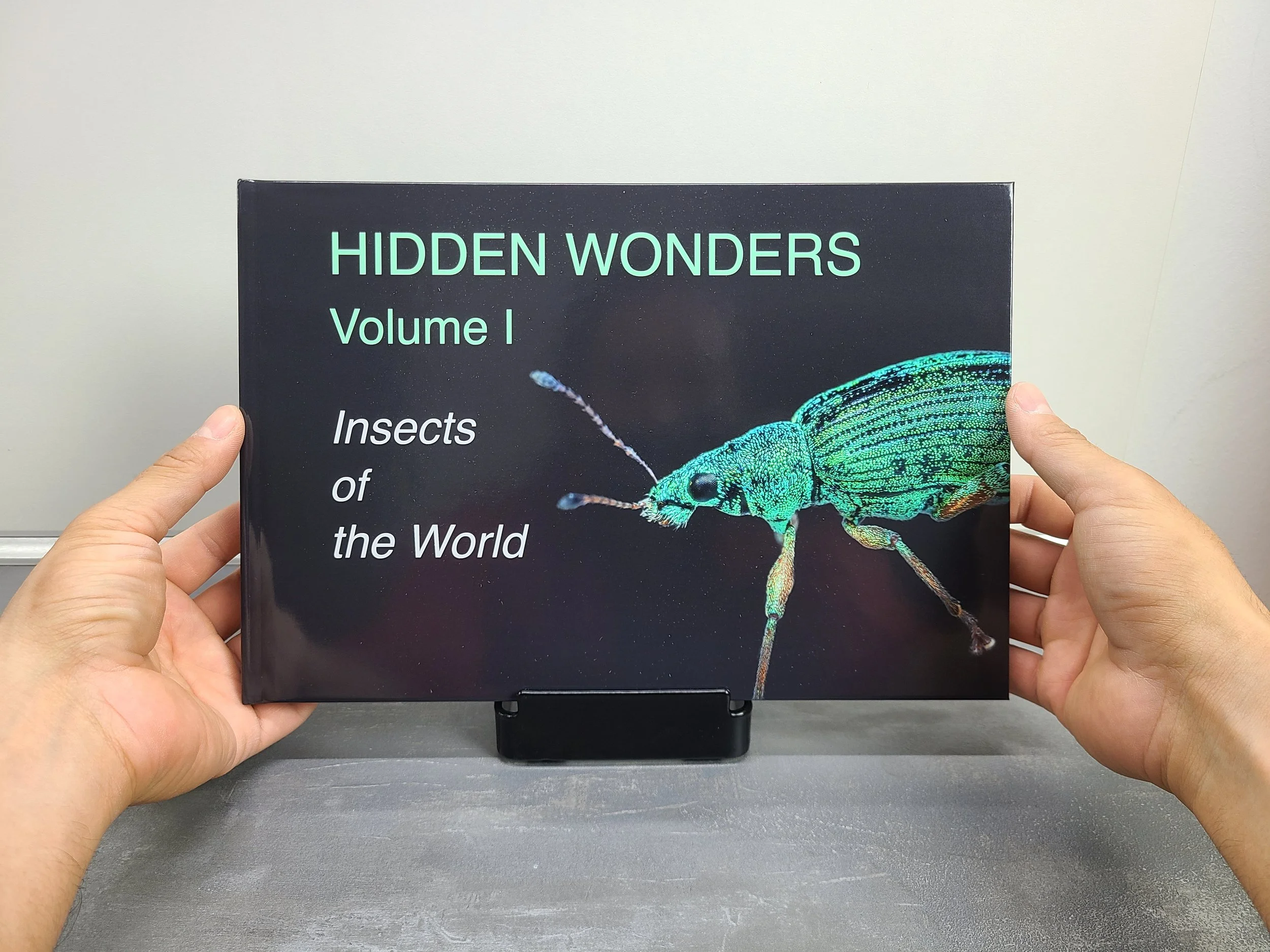
Fotobuch (Premium, mattes Fotopapier)
Format: 28 × 19 cm · 38 Seiten
Limitierte Edition (15 Exemplare)
Kastanienbohrer
(Curculio elephas)
Martina Franca, Taranto, Italien (auch in Österreich heimisch)
Mit jedem Kauf: 10% des Verkaufspreises unterstützen Naturschutz & Bildung im Alpenzoo.