

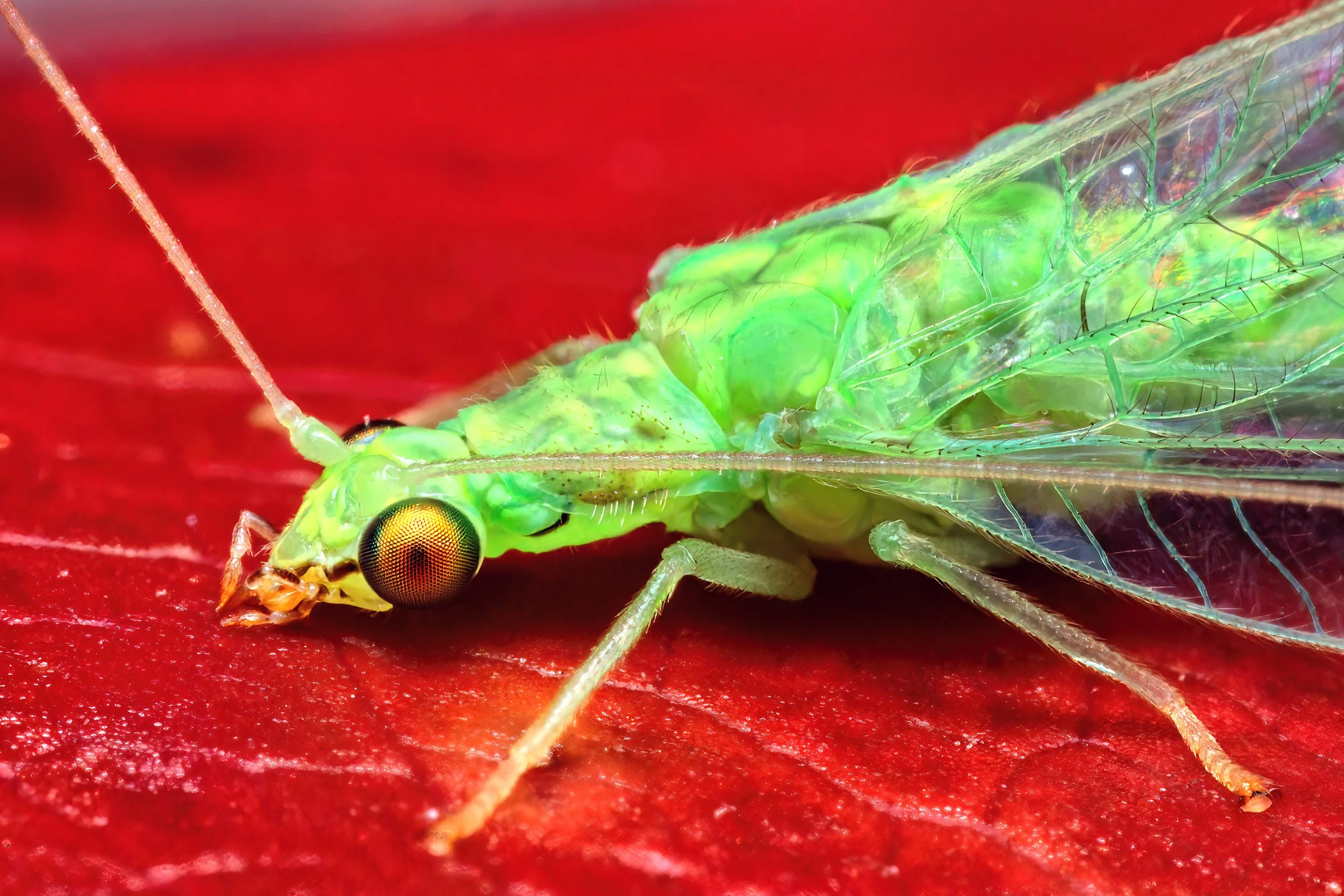
Green Lacewing
(Chrysoperla carnea)
Quick Facts
Larvae hunt aphids.
Does not build paper nests.
Adults can hear ultrasonic echolocation signals from bats.
Why This Tiny Insect Matters
The Green Lacewing is a reminder that some of nature’s most helpful allies are easy to overlook. Delicate and elegant as an adult, it begins life as a fierce little hunter. Its larvae feed on aphids and other soft-bodied pests, making this species an important part of the balance that keeps plants and ecosystems healthier.
Meet the Green Lacewing
Conservation status: Has not been evaluated
Endemic: No
Habitat: Gardens, meadows, hedgerows, forests, and agricultural landscapes
Ecological role: Predator of aphids and other small soft-bodied insects, especially in the larval stage
Lifespan: Lives through egg, larval, pupal, and adult stages
Fun fact: Lacewing larvae are sometimes called “aphid lions” because of how actively they hunt tiny plant pests.
Explore more
If this image caught your attention, you may also enjoy exploring the wider collection.

Undatierter Fine‑Art Kalender (12 Motive)
Österreich · Tirol & weitere Regionen
Kuratiert aus 12 außergewöhnlichen Makro‑Porträts österreichischer Arthropoden — viele Motive waren Teil meiner Kooperationen mit Alpenzoo Innsbruck, der Universität Innsbruck, dem Innsbruck Nature Film Festival und dem Botanischen Garten Innsbruck.
Format: DIN A3 (45 × 30 cm) · Spiralbindung mit Aufhänger · Mattes Premium‑Fotopapier
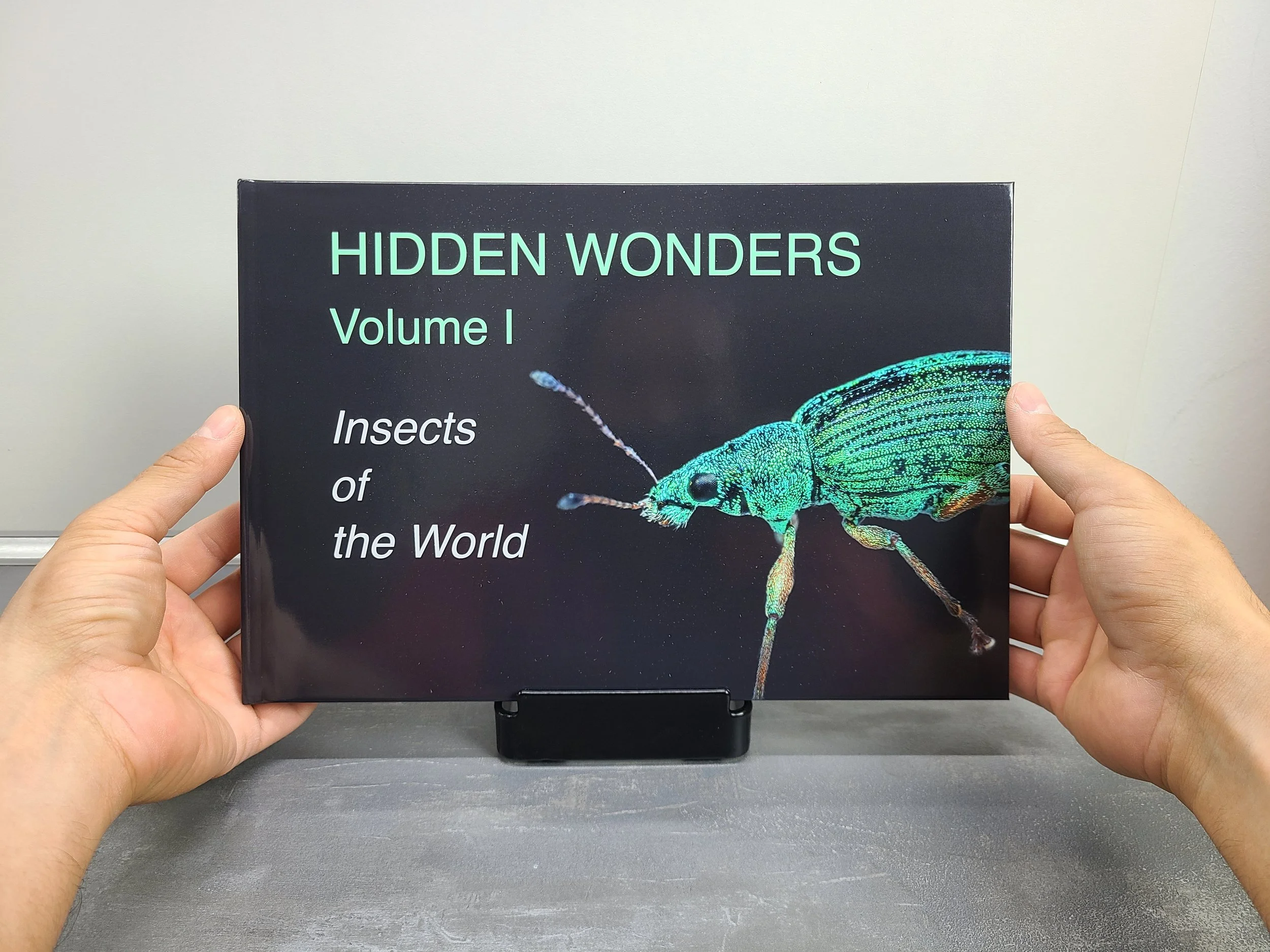
Arthropoden aus Österreich & der Welt (kuratierte Auswahl)
Enthält Motive aus der Ausstellung im Alpenzoo Innsbruck – plus weitere Arten, die nicht Teil der Ausstellung sind.
Fotobuch (Premium, mattes Fotopapier)
Format: 28 × 19 cm · 38 Seiten
Limitierte Edition (15 Exemplare)
Grüne Florfliege
(Chrysoperla carnea)
Innsbruck, Tirol, Österreich
Mit jedem Kauf: 10% des Verkaufspreises unterstützen Naturschutz & Bildung im Alpenzoo.