
“Hidden Wonders” at Alpenzoo Innsbruck — Recap
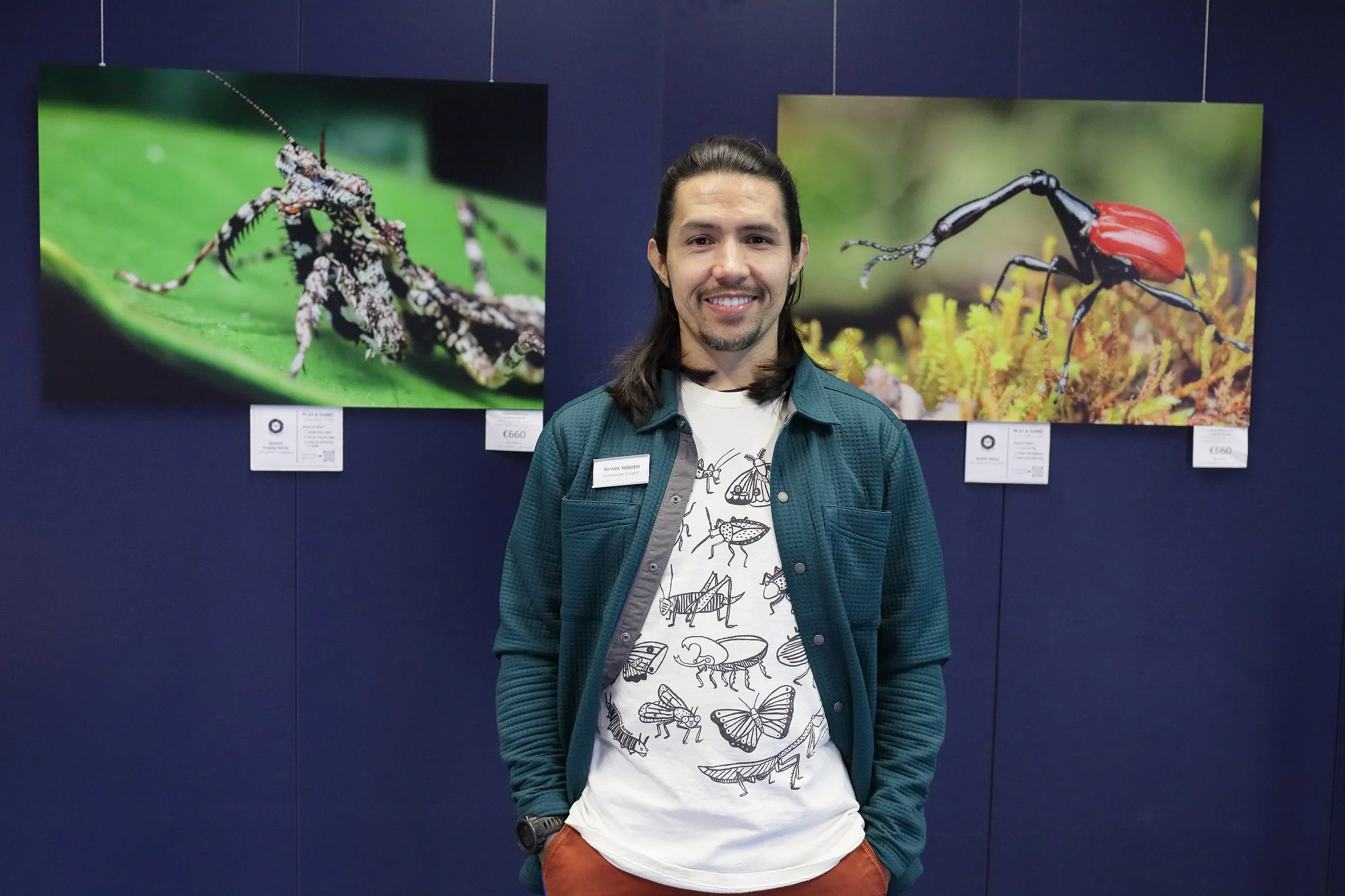
From 27 March to 2 August 2026, Alpenzoo Innsbruck hosted my macro photography exhibition “Hidden Wonders: Insects — Near & Far”.
It was a calm, museum-style room inside a place that is usually loud, energetic, and full of motion — families, school groups, excited kids, and people on a day out to see animals. And that contrast was exactly the point.
I wanted to create a space where people could slow down and notice something most of us walk past every day: the small lives around us — insects, textures, patterns, tiny behaviors — and the strange beauty that only appears when you look closely enough.
A collaboration built on shared values
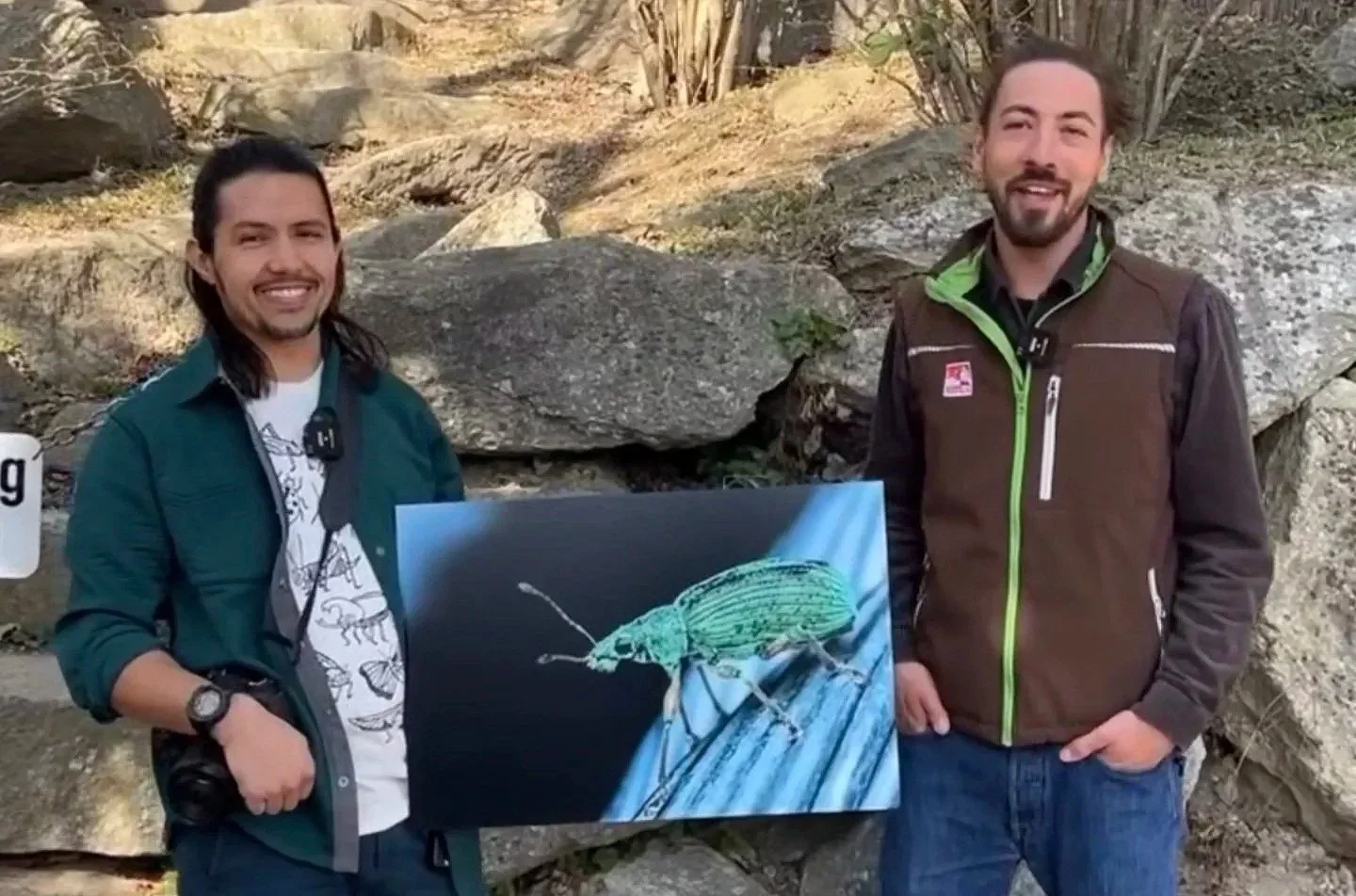
This kind of project only works when the institution genuinely cares about education and conservation — and Alpenzoo does.
My mission with Overlooking Lens is to help people discover hidden beauty in plain sight, and to build respect for overlooked wildlife (especially insects). Alpenzoo’s mission is rooted in environmental education, species protection, and helping visitors understand the living world of the Alps.
That overlap made this collaboration feel natural from the start. I’m especially grateful to Magnus Klammer (Alpenzoo) for his support and steady help throughout the process — from planning and logistics to the public-facing experience. And a sincere thank you as well to the Alpenzoo leadership for making space for a project like this.
The human layer: building it with my mom
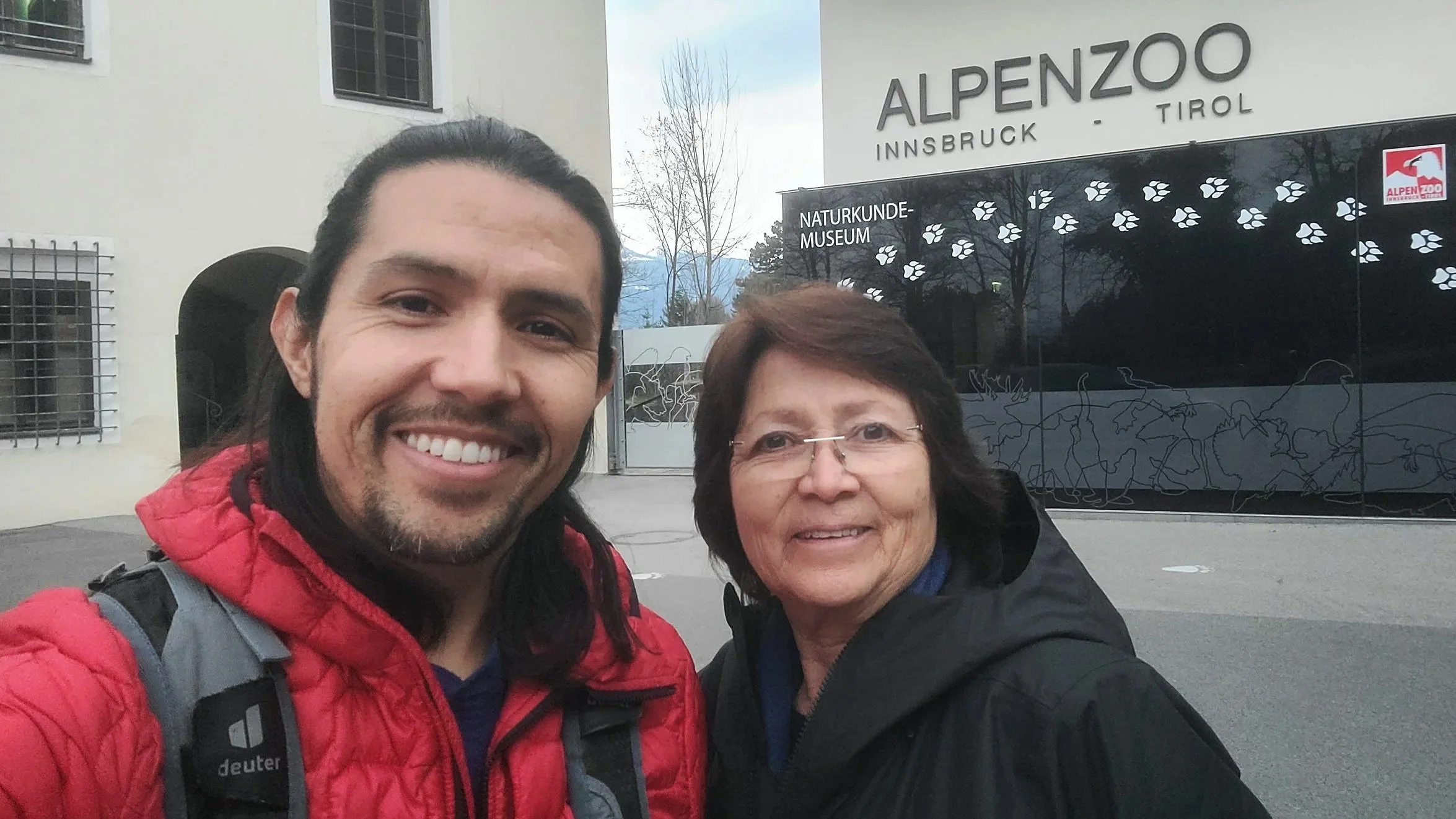
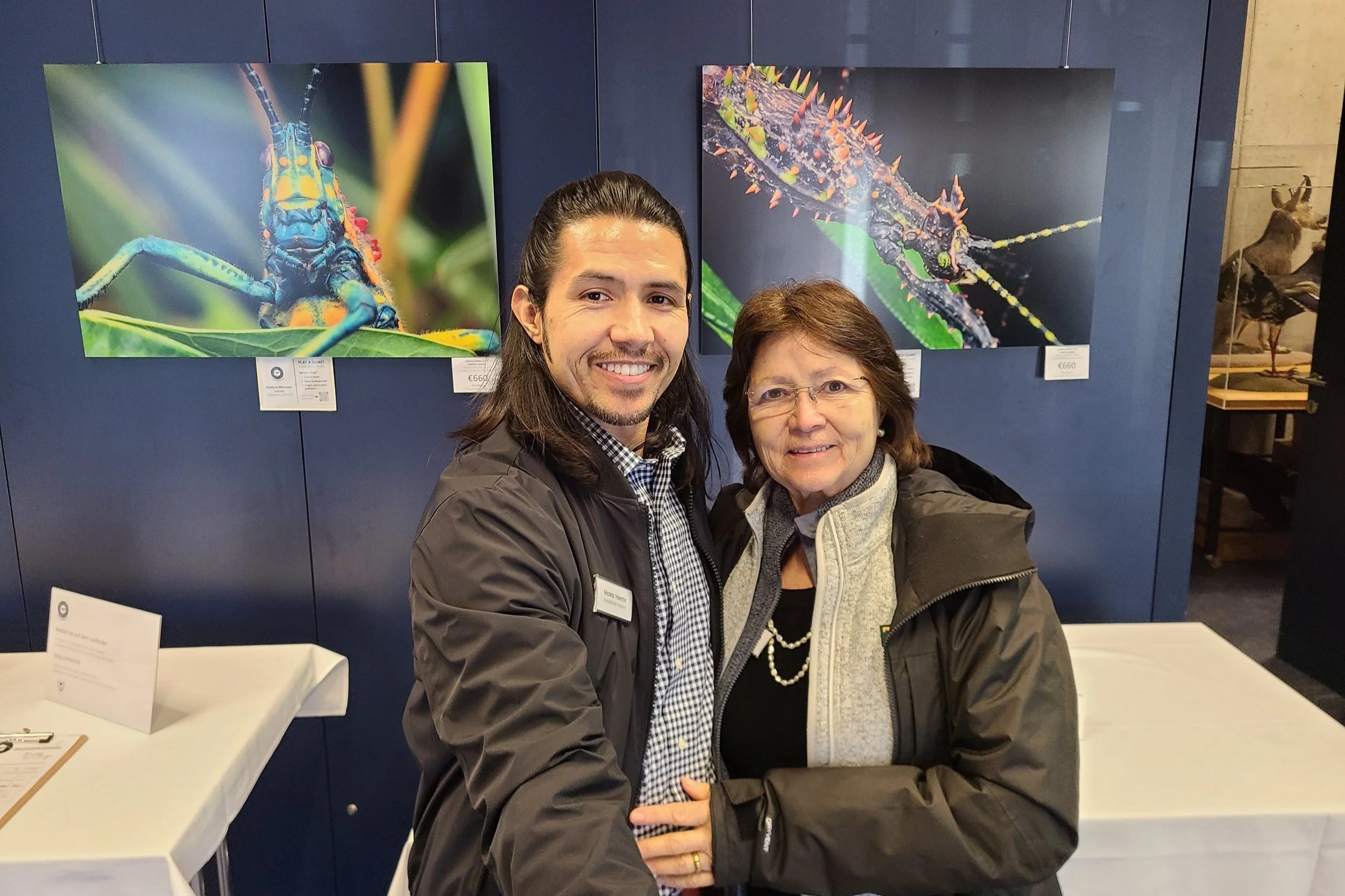
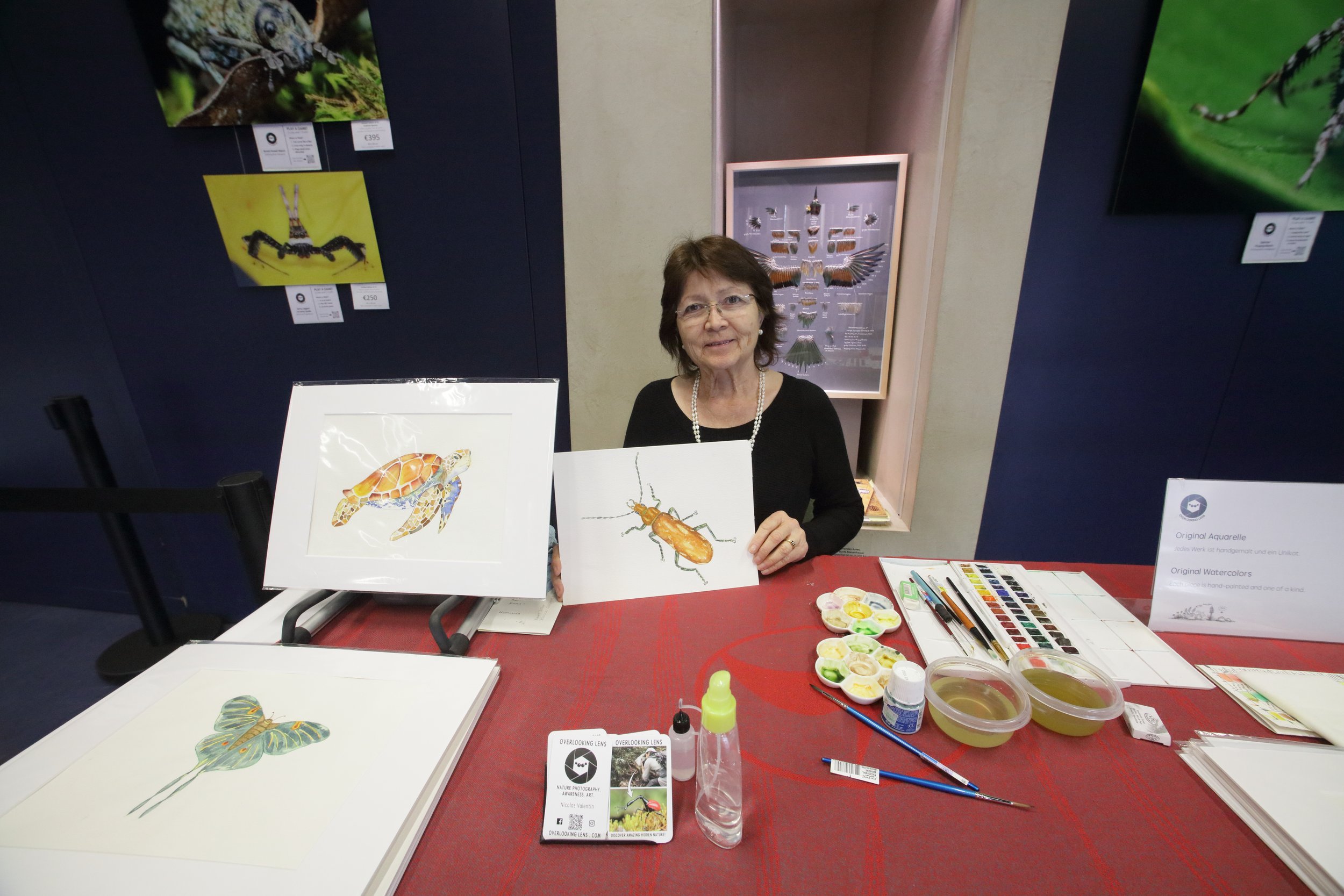
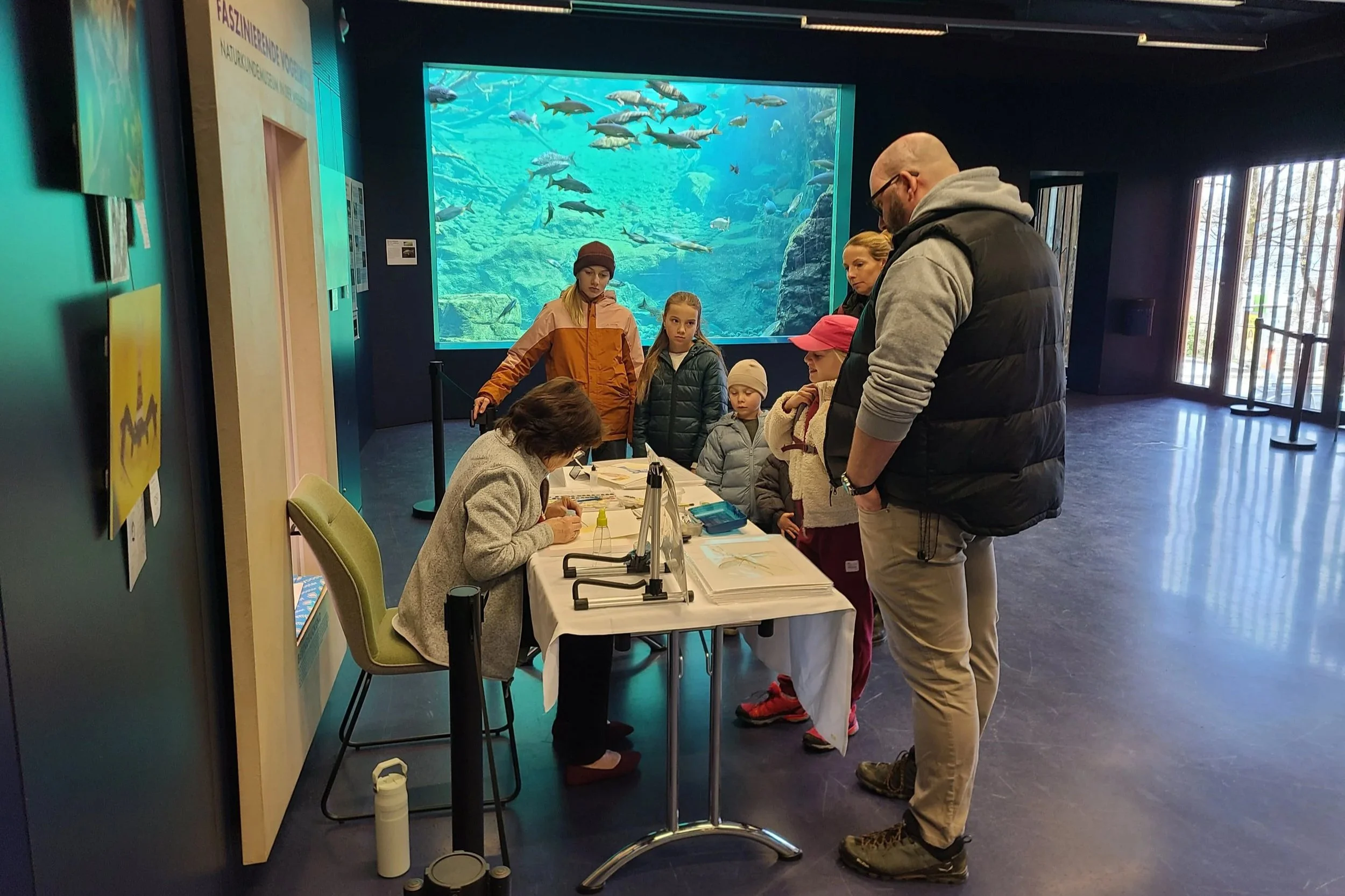
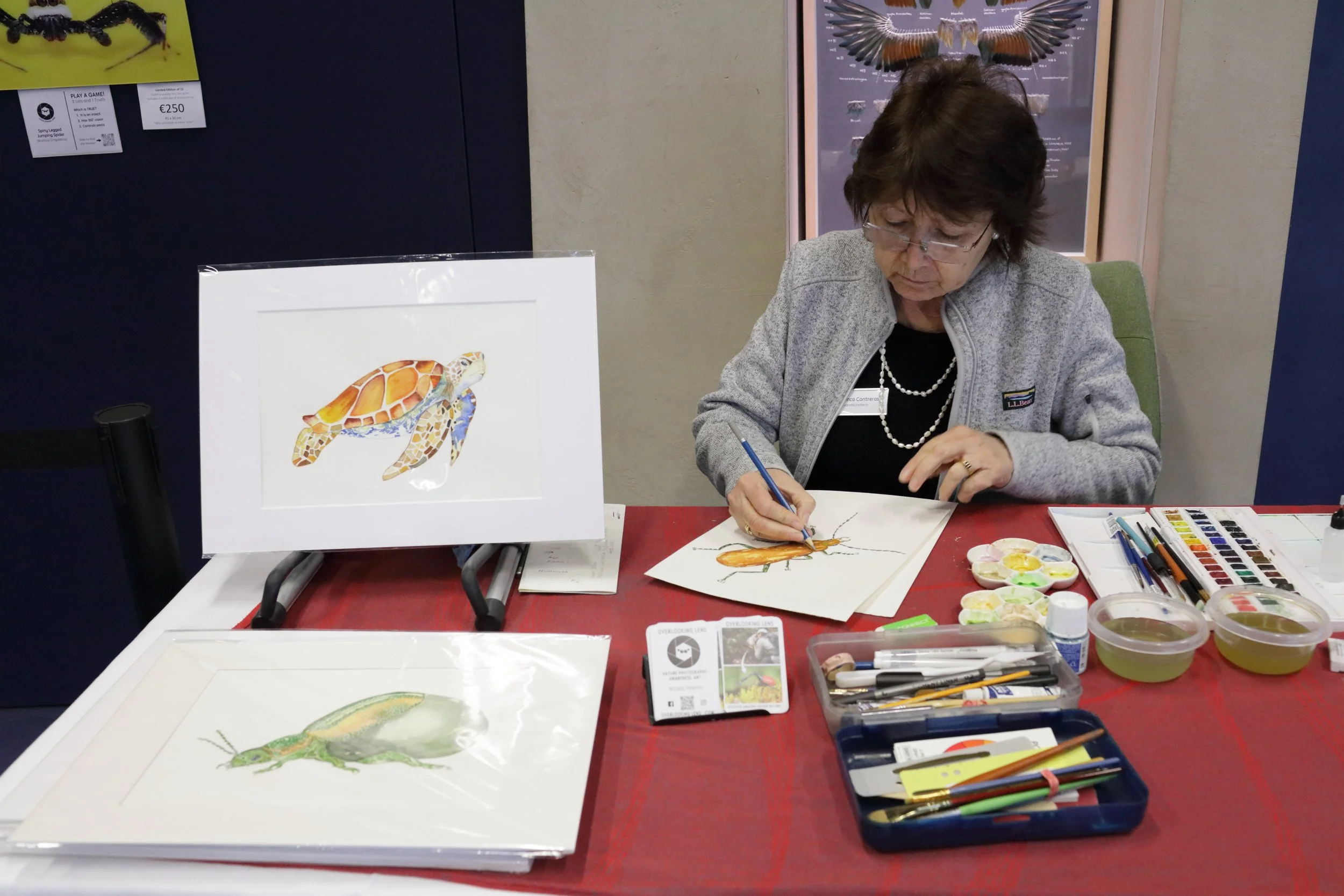
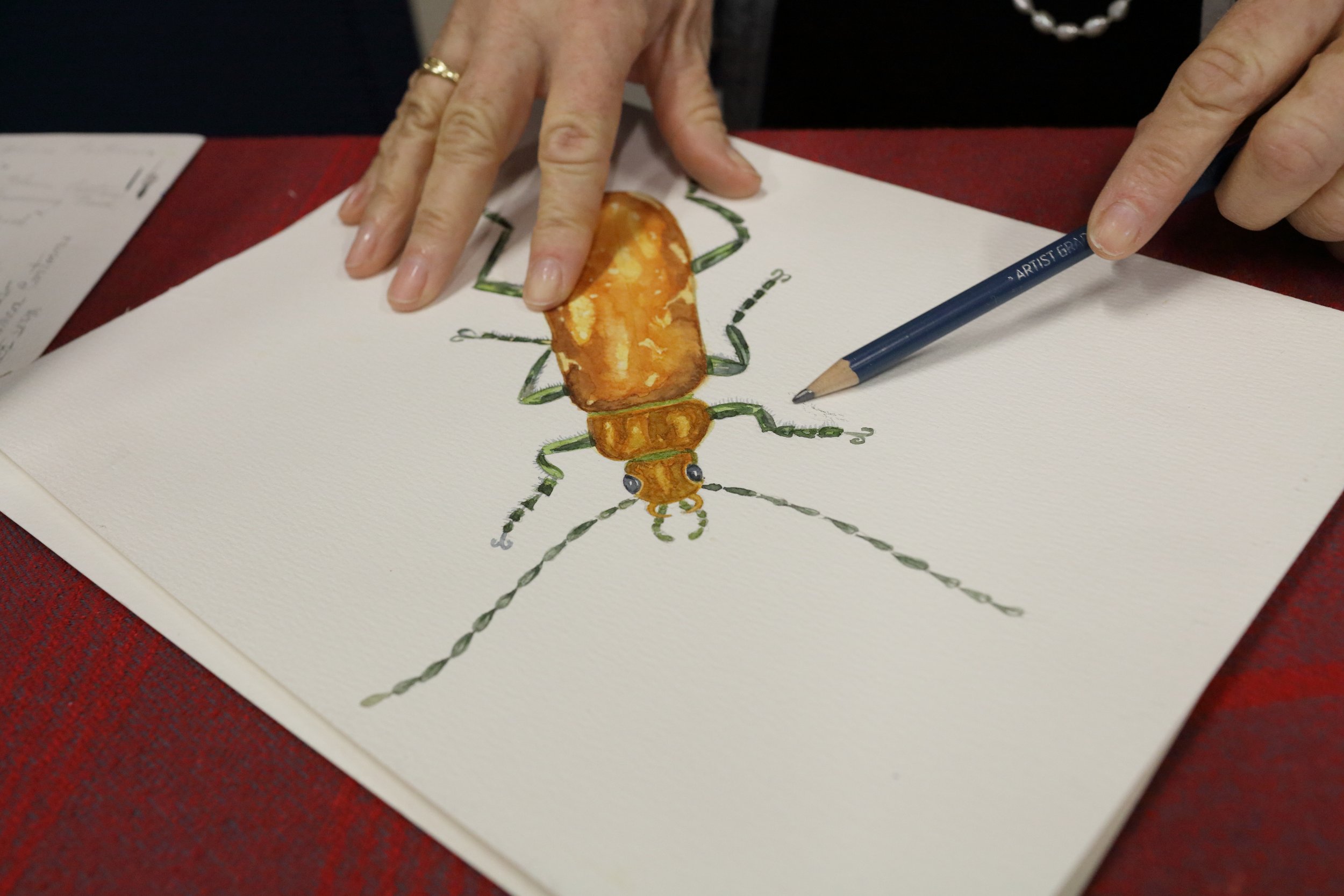
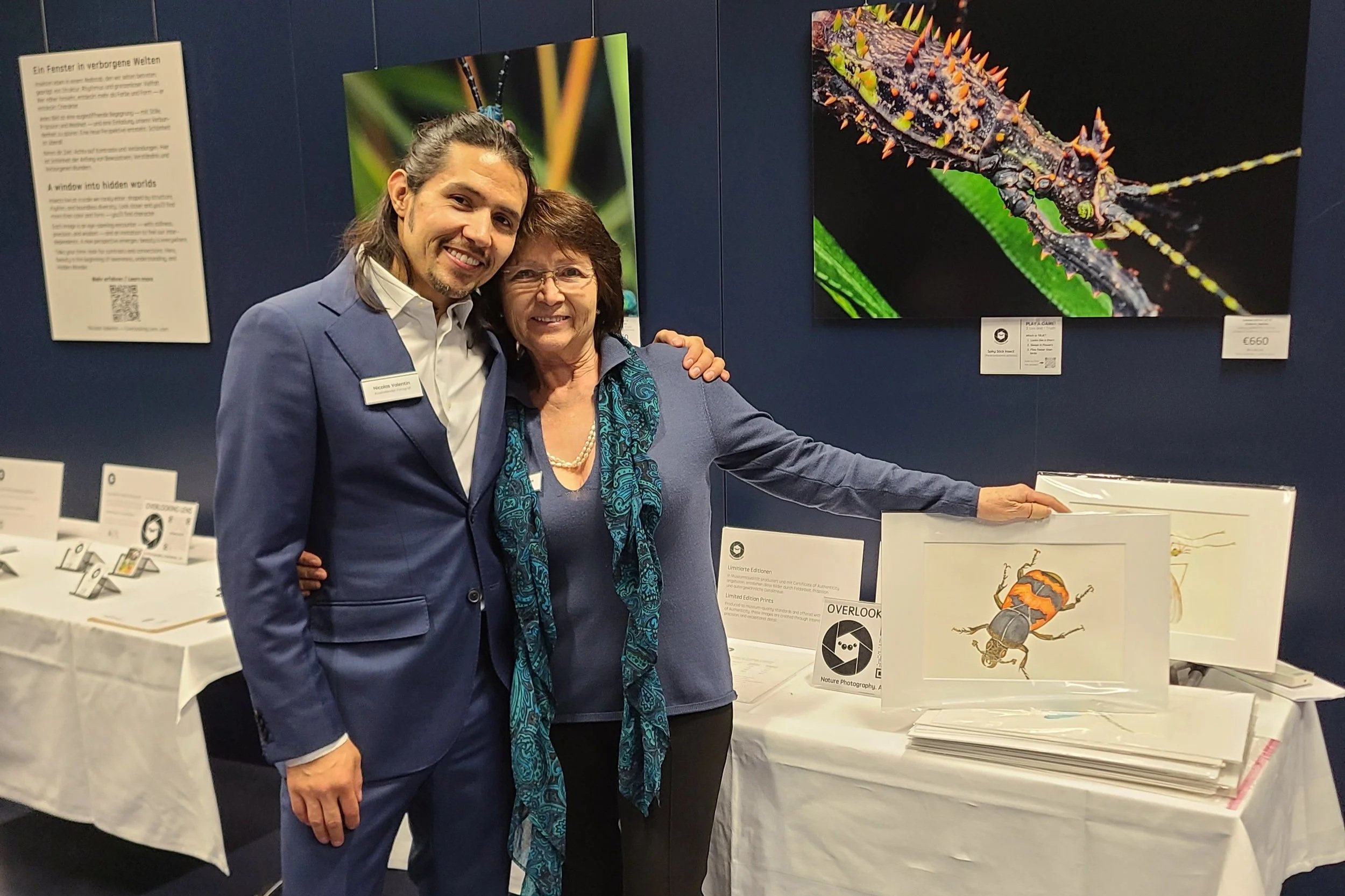
For the opening phase, my mom flew in from the USA to support me.
Sharing something this meaningful with one of my favorite people was a gift. She saw the meticulous preparation, the passion, and also the stressful moments — and she was steady through all of it.
She also brought her own craft into the space: original insect watercolors created specifically for this exhibition. Watching visitors gather around while she painted live was one of my favorite scenes of the entire project — proof that “small wonders” can pull people in through many doors: photography, science, story, and paint.
👉 Original Watercolors available here.
What we built (and why it mattered)
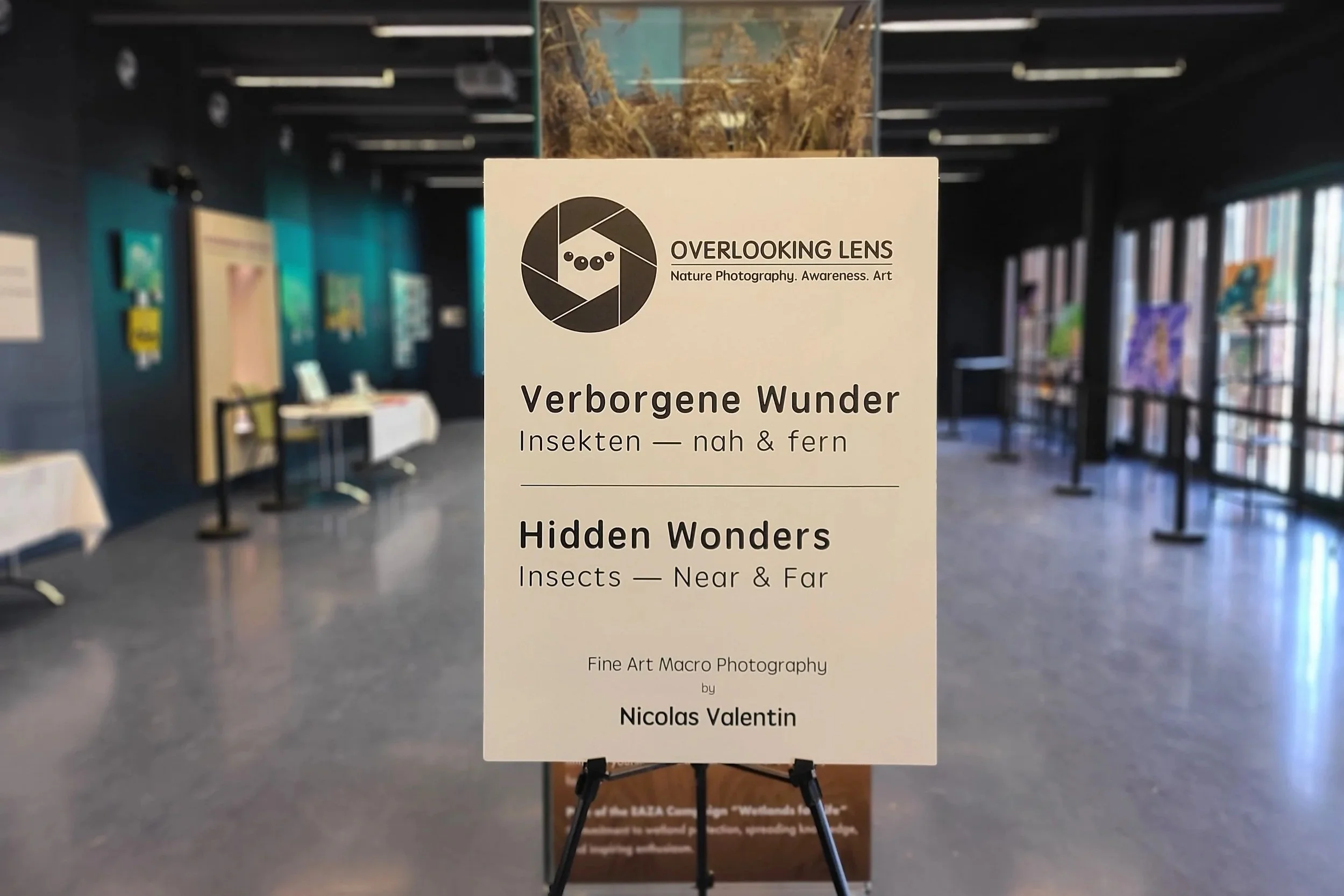
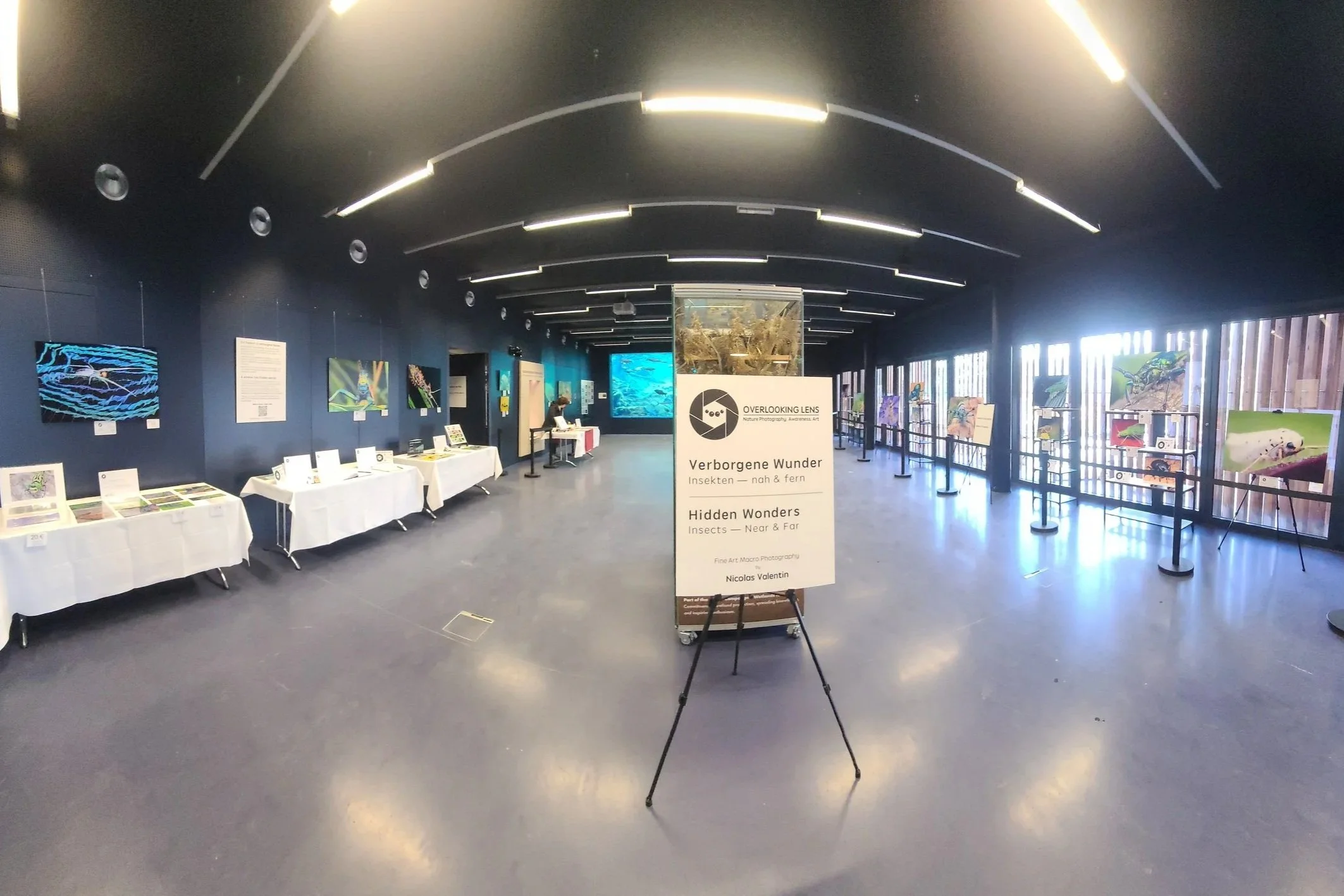
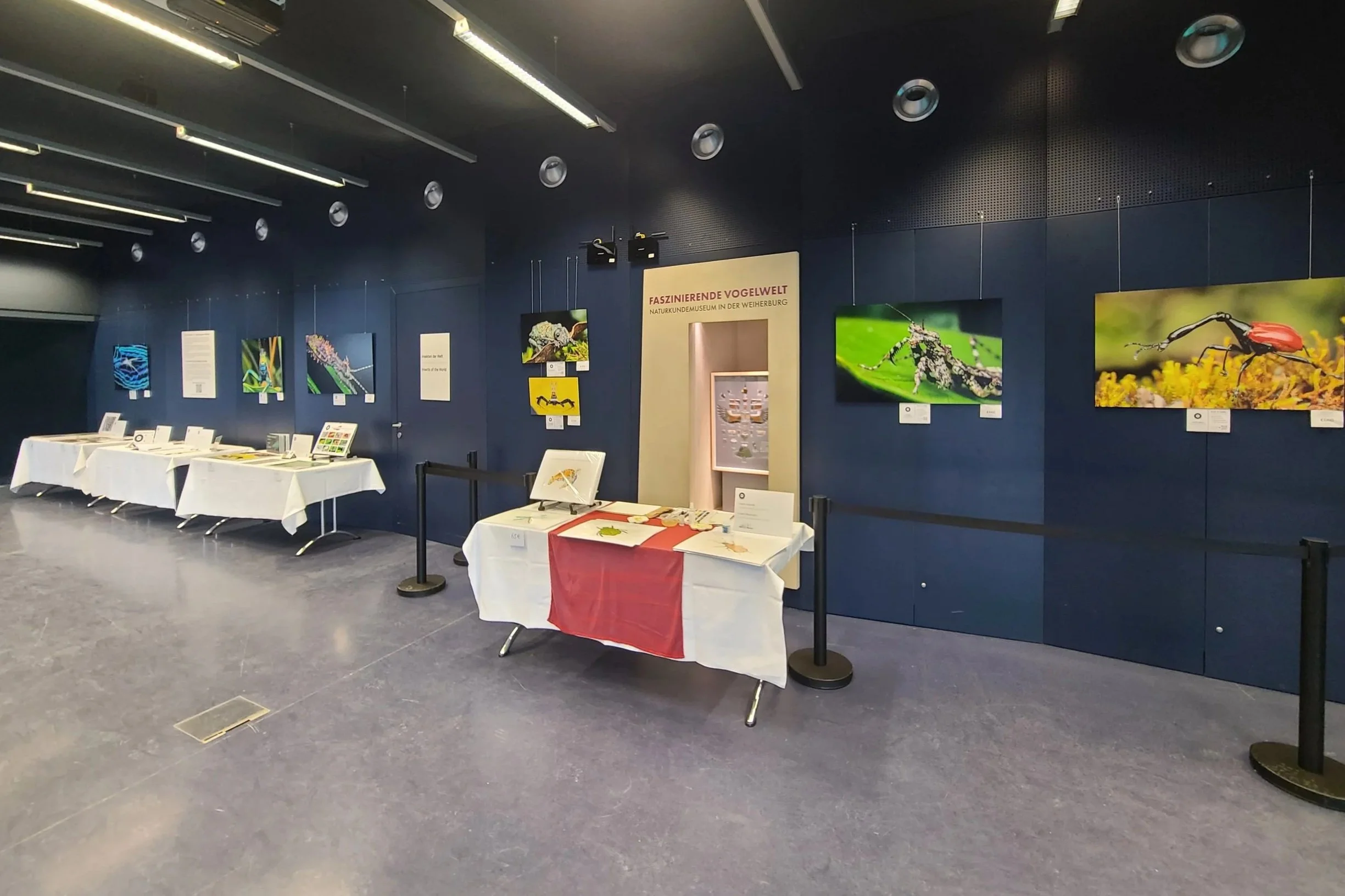
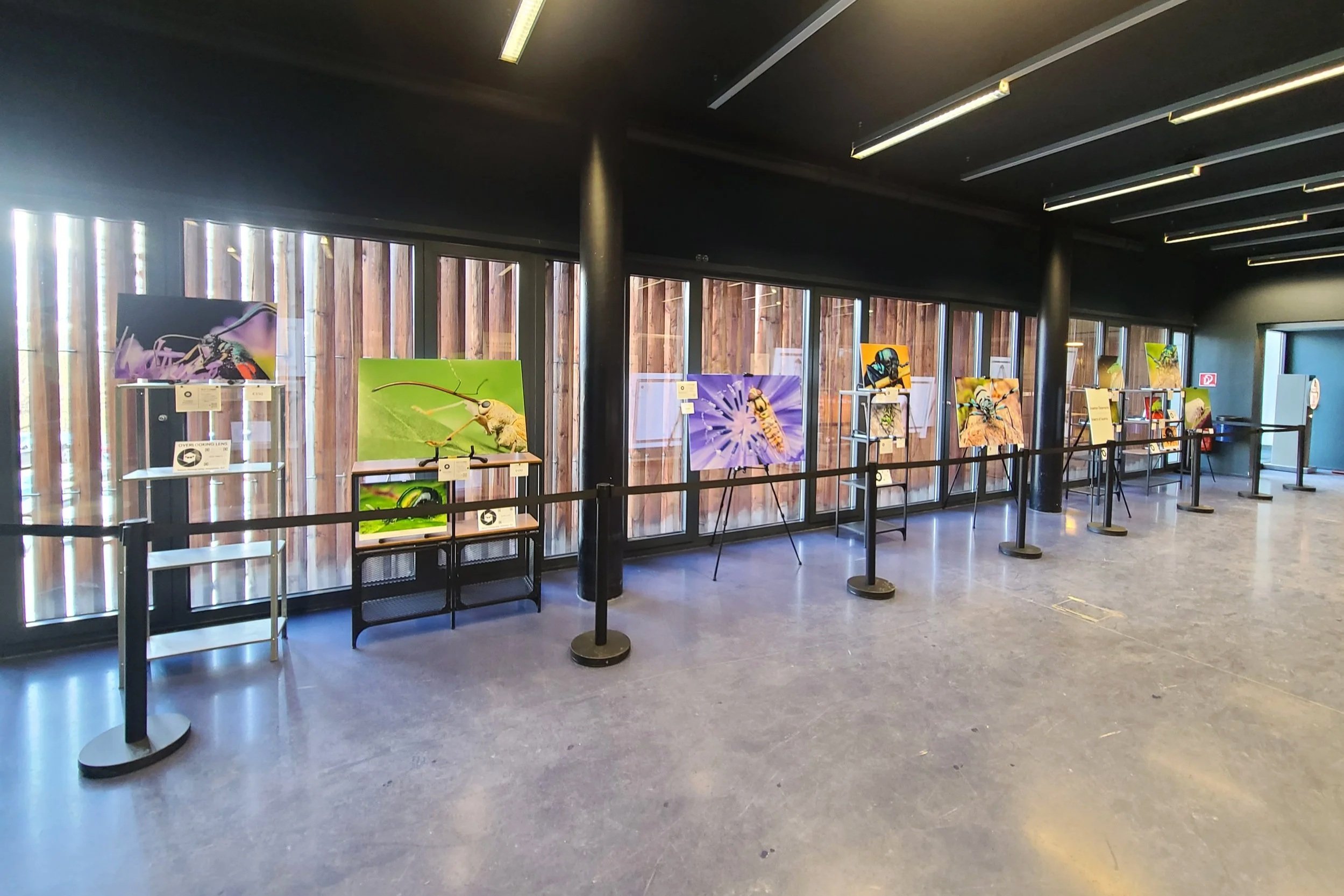
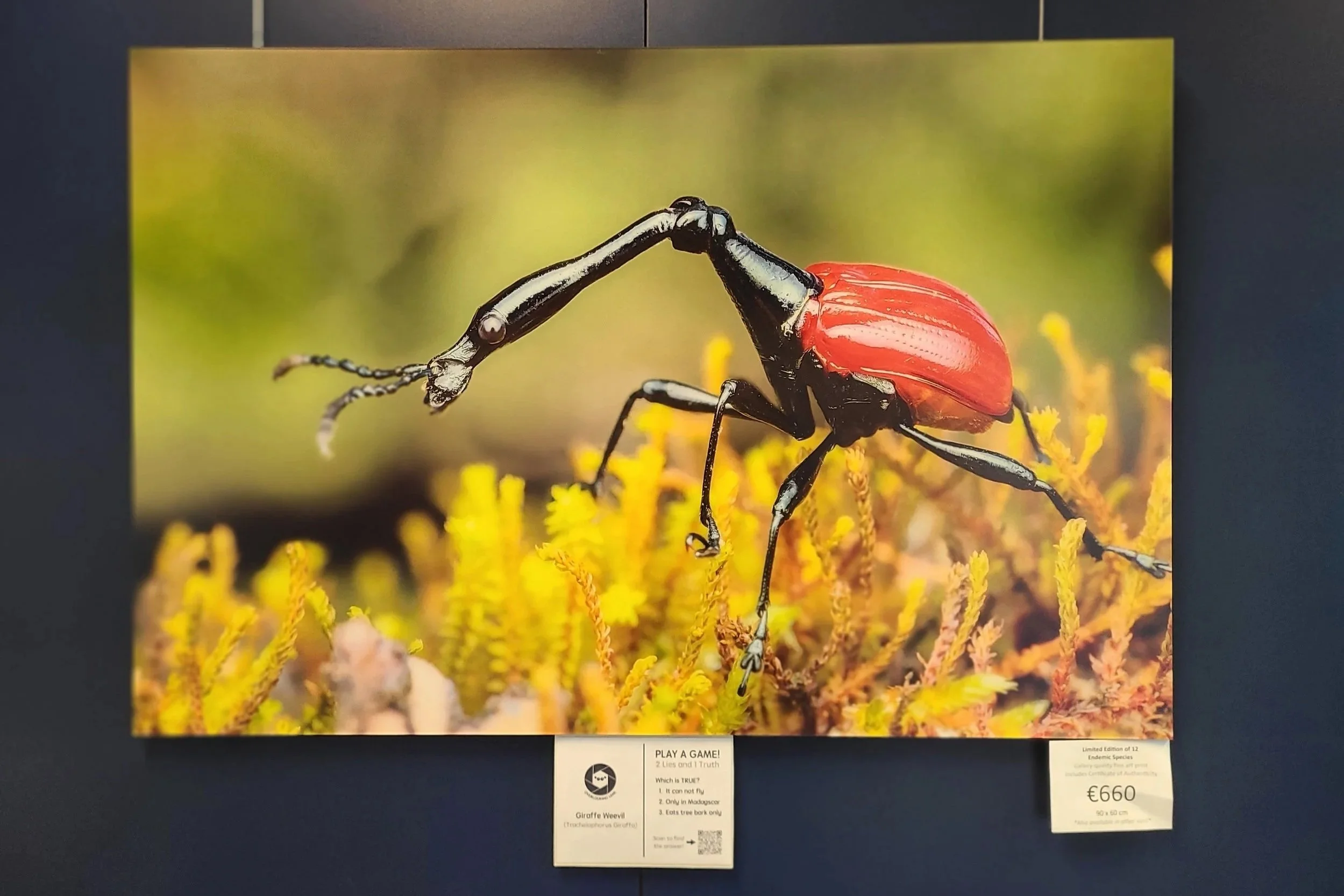
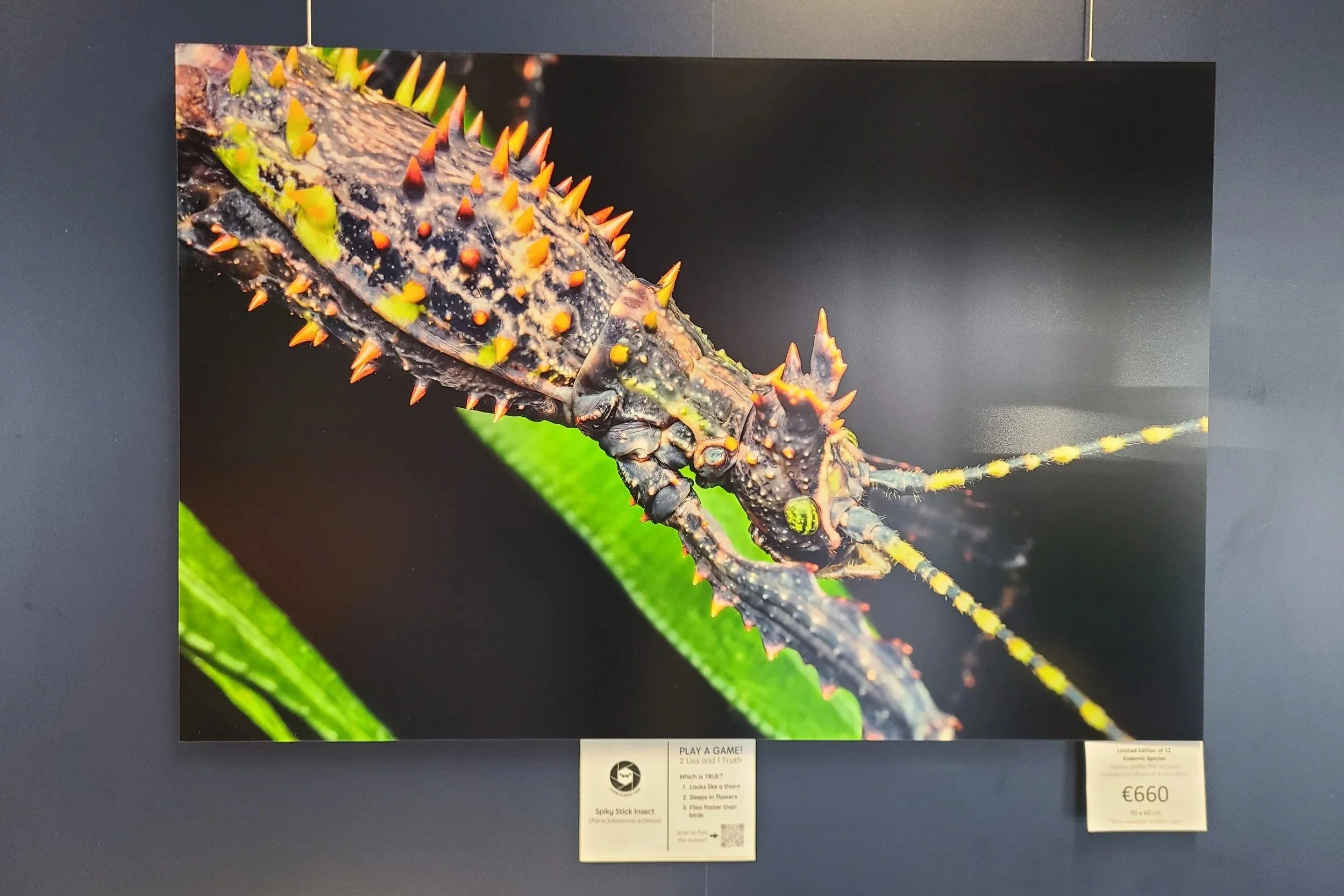
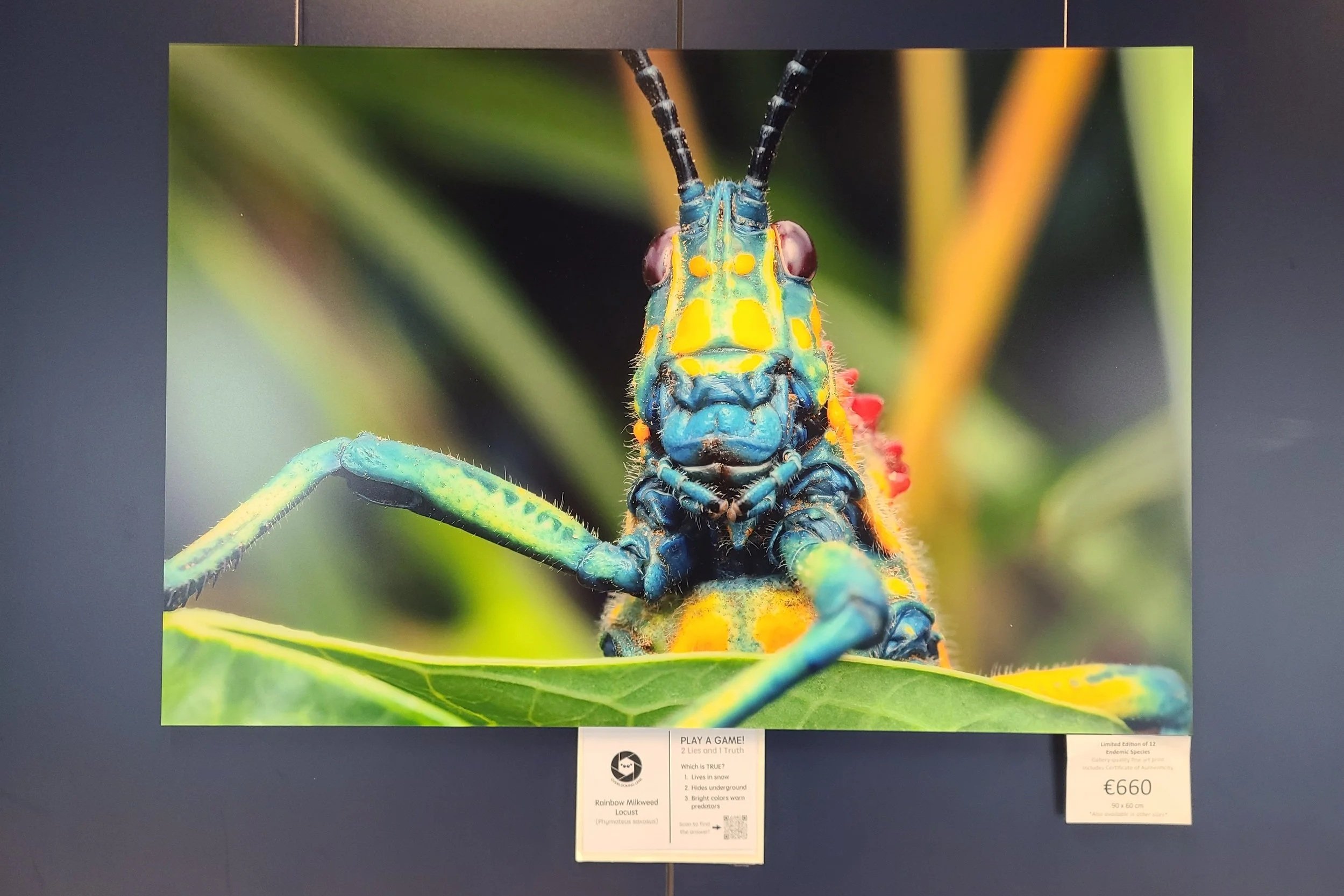
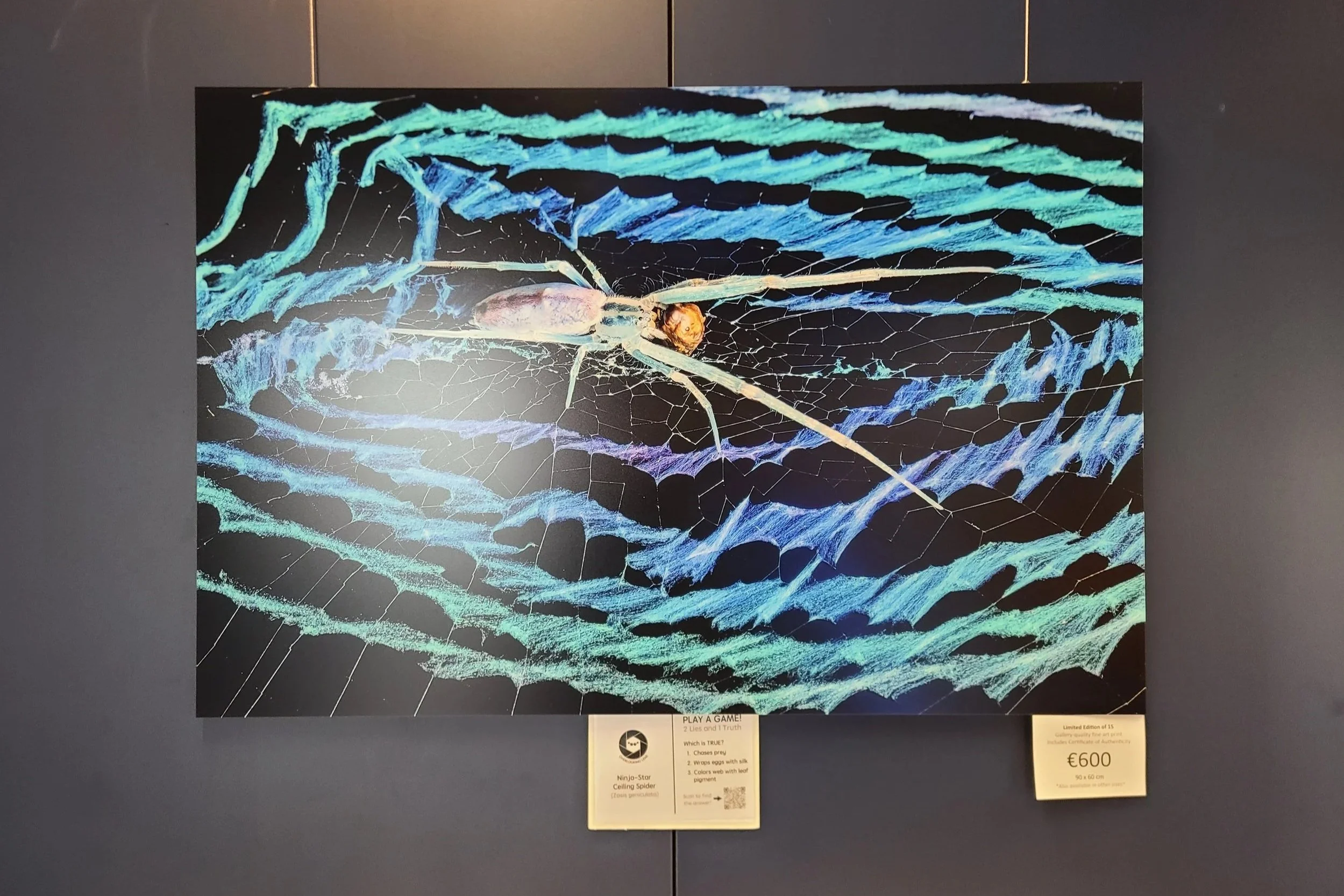
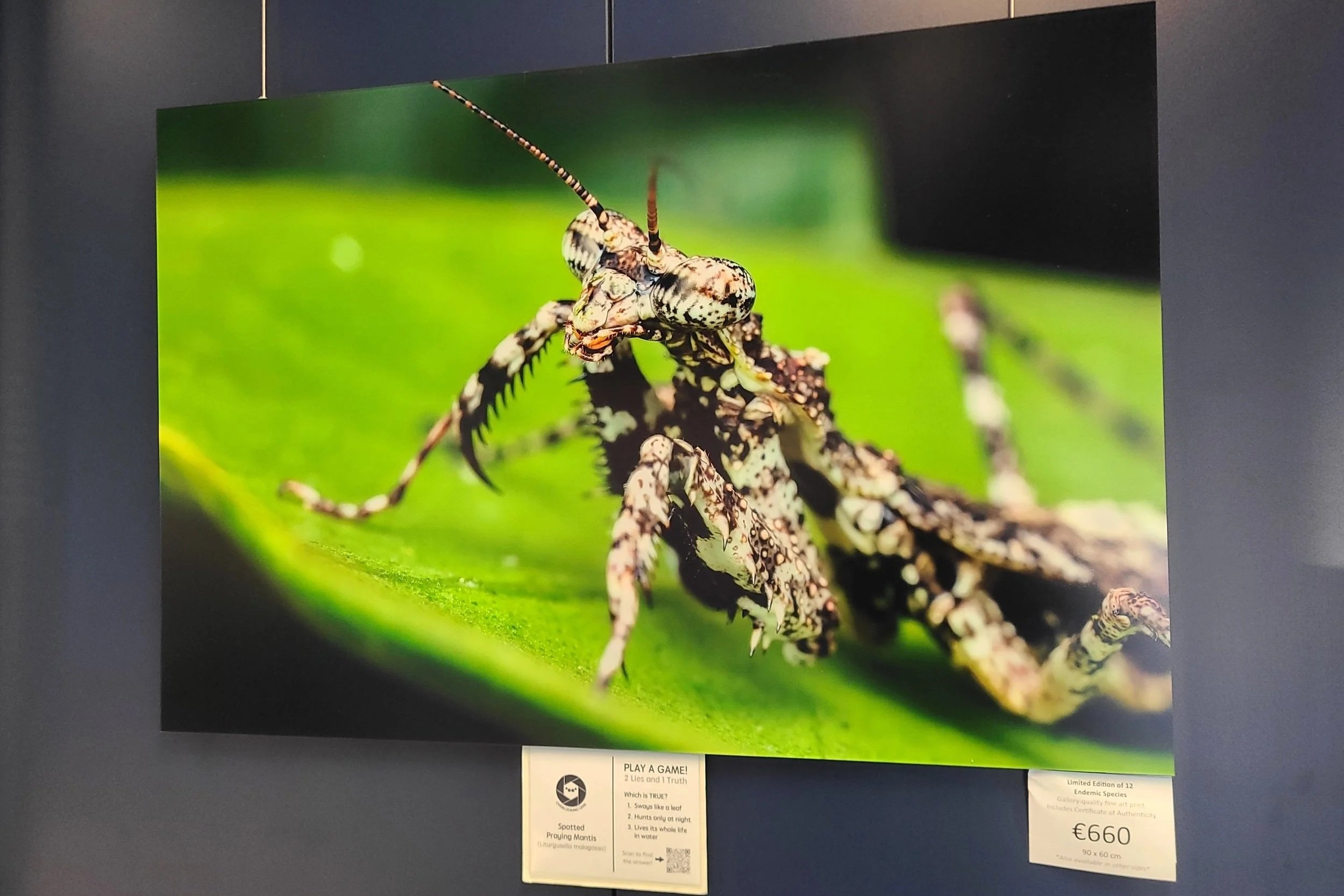
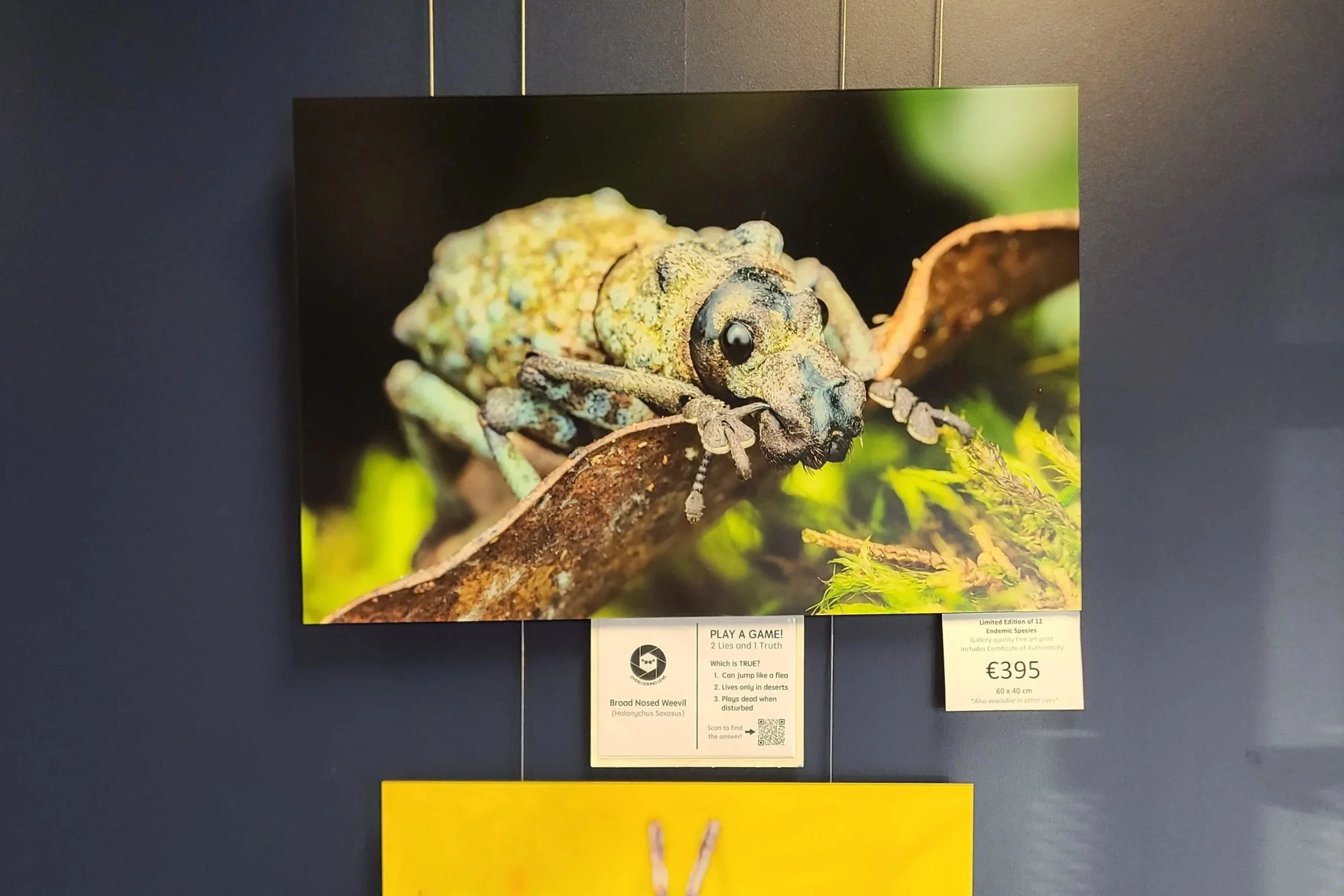
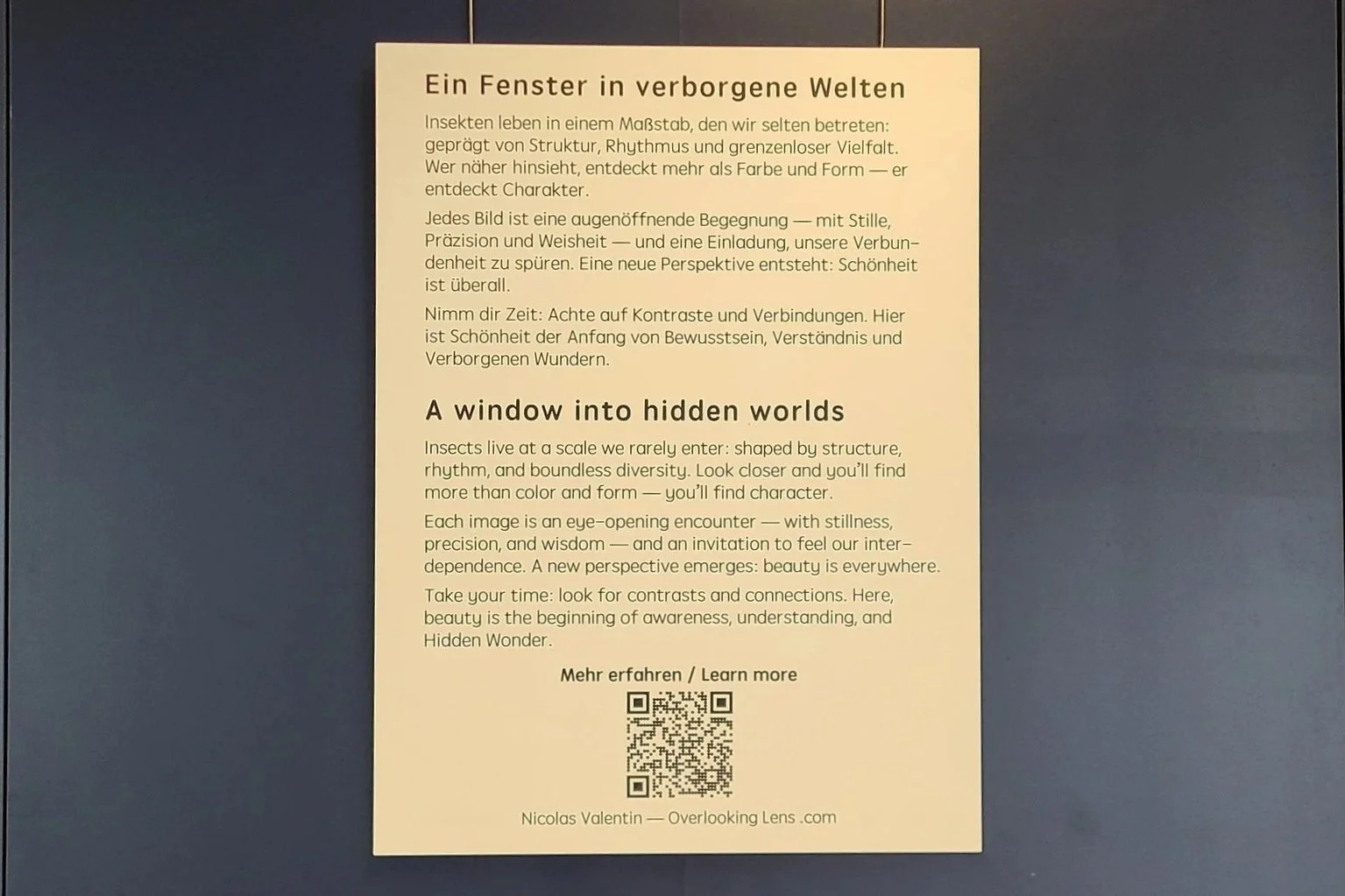
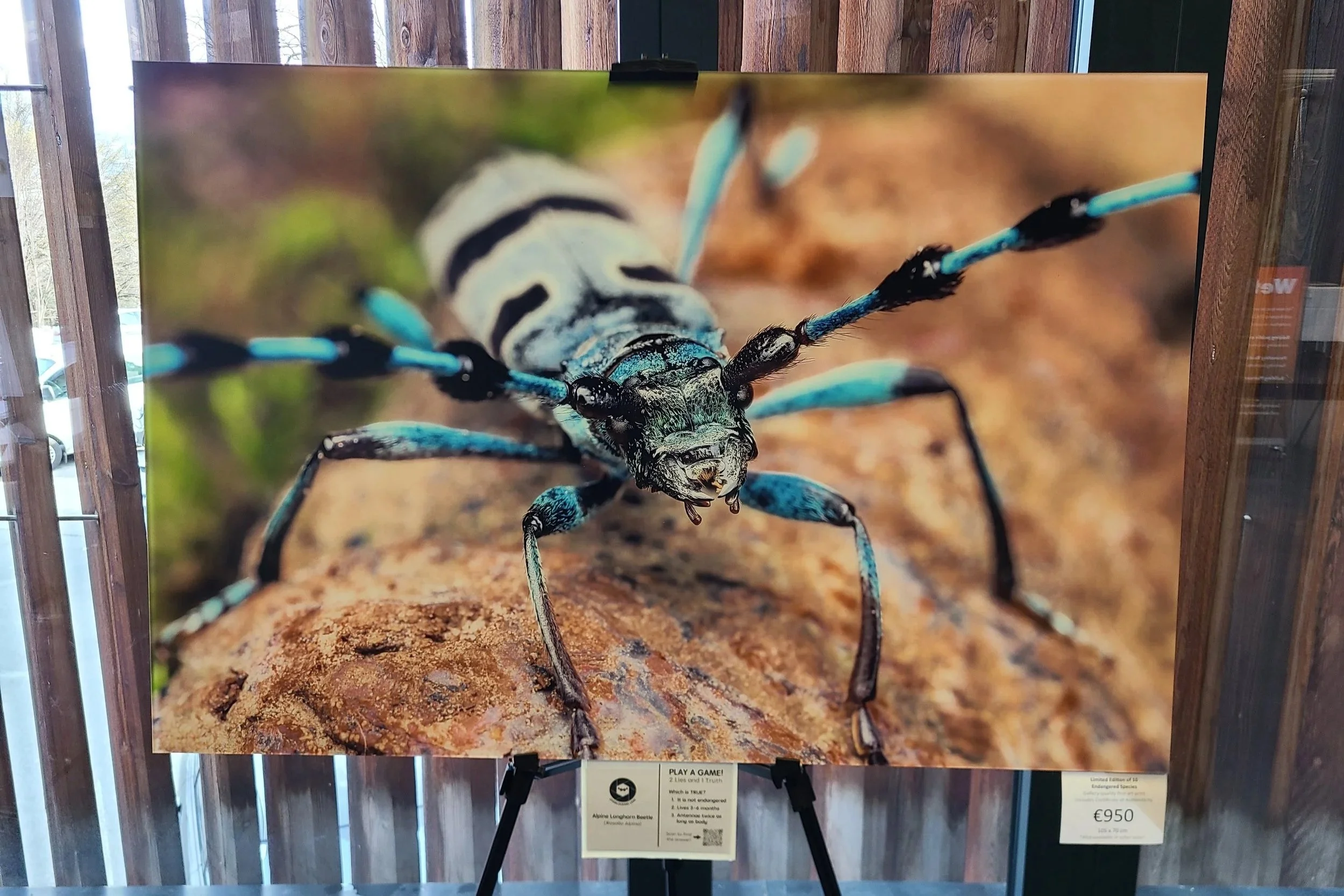
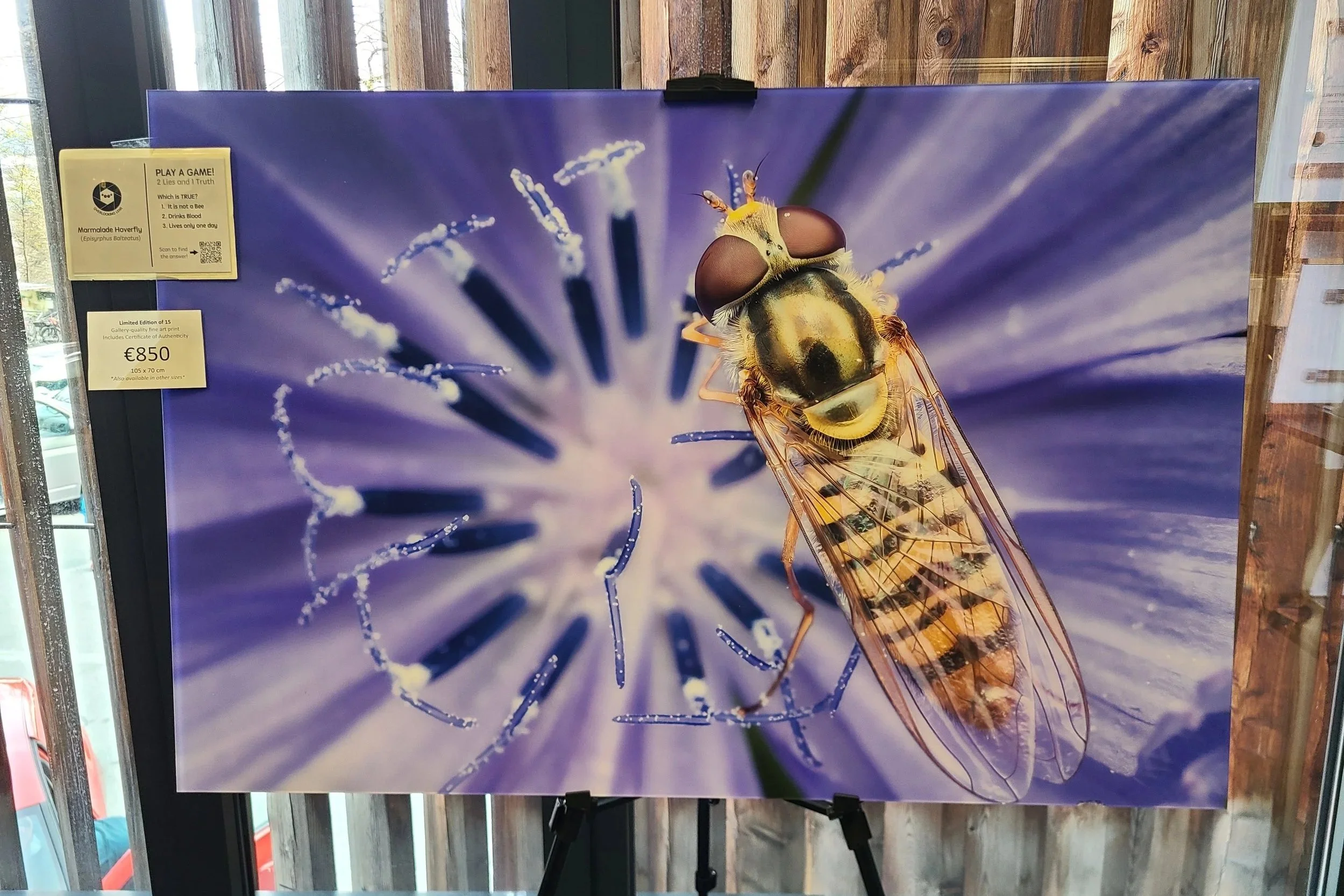
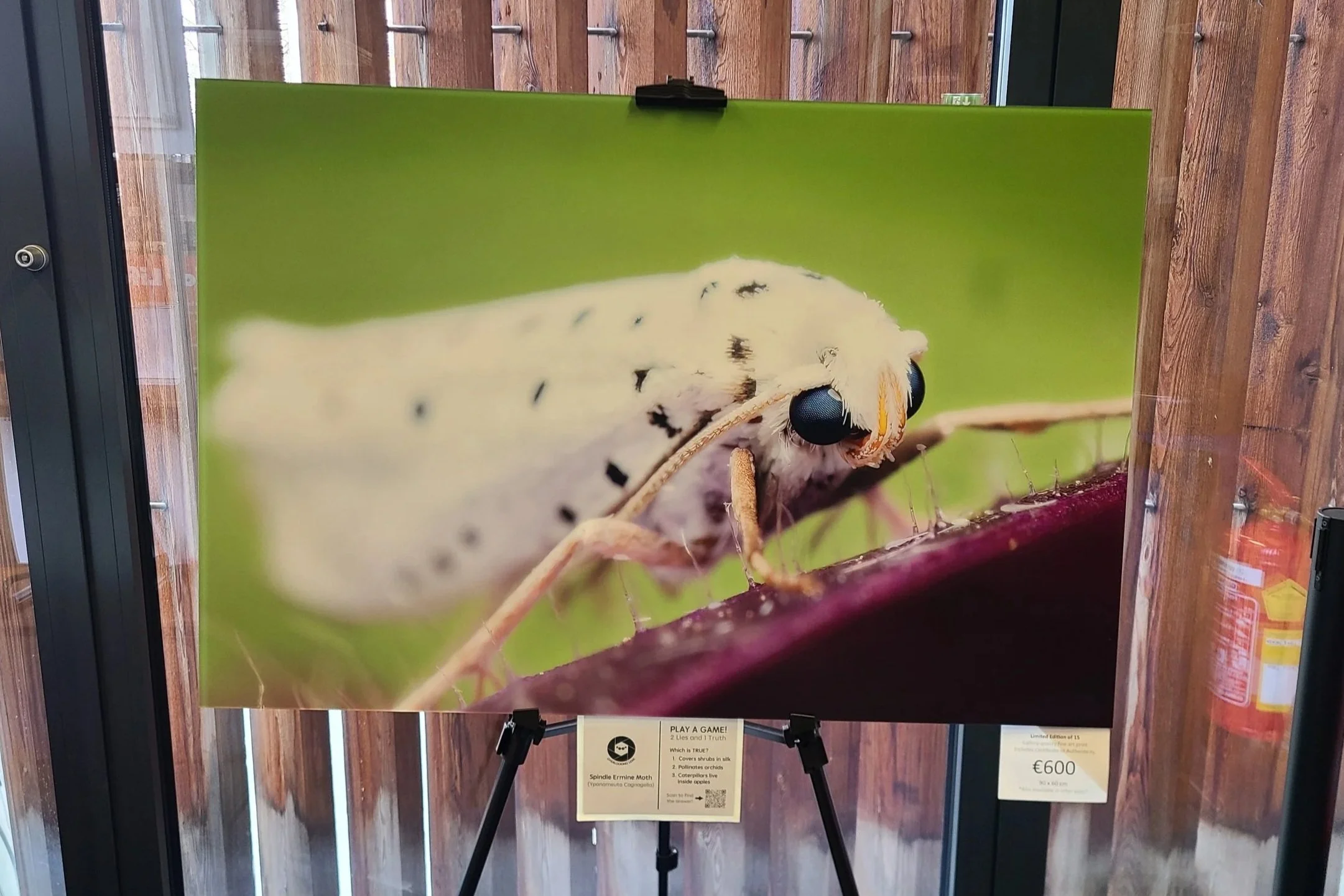
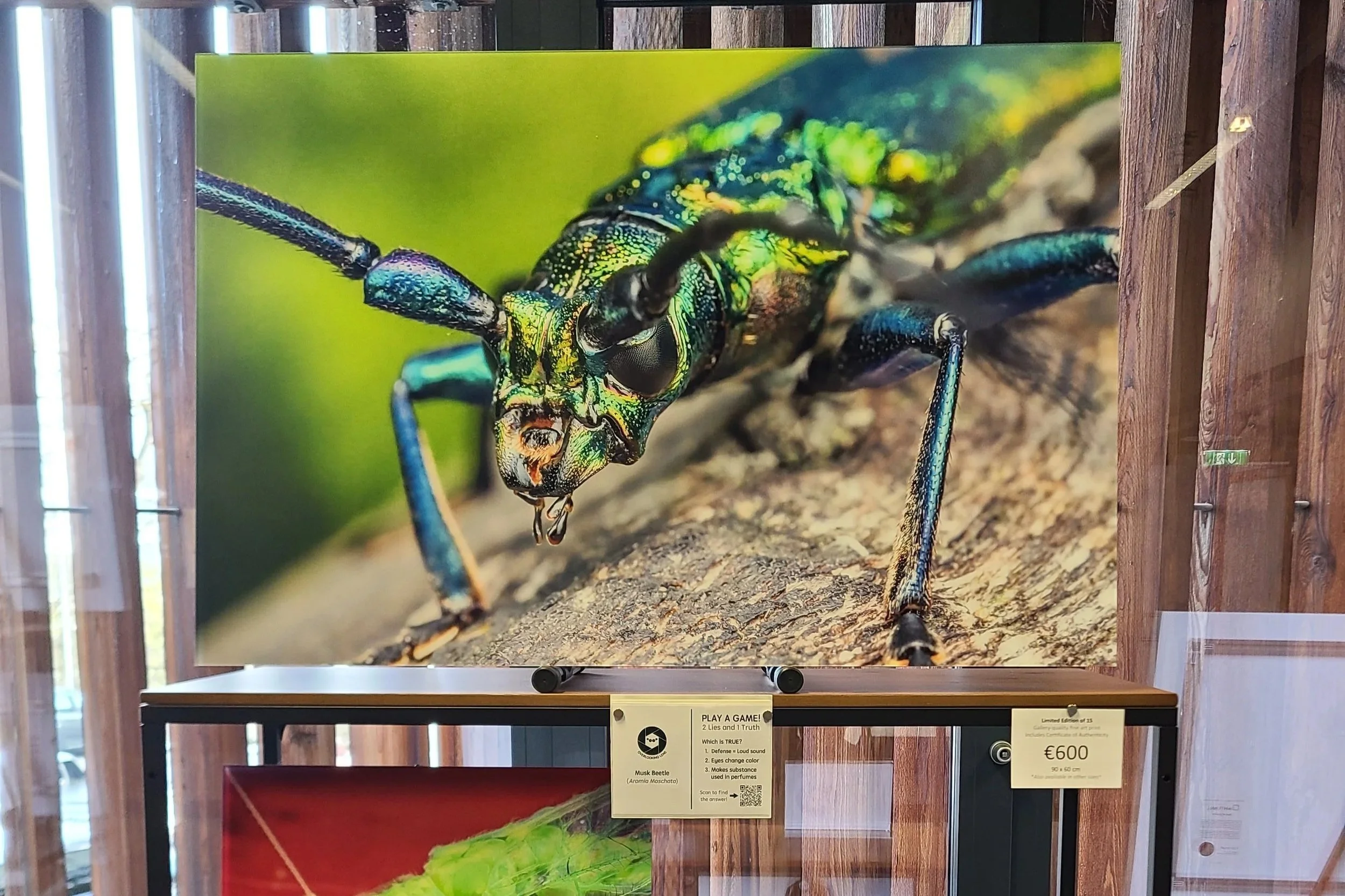
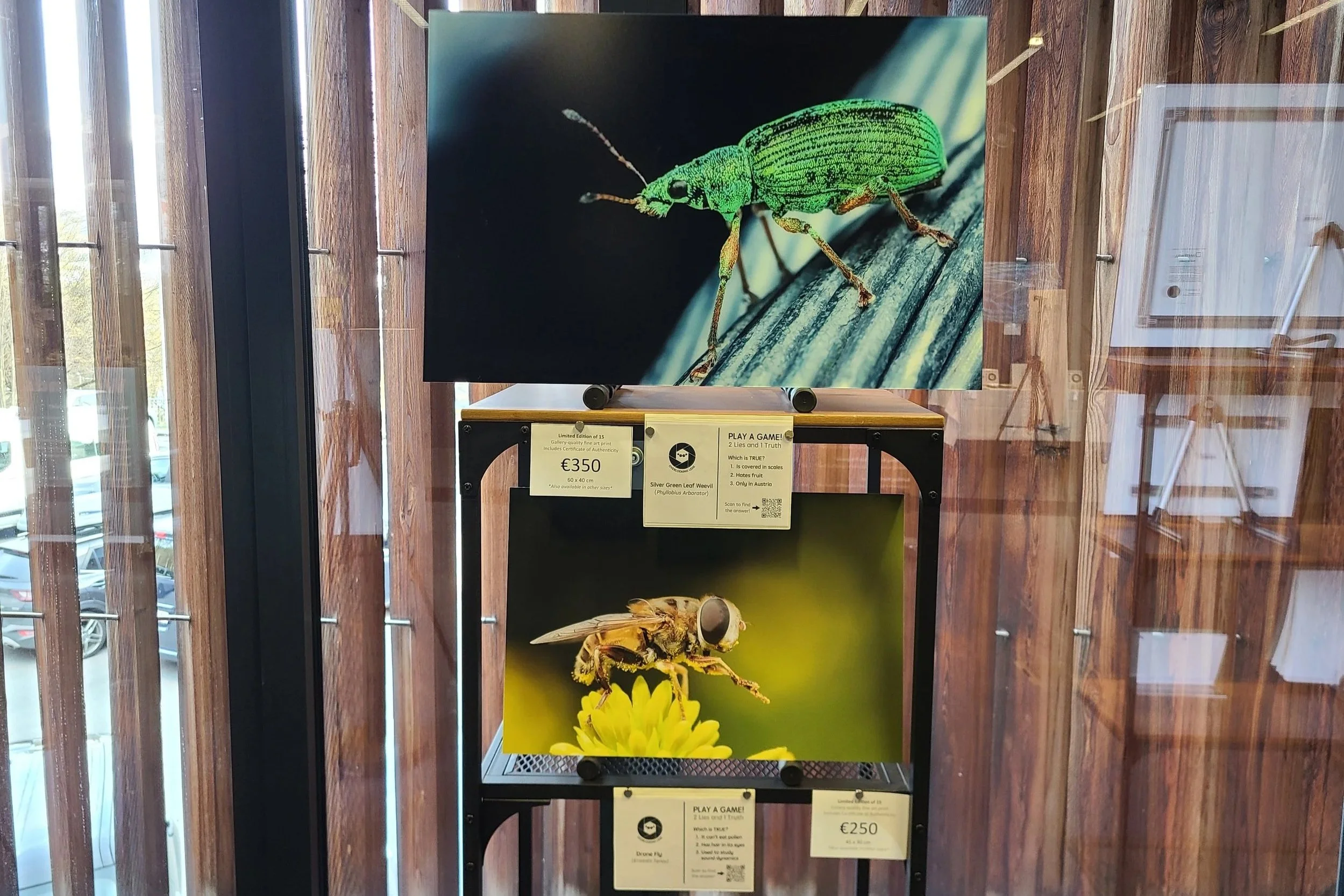
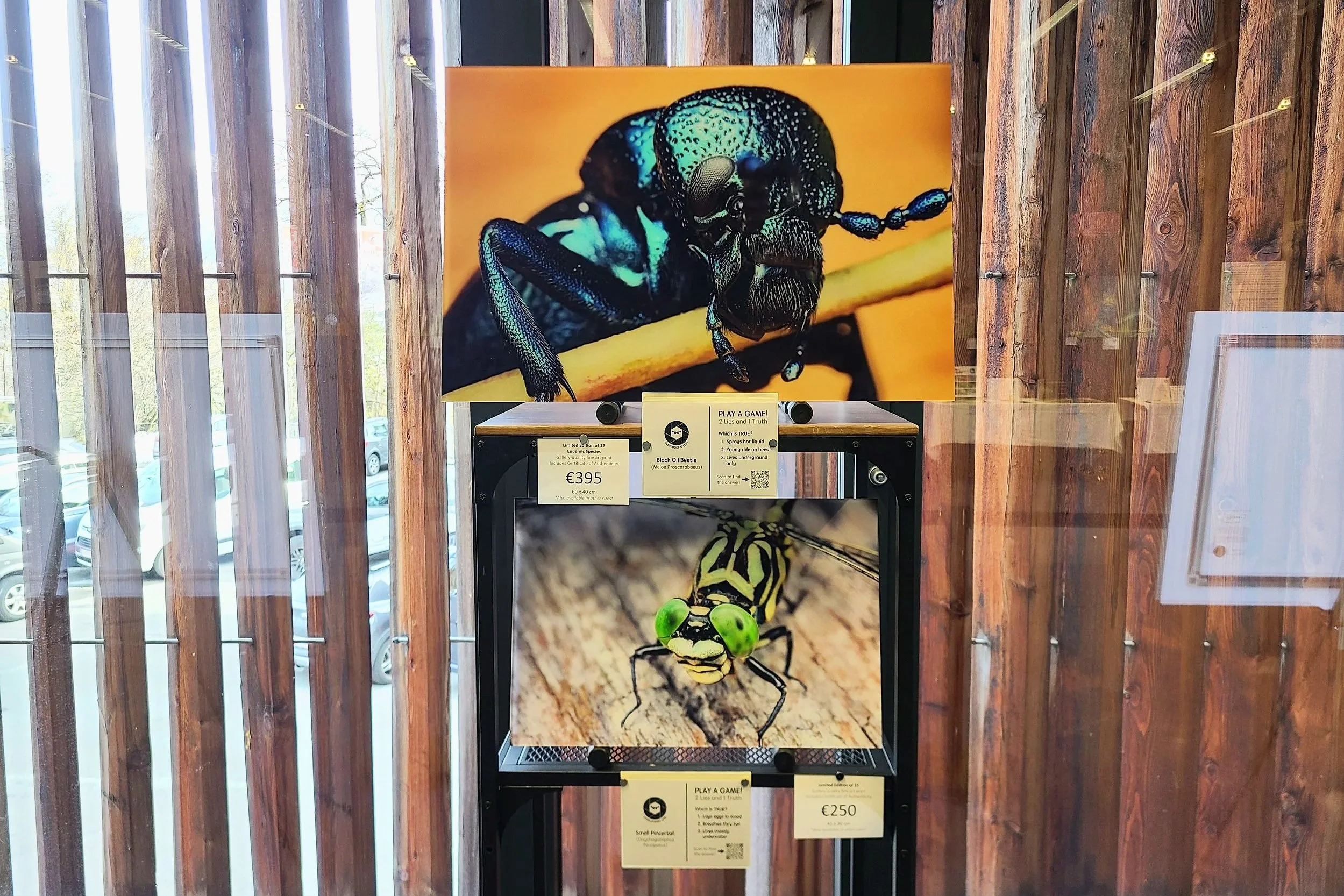
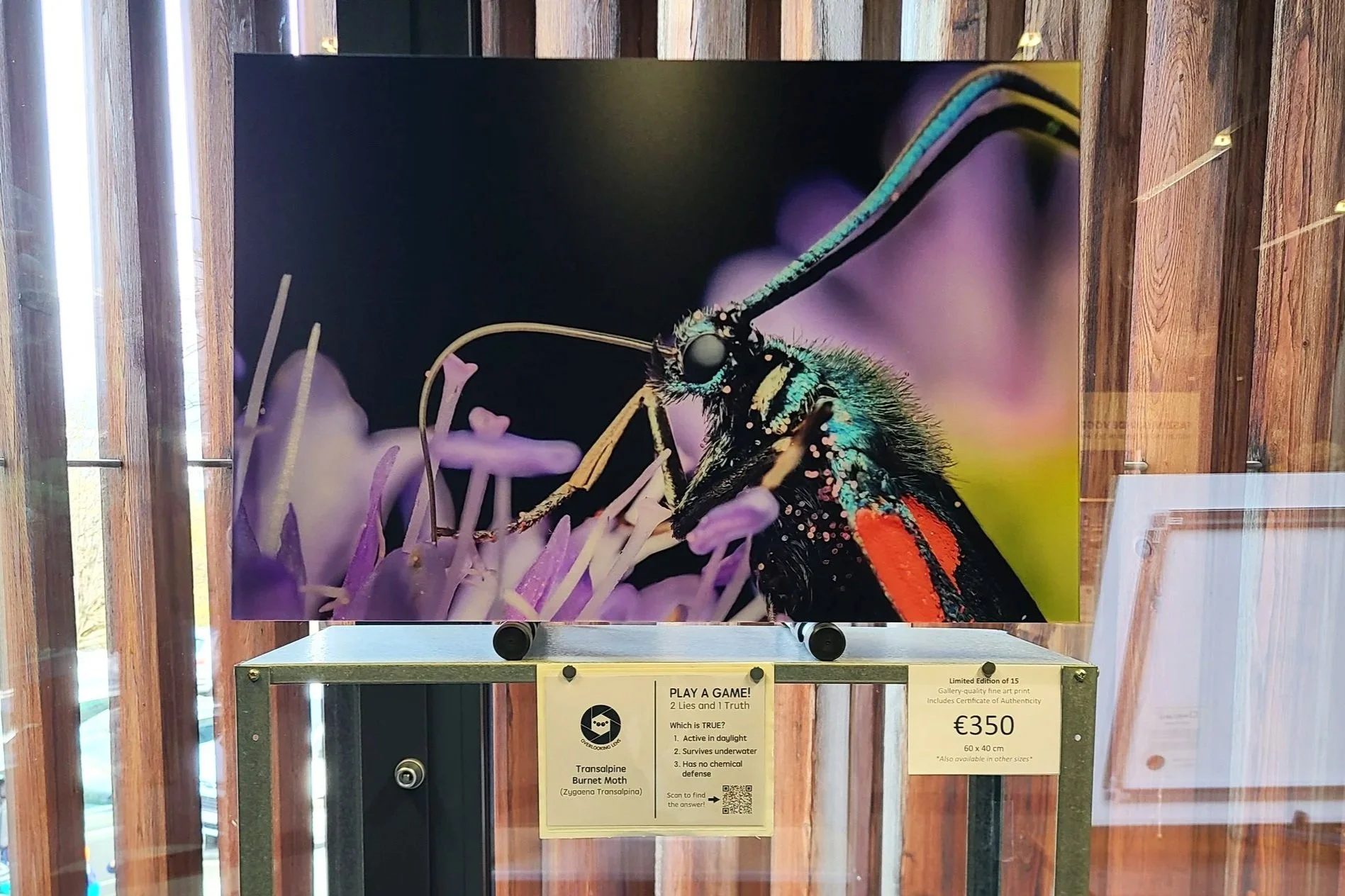
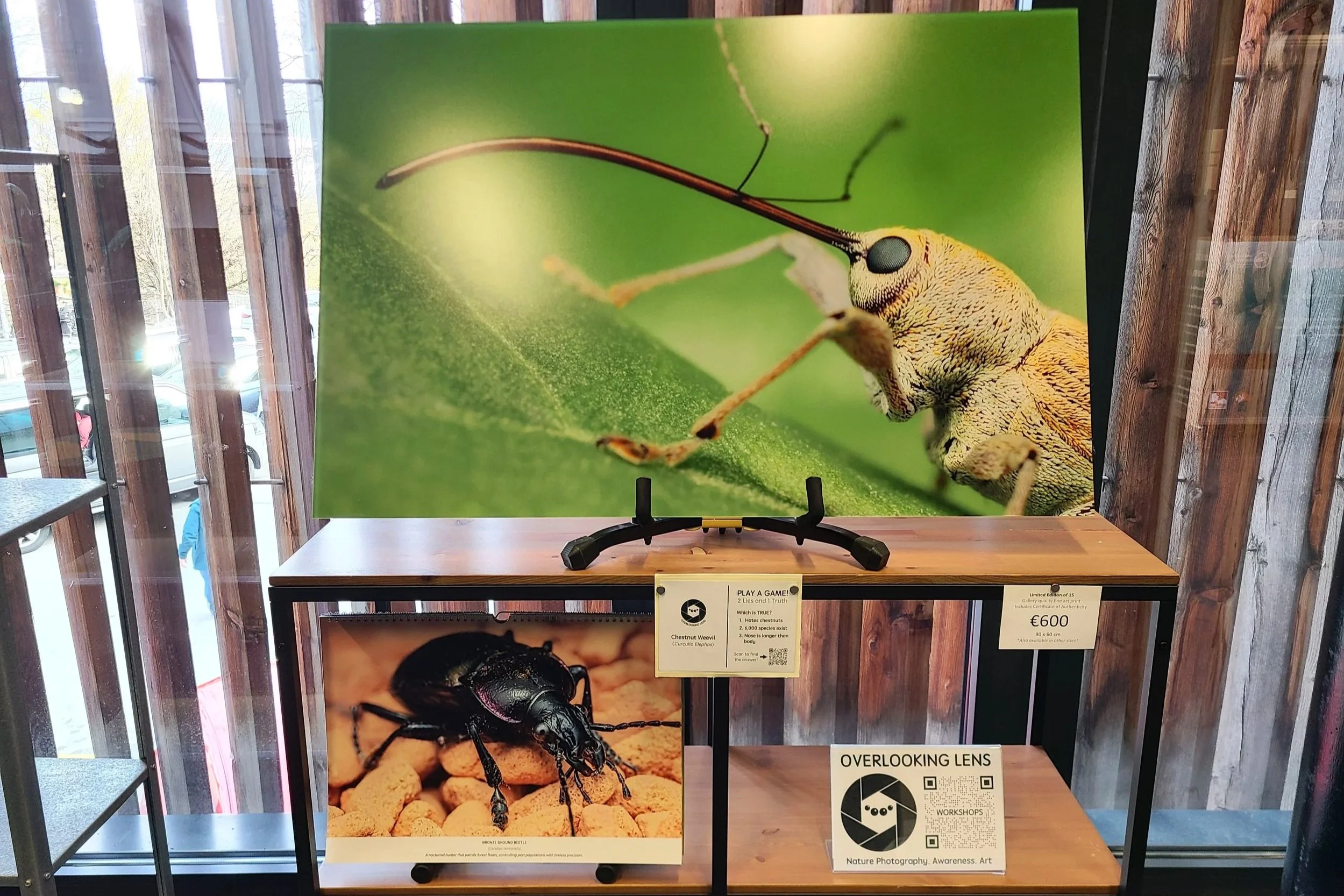
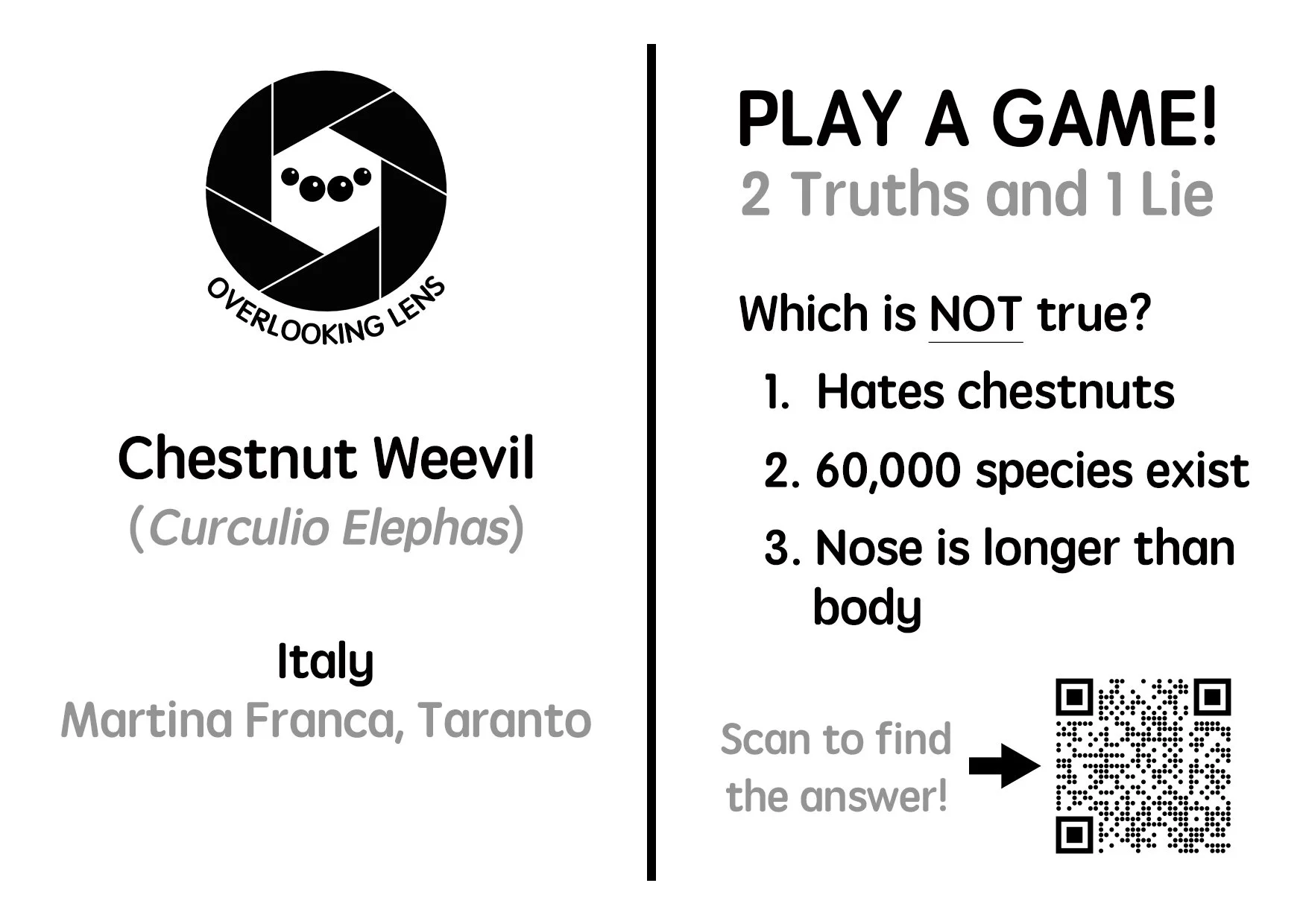
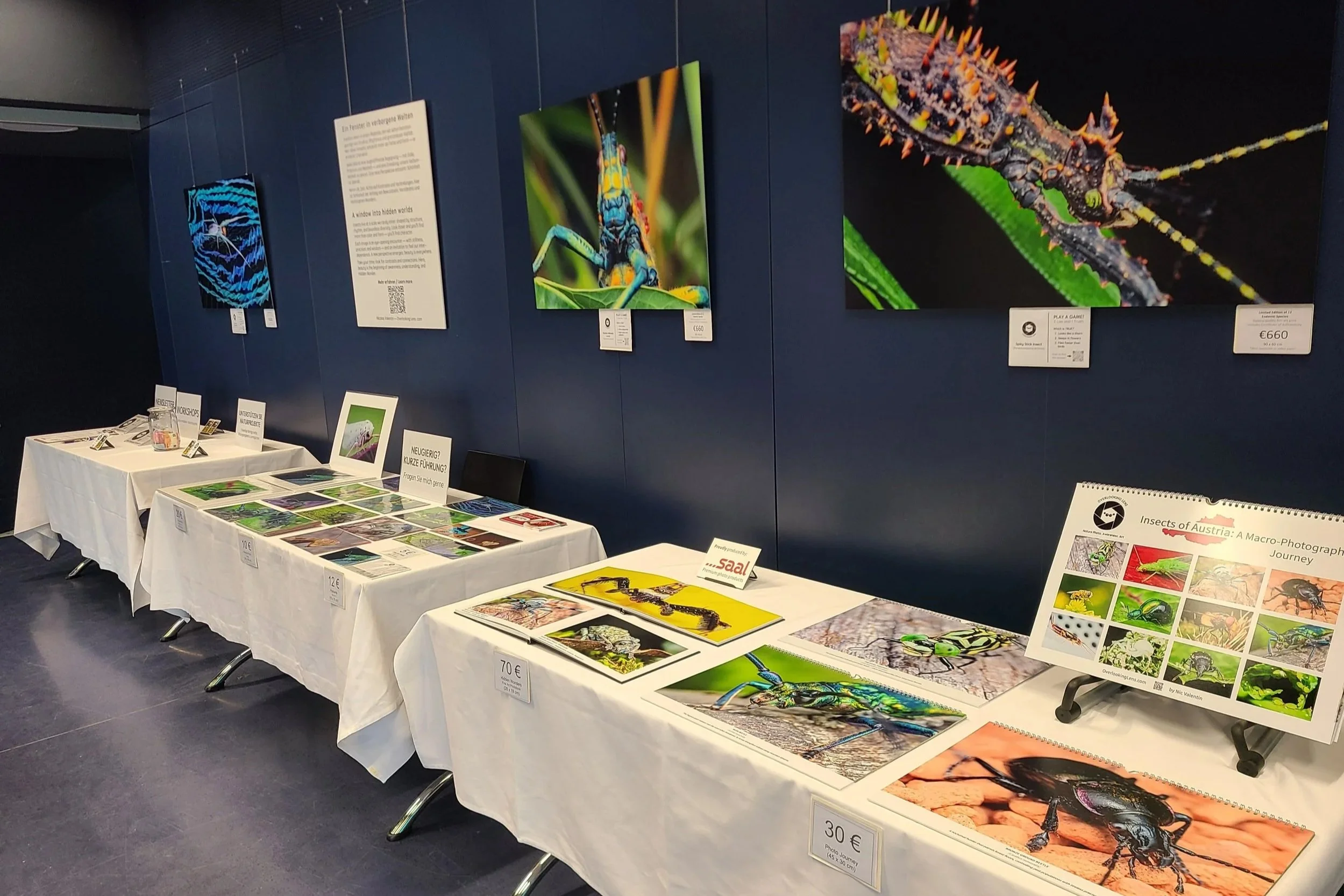
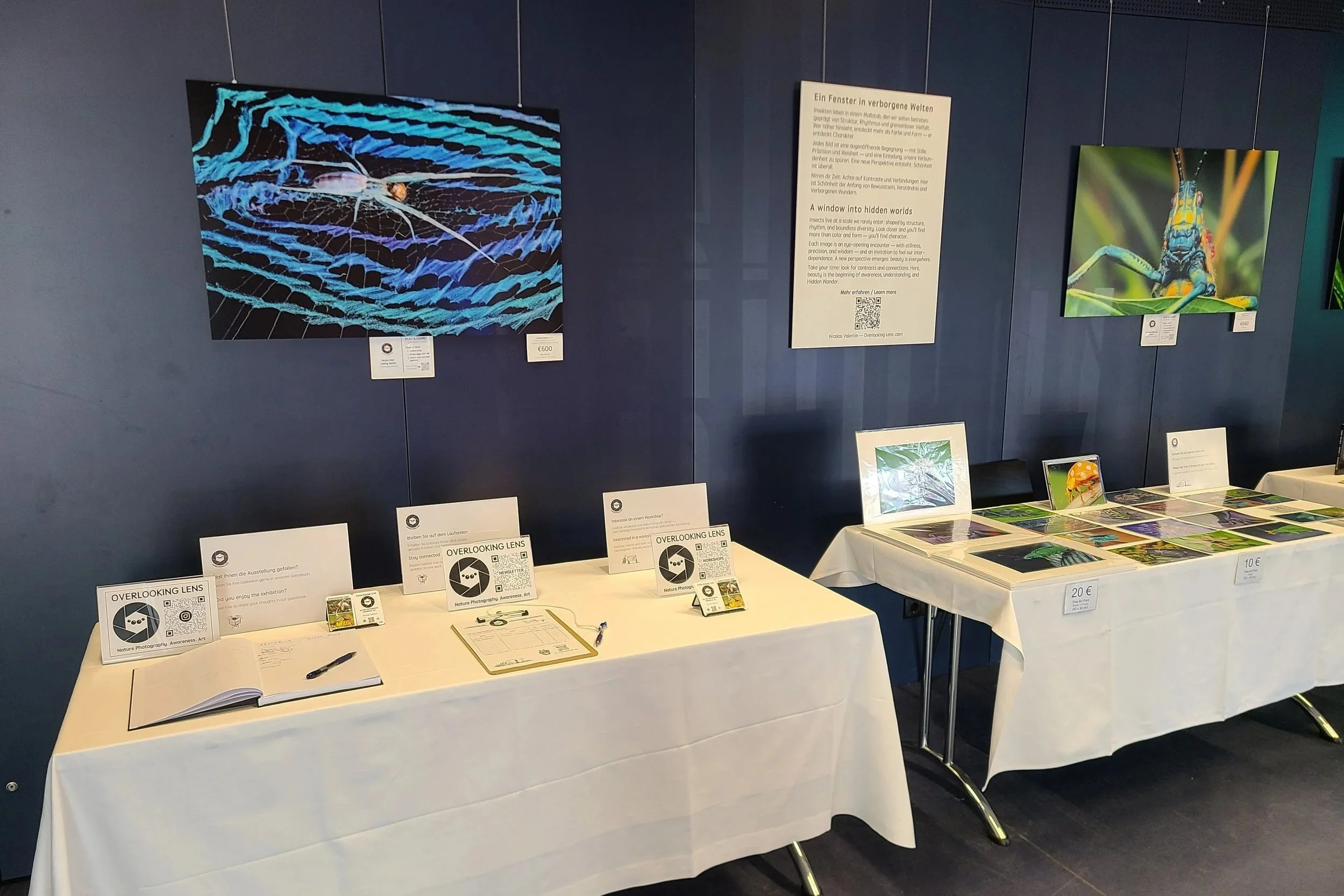
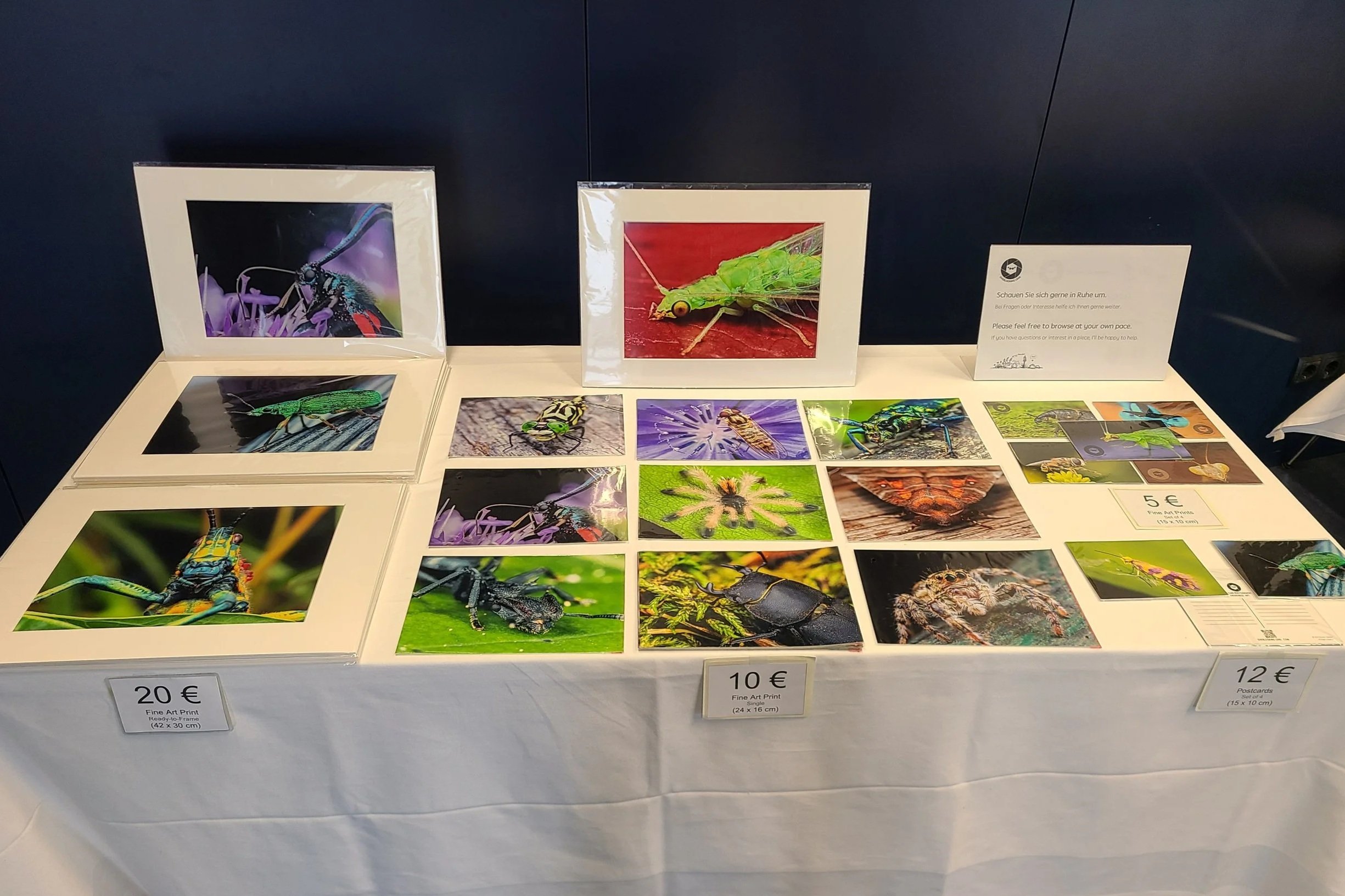
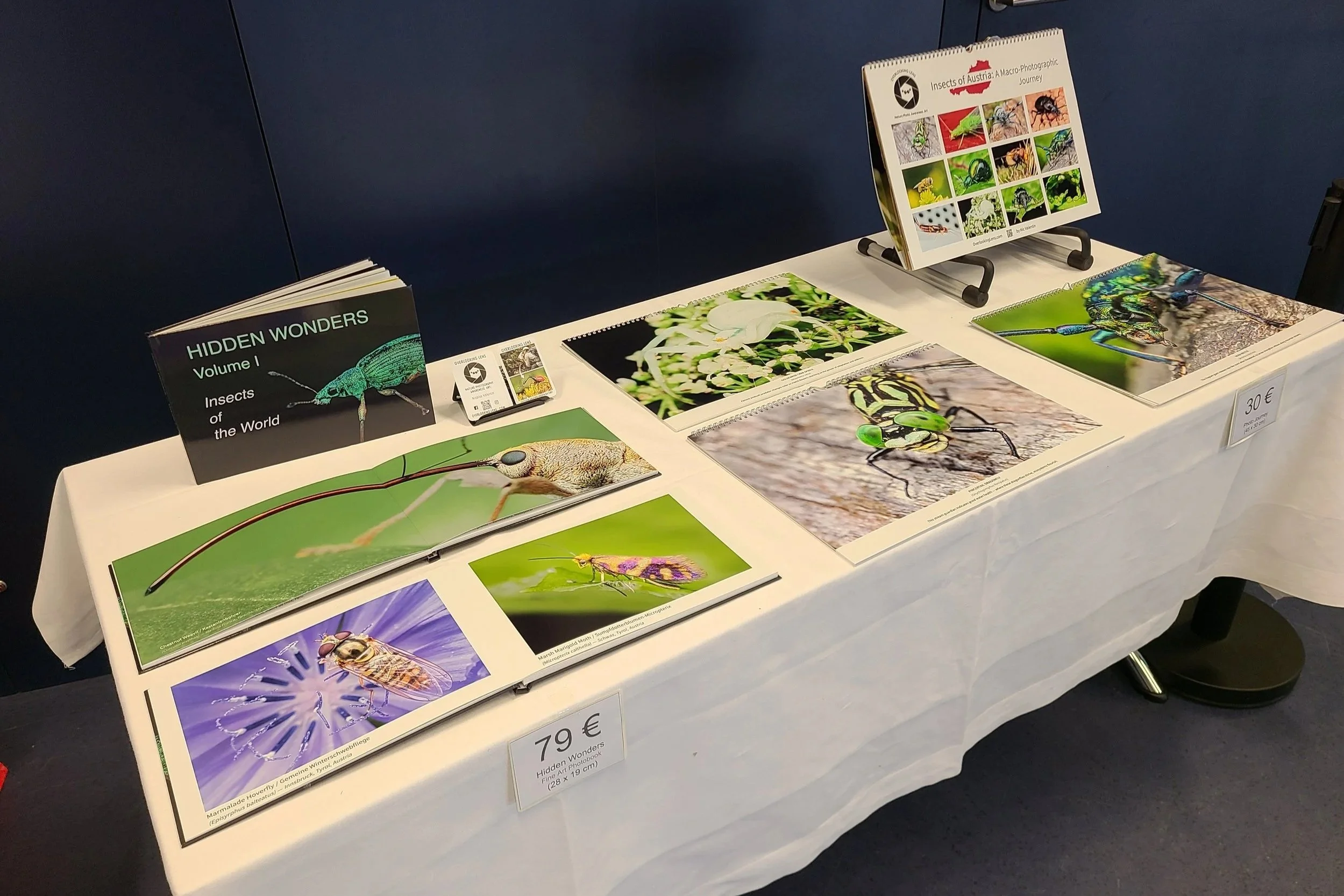
The exhibition was designed as more than “a room with pictures.” It was an experience with multiple ways to engage:
Large-format Fine-Art macro portraits (up to 105×70 cm) — curated to feel calm, premium, and contemplative
A playful learning game for each featured insect: Two Lies and One Truth — visitors could guess which fact was true, then scan an interactive QR code to reveal the answer and explore what makes that species unique
Short, accessible learning moments — to help visitors understand what they were seeing (and why it matters)
Interactive elements for families — including kids activities that made the room feel welcoming, not intimidating
A small shop corner — so visitors who connected with the work could take a piece of the experience home
Over the run of the exhibition, I spent a lot of time in the room speaking with visitors: answering questions, sharing stories behind the images, and helping people notice the diversity and “personality” of insects that most of us never really look at.
👉 Fine-Art Macro Portraits available here.
Behind the scenes: from mockups to installation
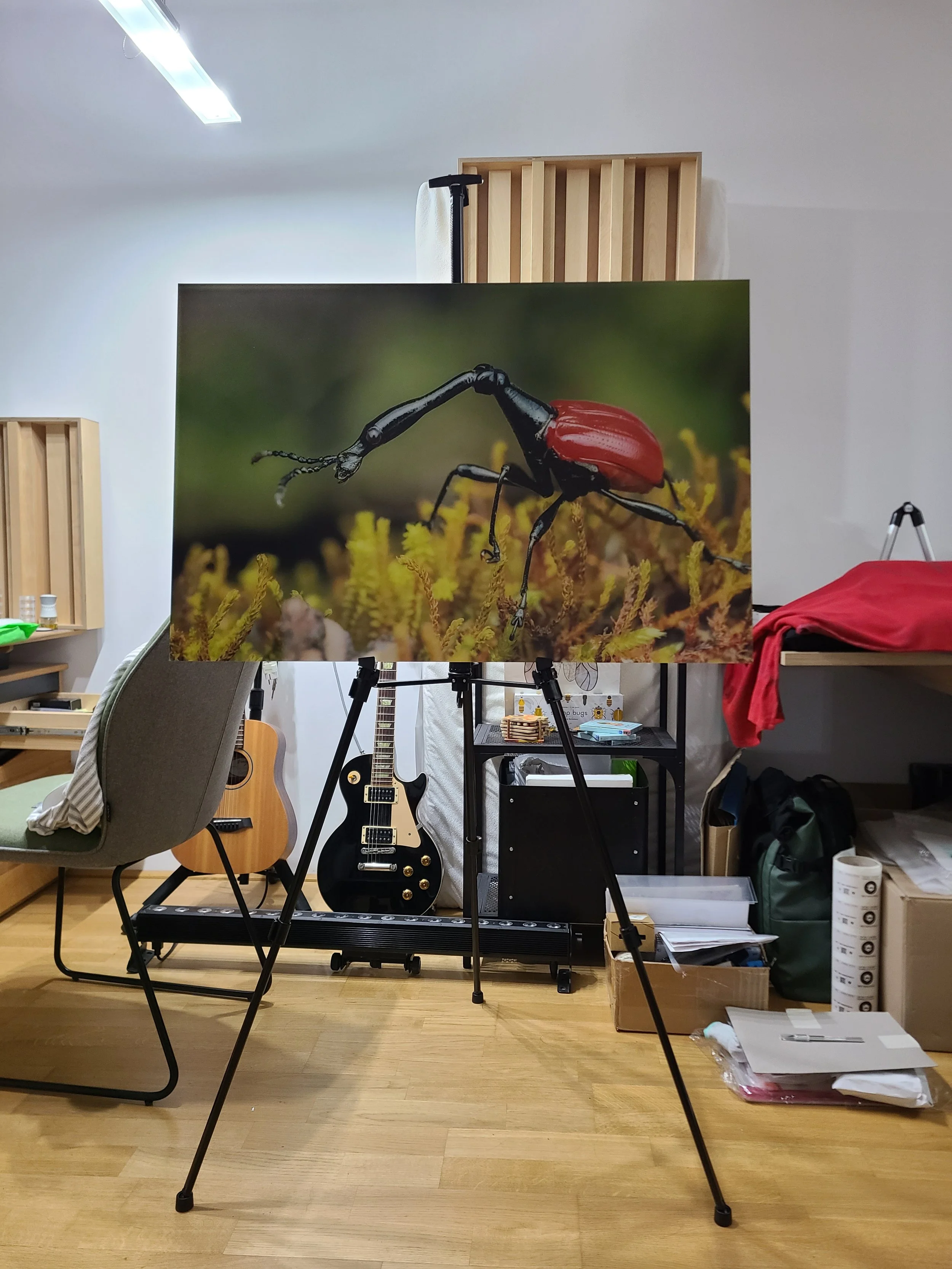
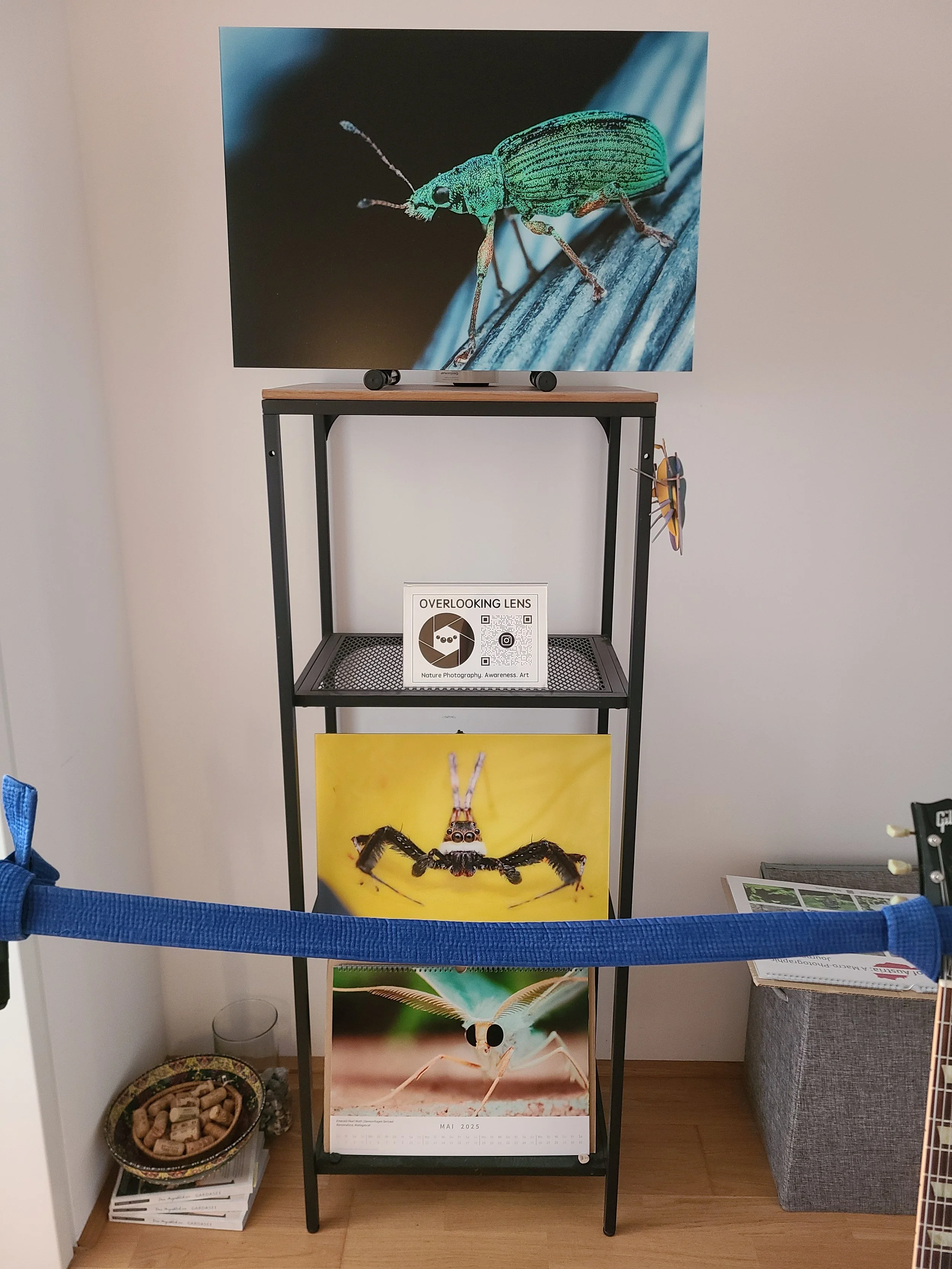
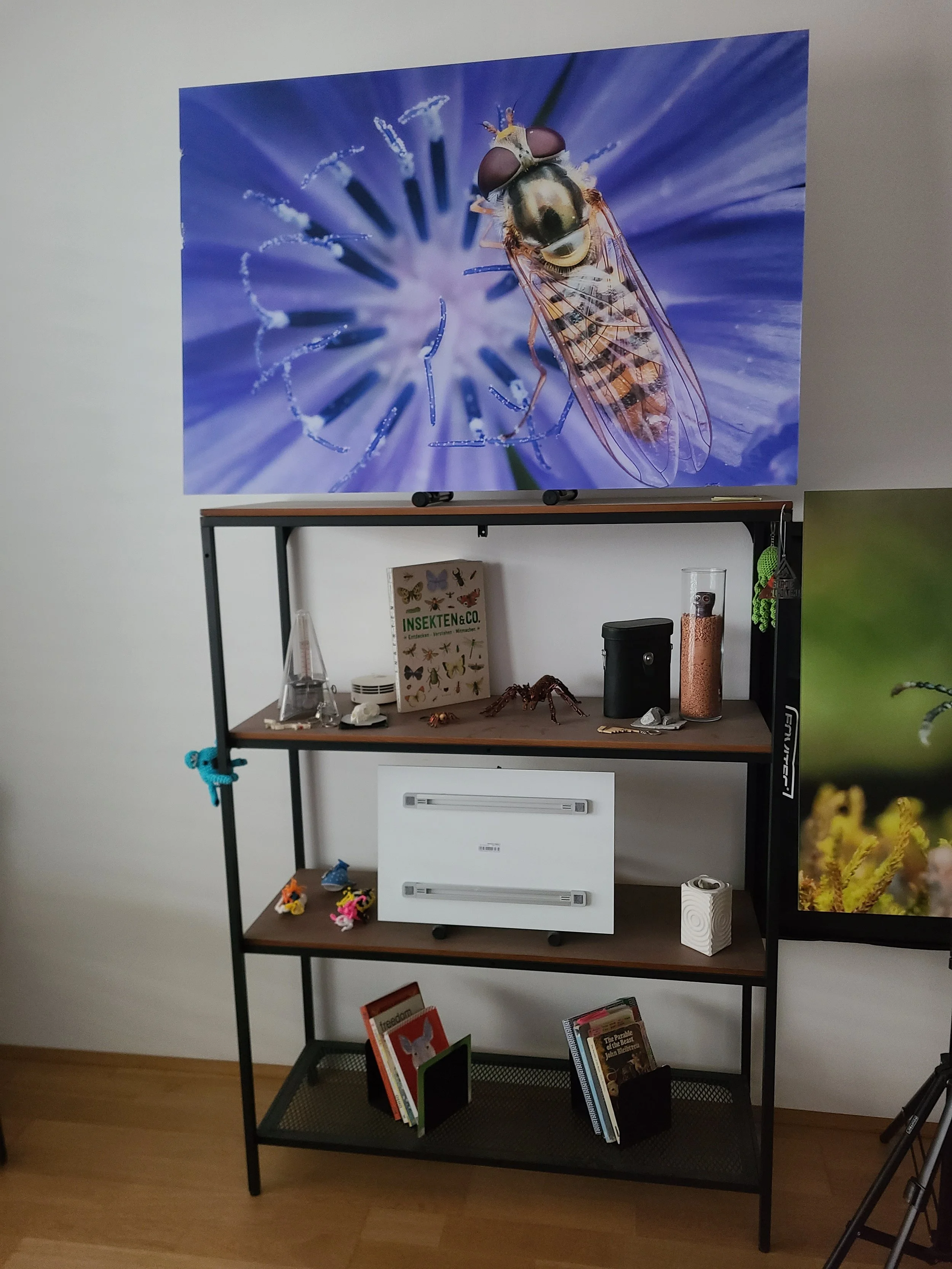
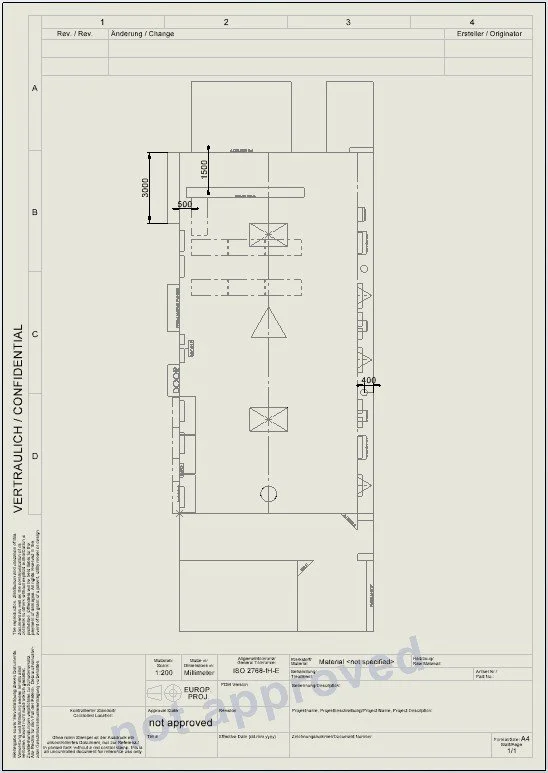
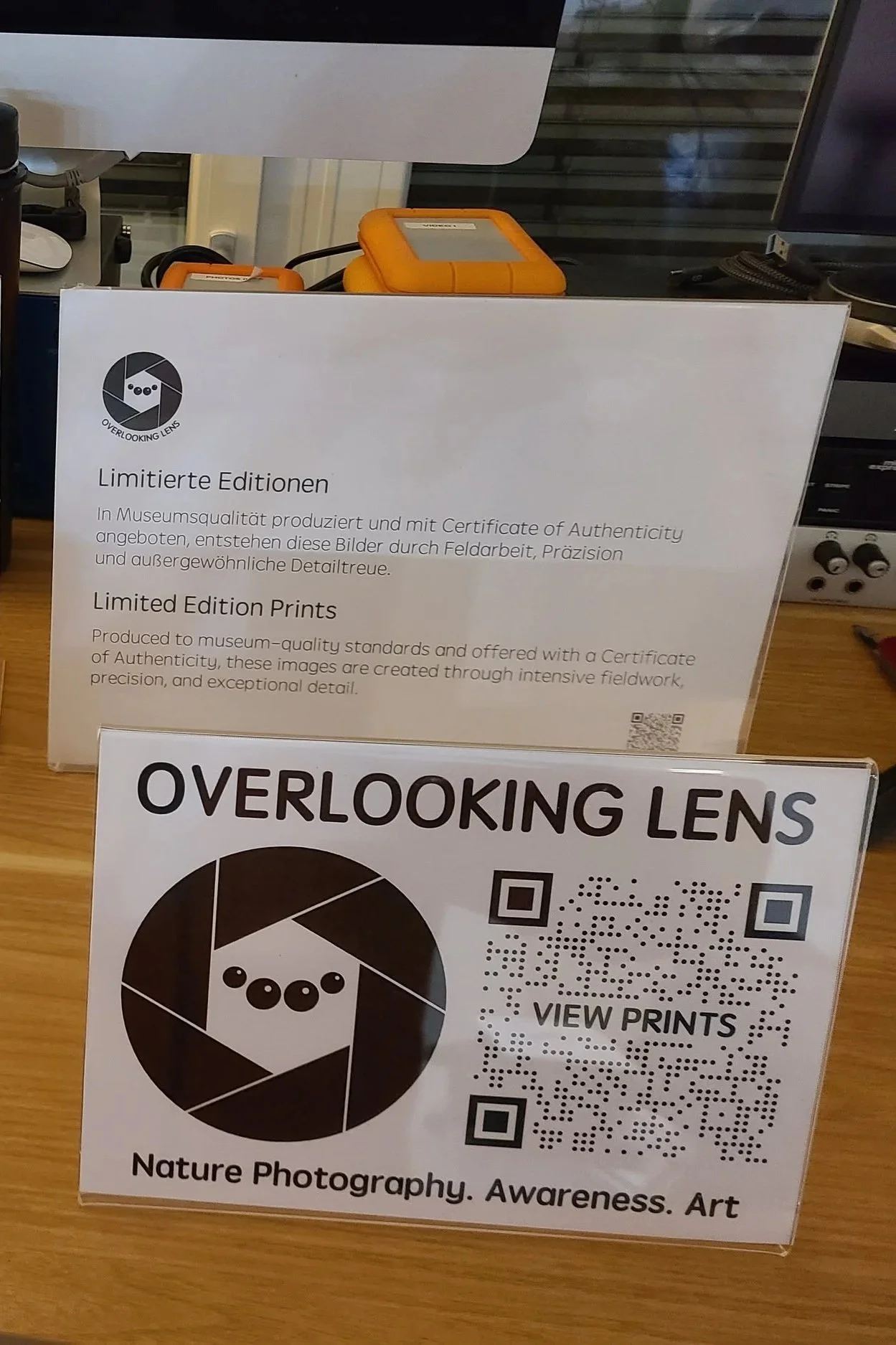
Before anything went on the walls, it existed as sketches, measurements, and home mockups.
I’m meticulous by nature — partly because I care about quality, and partly because exhibitions have a way of punishing vague planning. So I tested layouts, planned spacing, and tried to anticipate visitor flow: where people would enter, where they would pause, what would catch their eye first, and how to keep the room from feeling either cluttered or empty.
Installation days are always a mix of excitement and stress. You’re trying to bring something that lived in your head into the real world — with real walls, real light, and real constraints. Seeing it finally come together was one of those moments that makes the whole effort feel worth it.
Vernissage: a calm opening inside a busy world
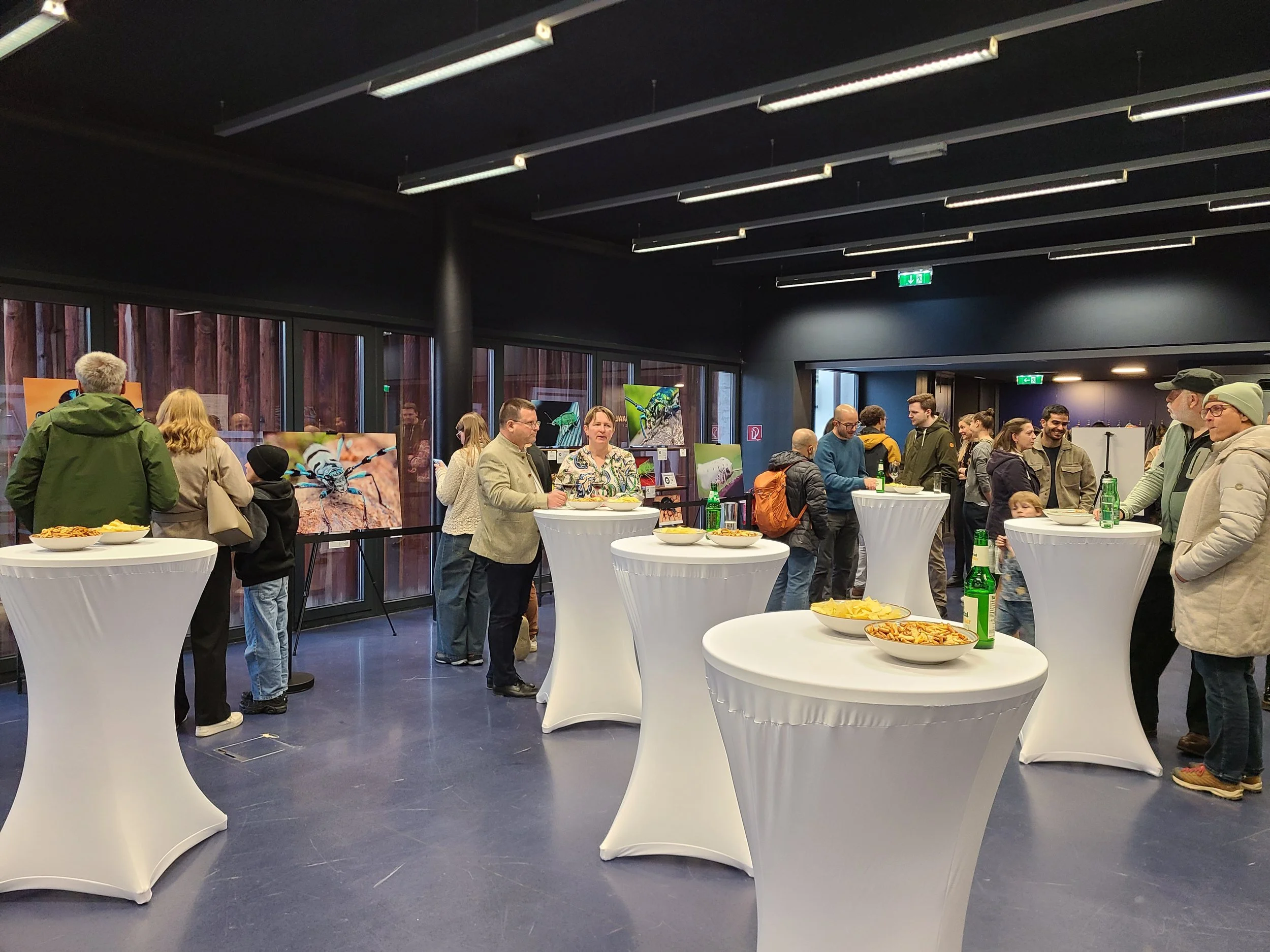
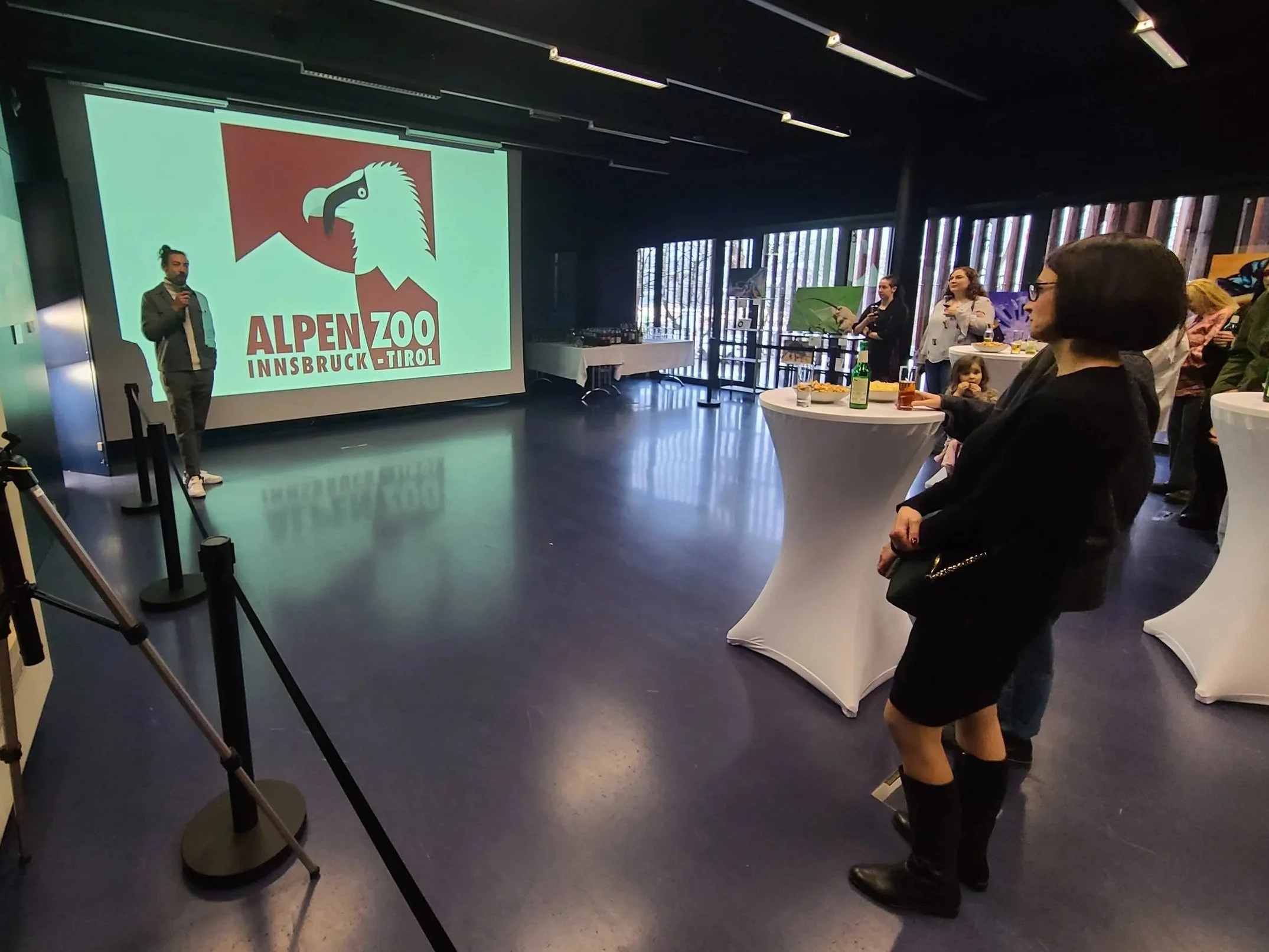
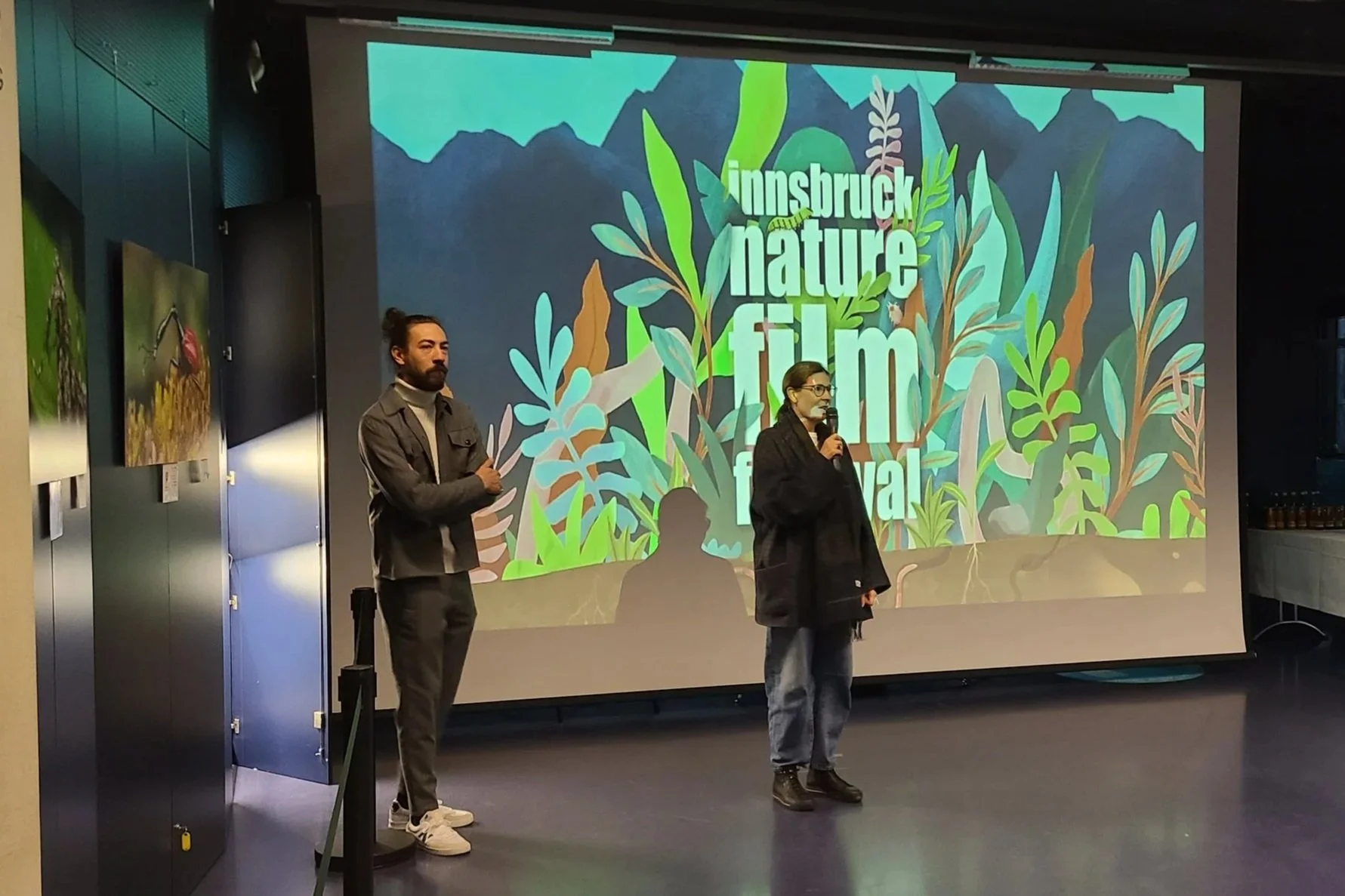
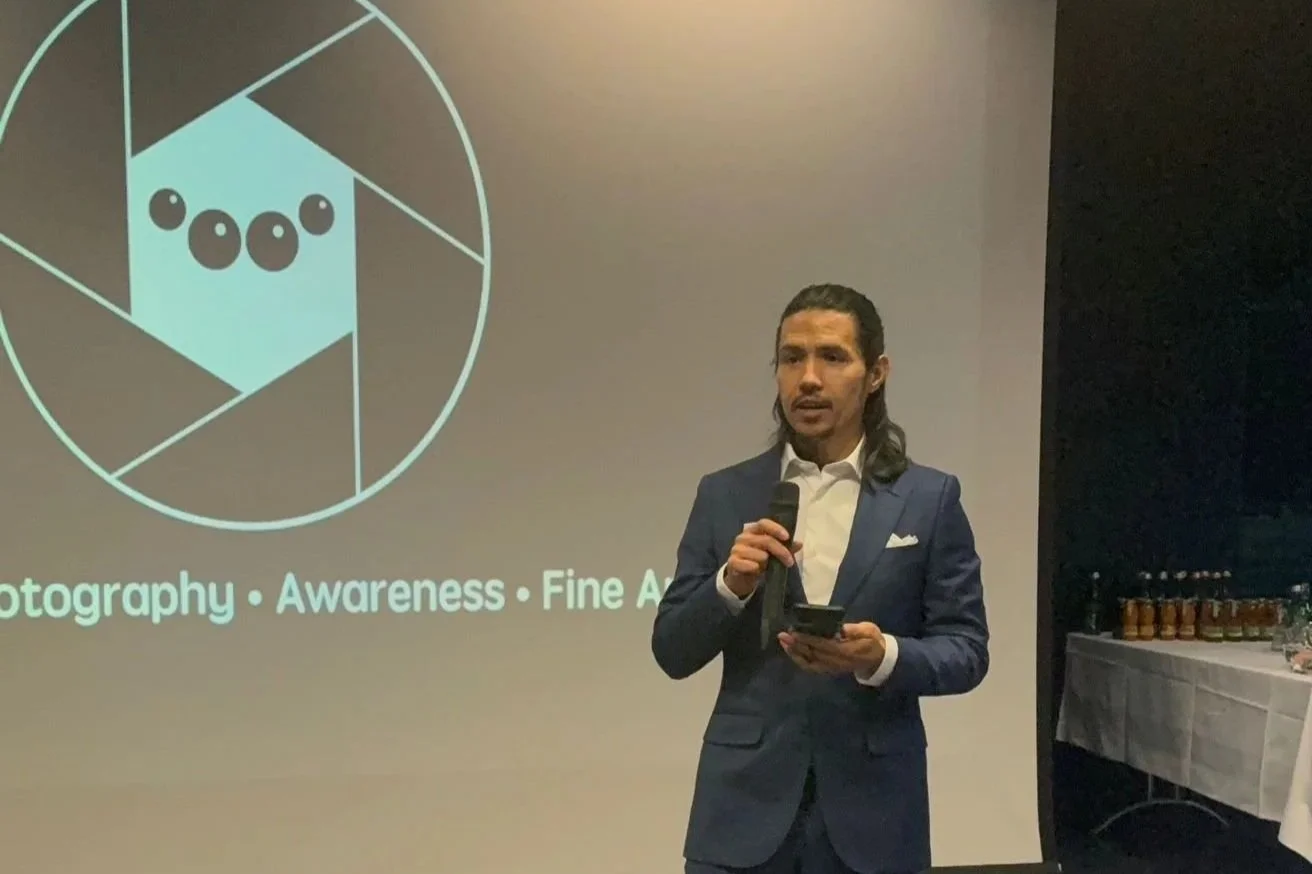
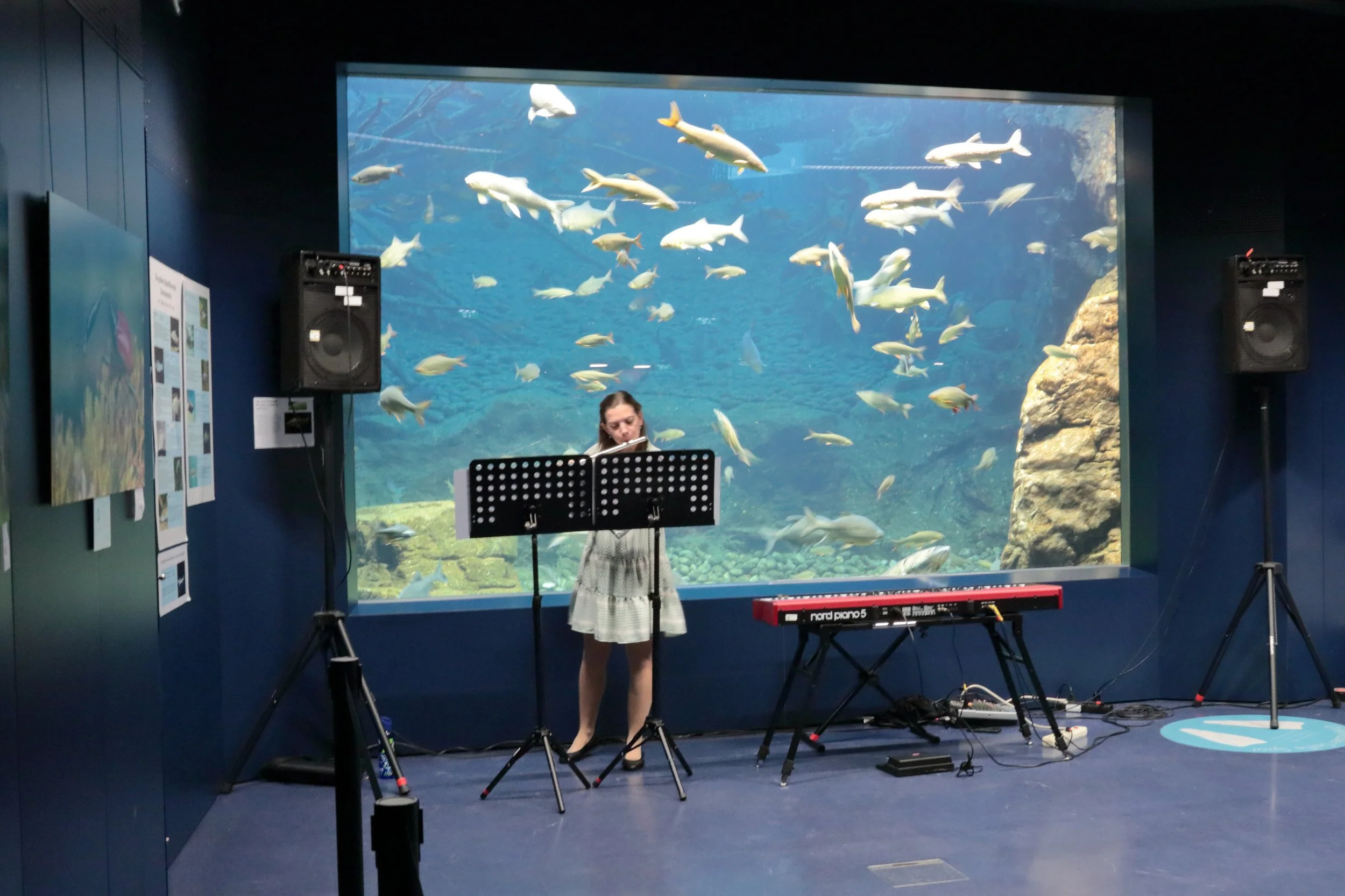
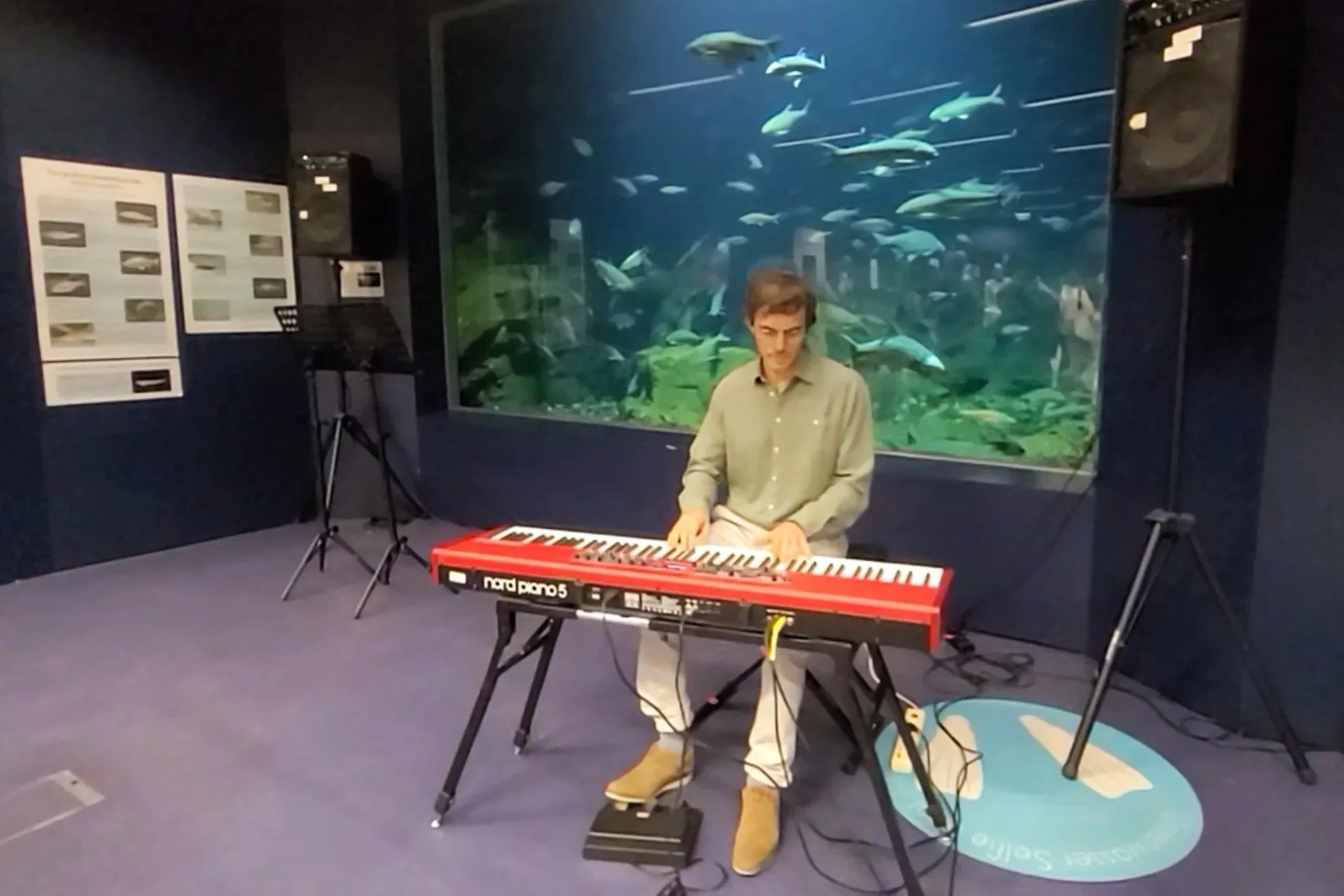
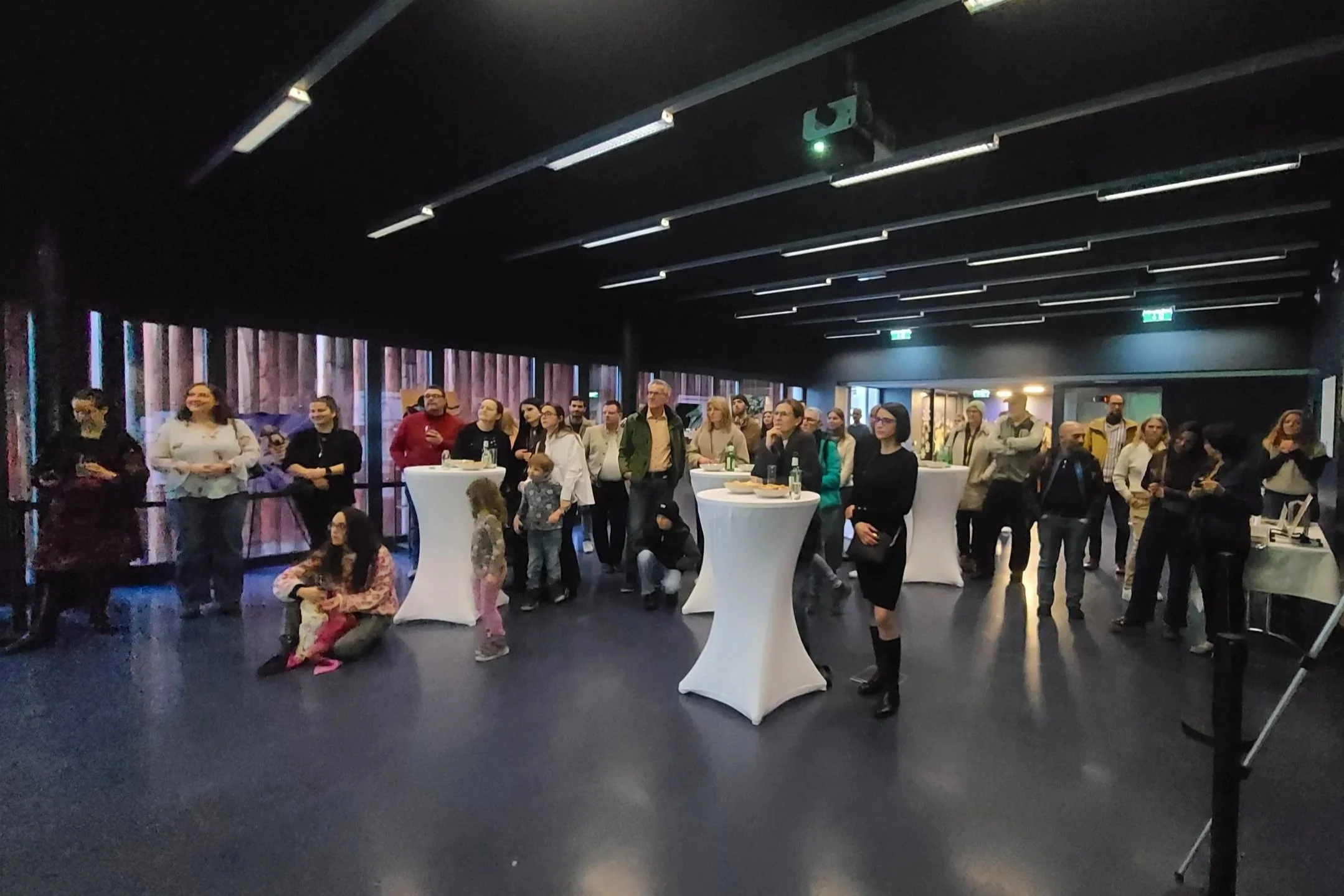
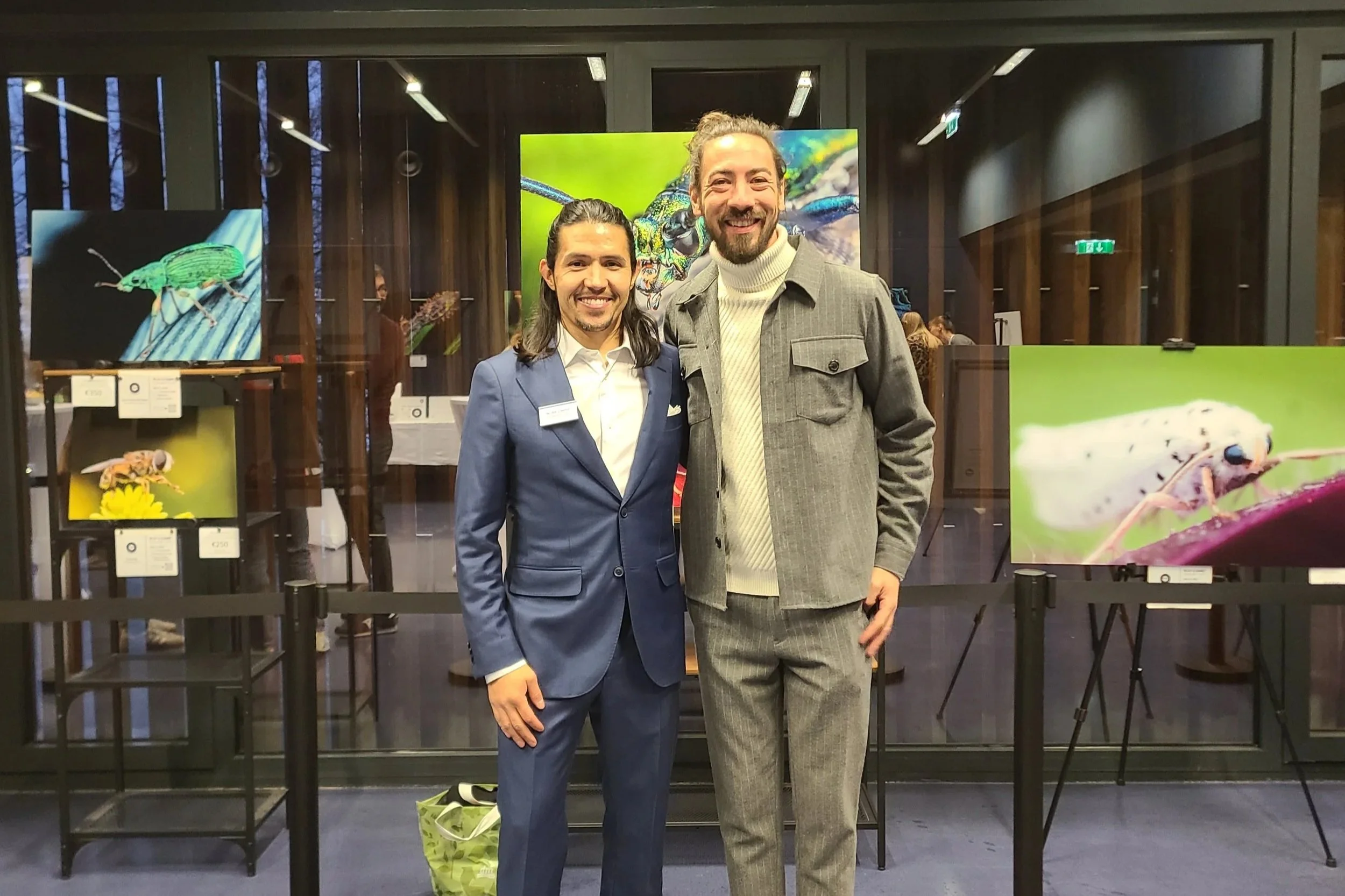
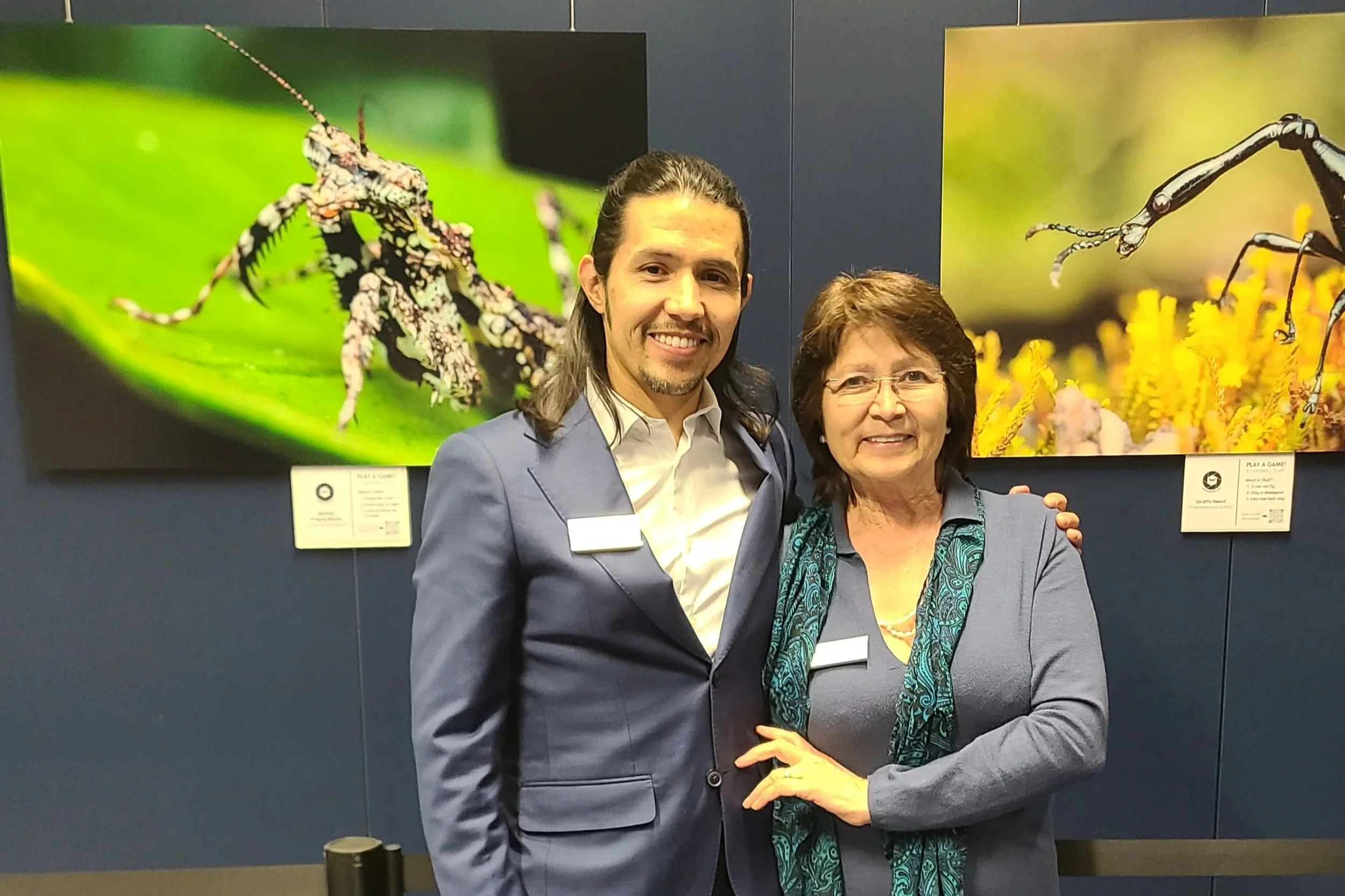
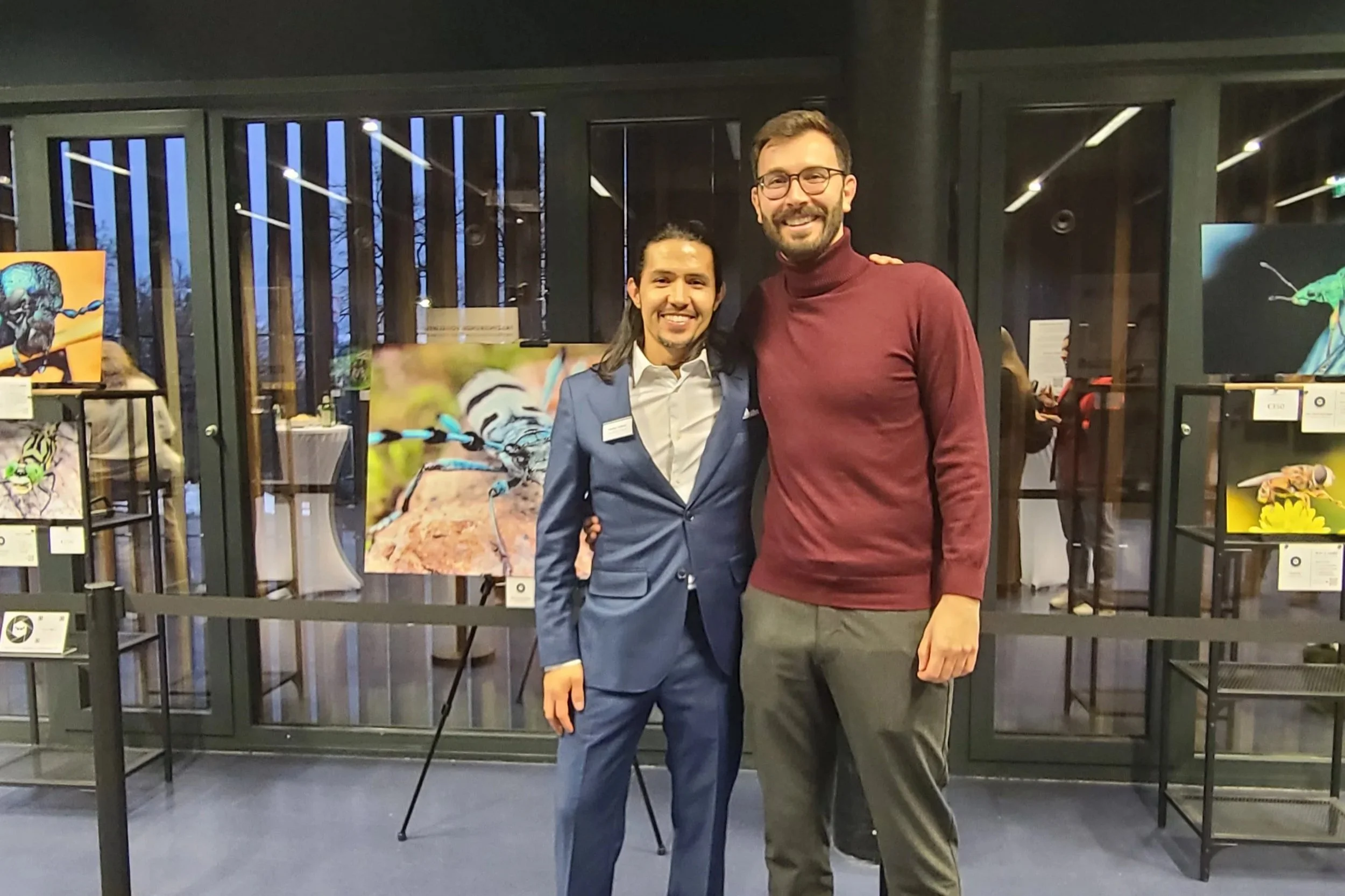
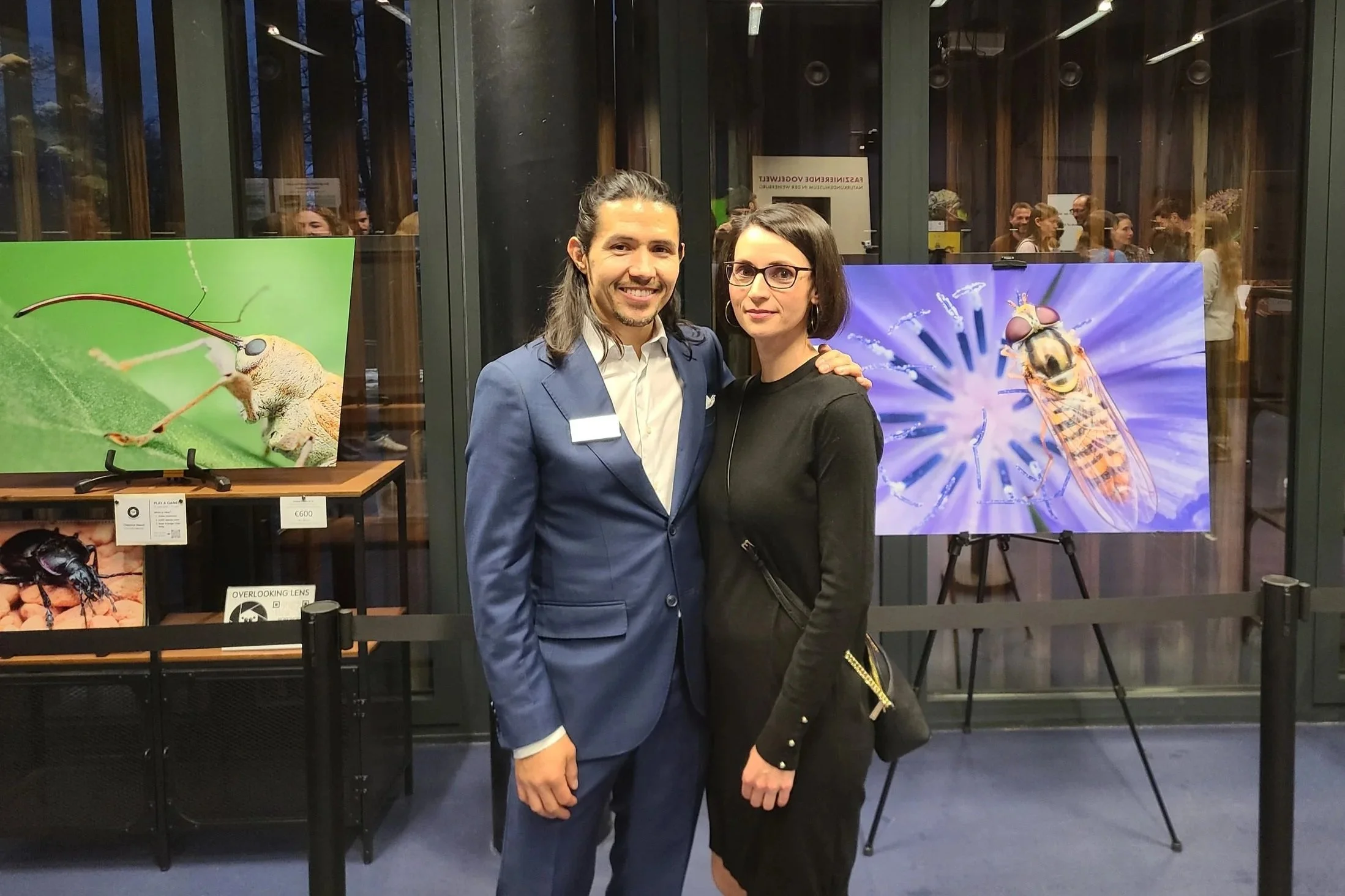
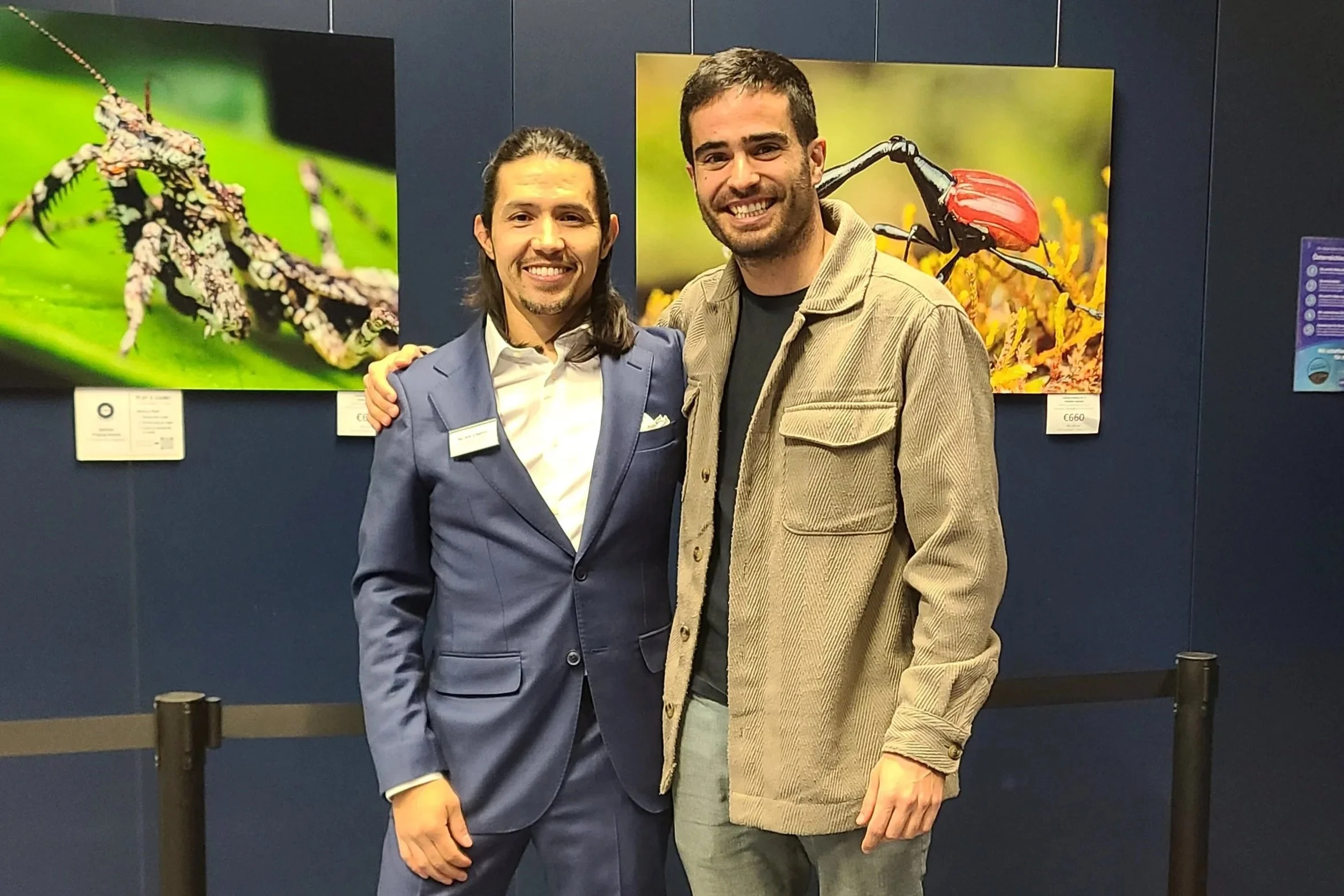
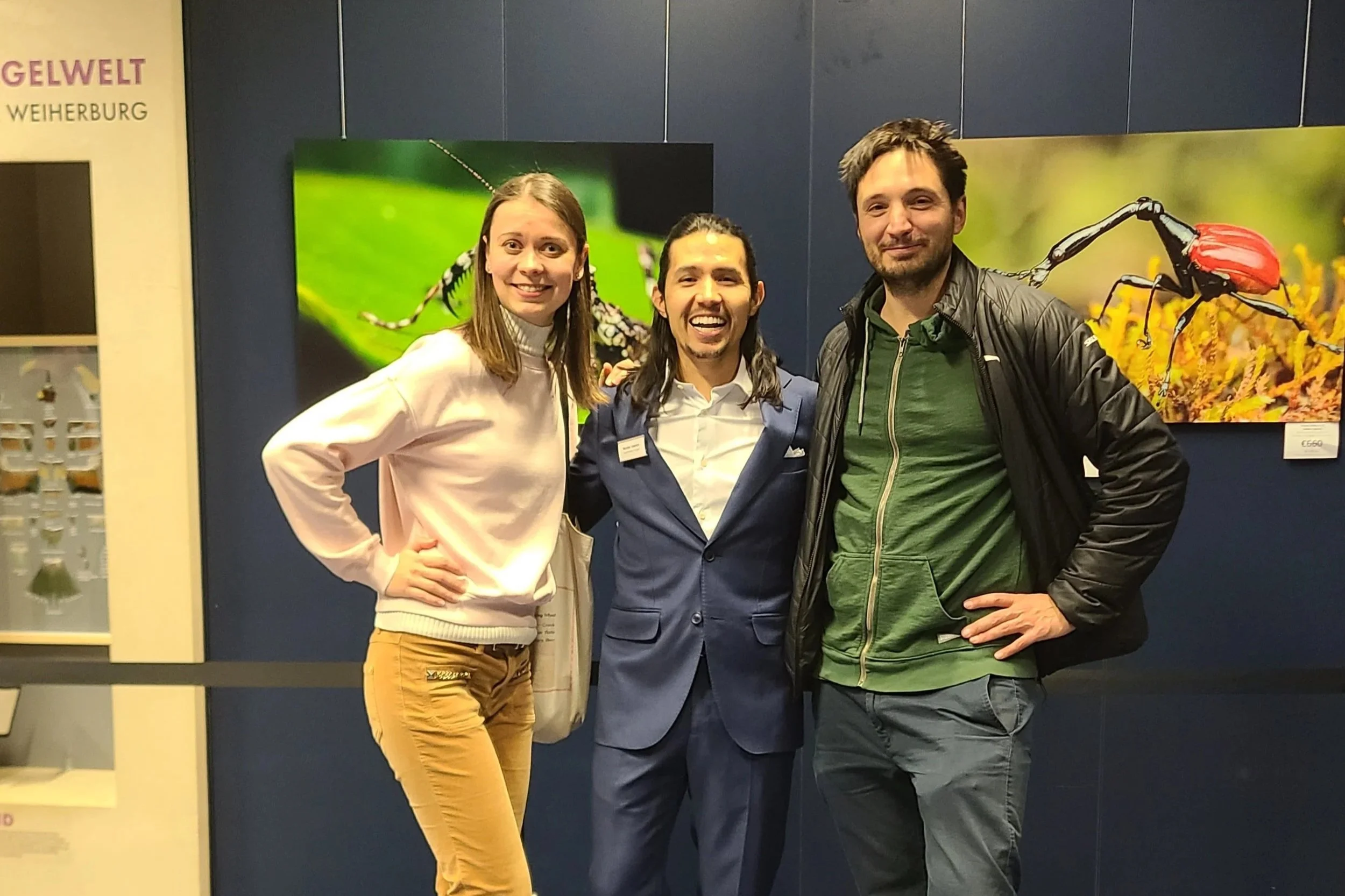
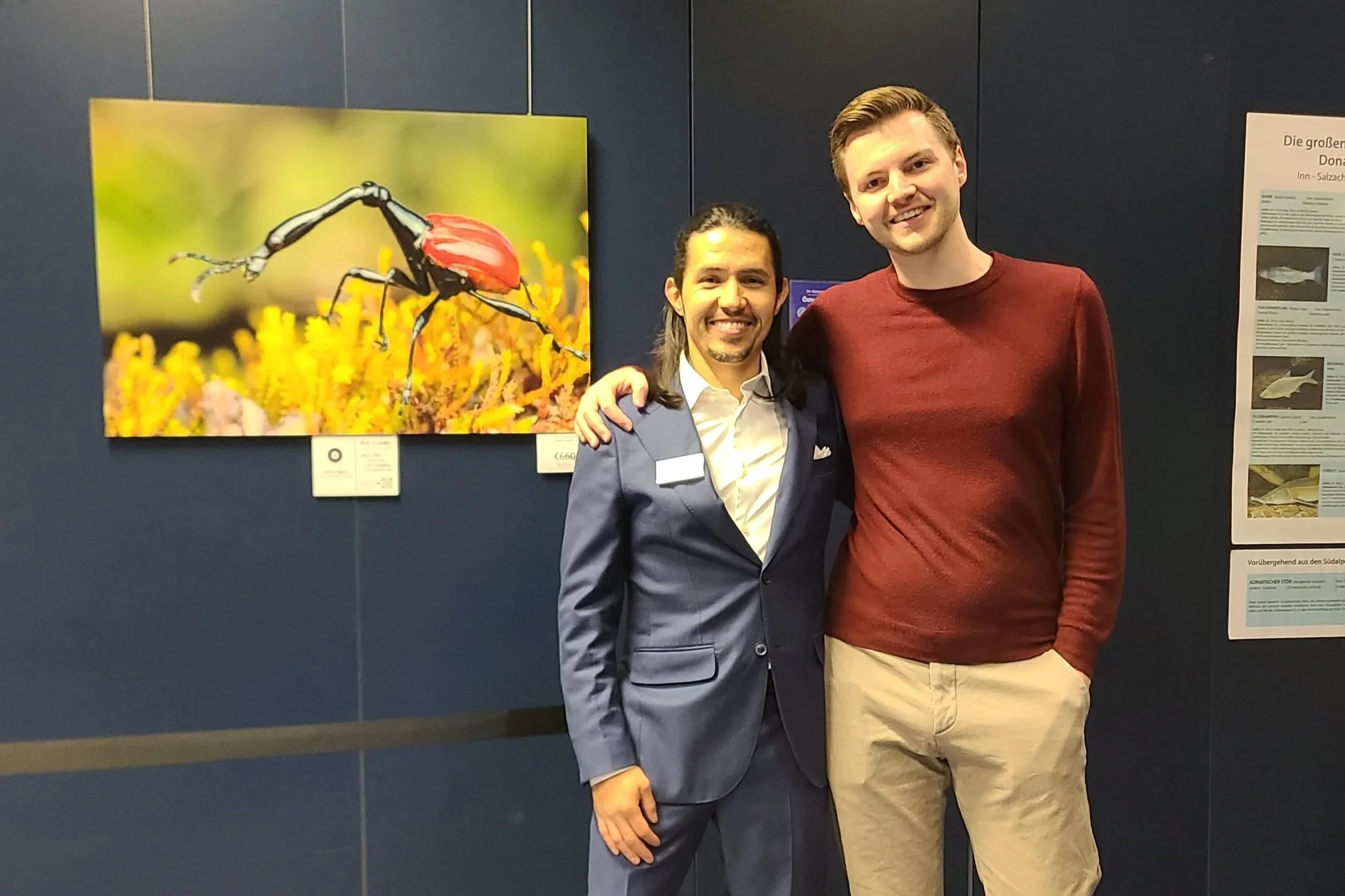
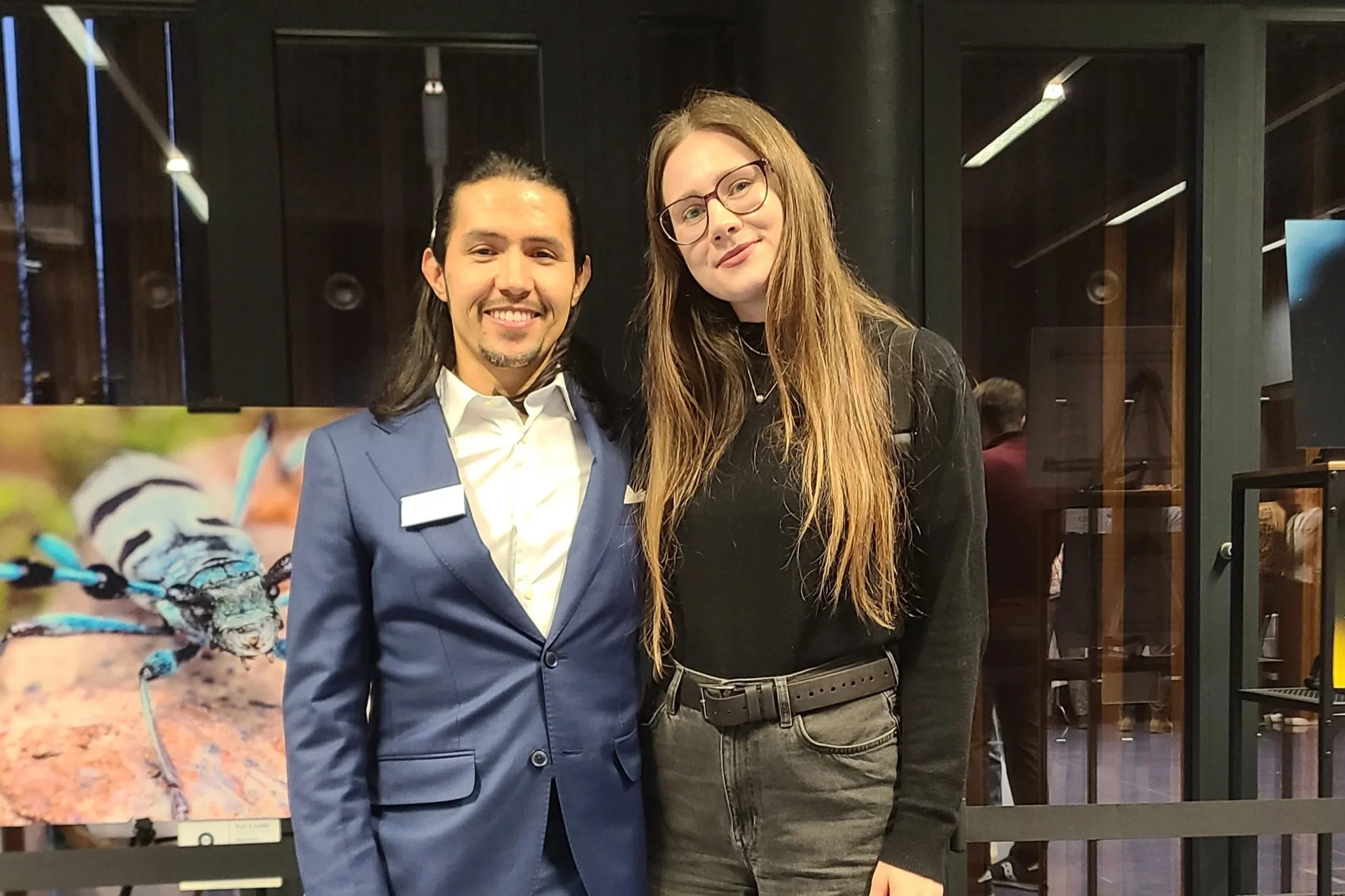
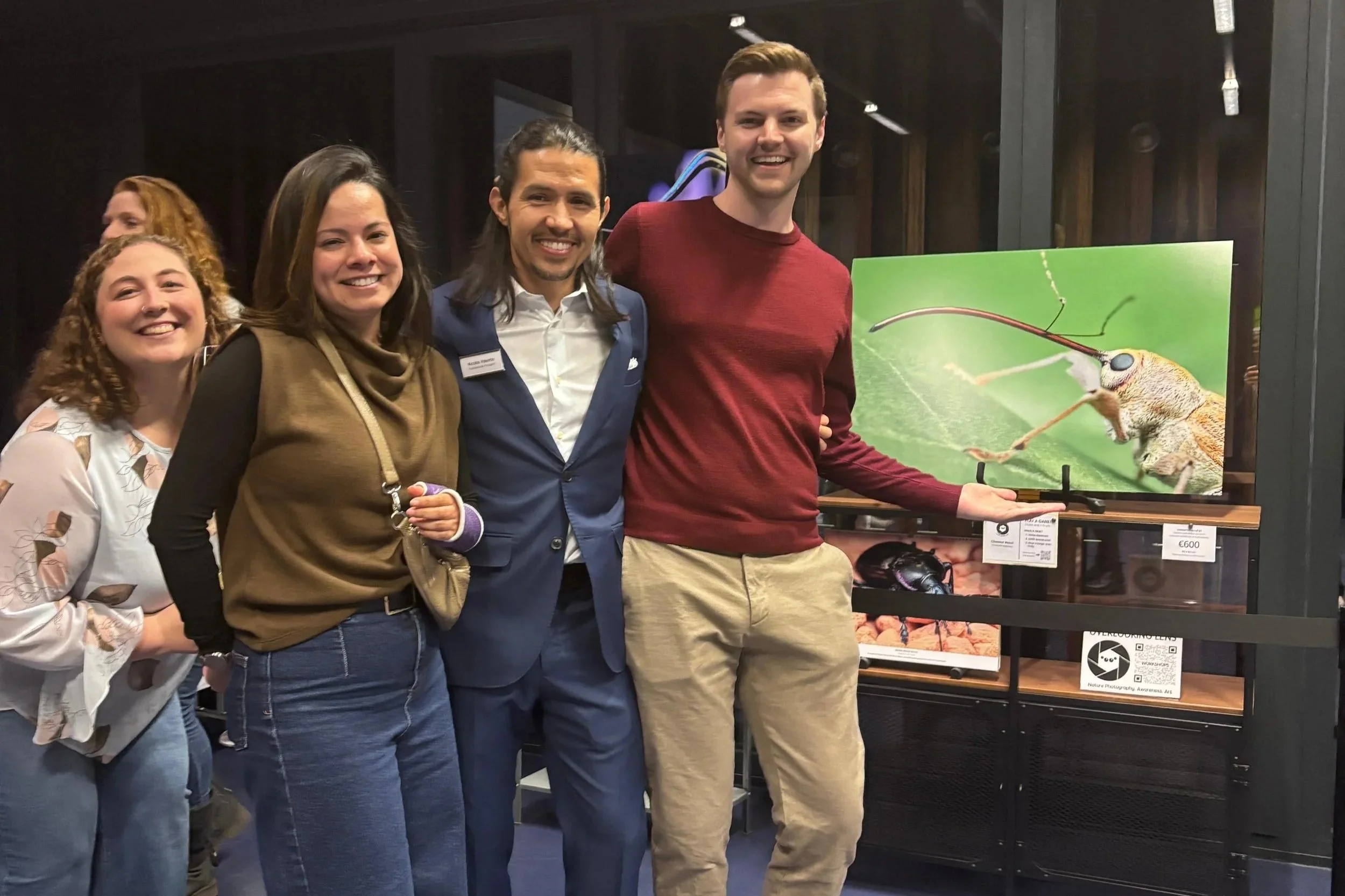
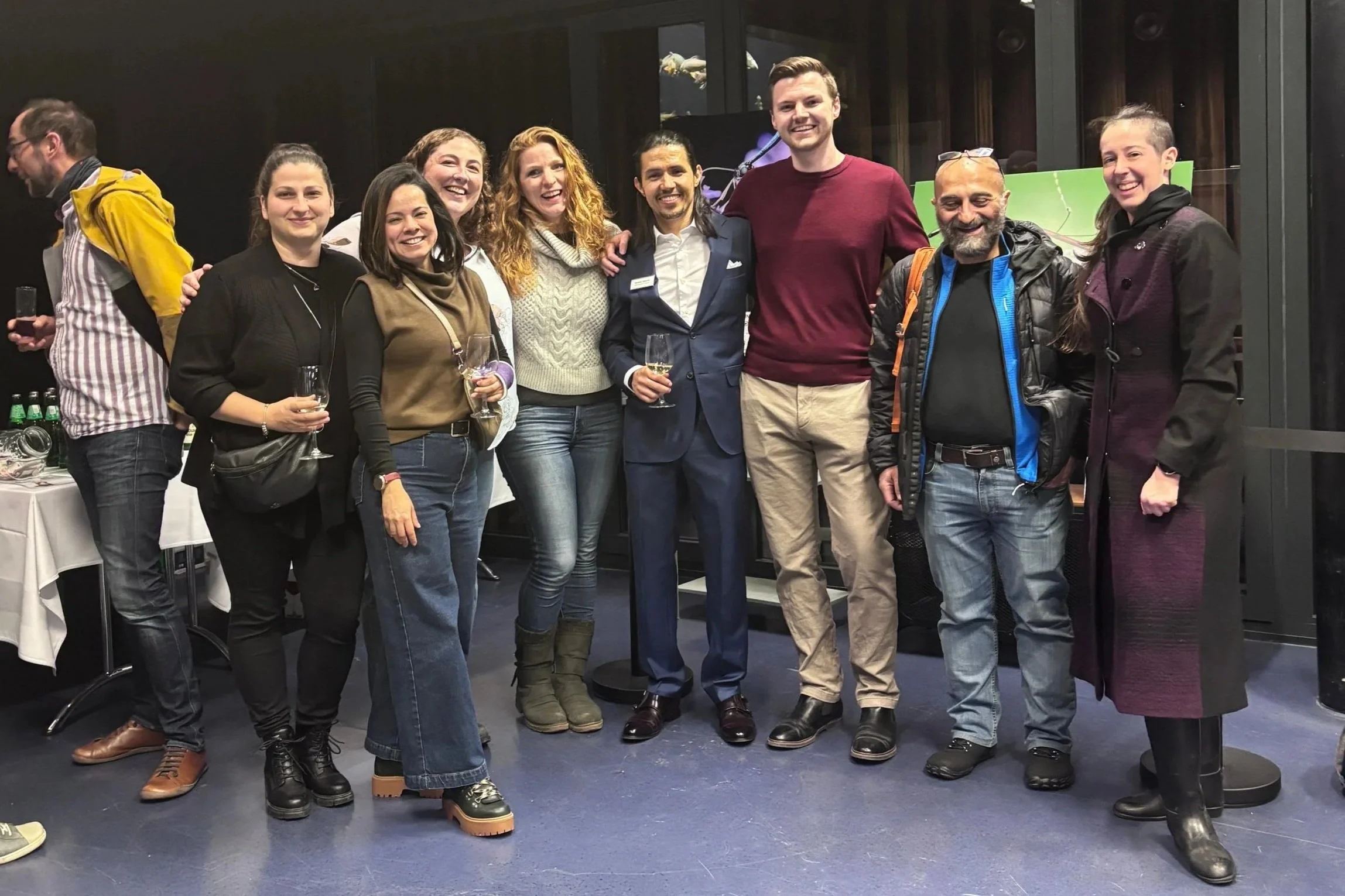
The opening was the first time the room felt “alive” in the way I imagined: people moving slowly, looking closely, asking questions, and connecting the images to their own experiences.
The evening included a brief film moment with the short film The Leap Beneath (a look into the microscopic and hidden world of soil fauna), as well as a short Overlooking Lens insect discovery film — accompanied by music from Polyphonix on Austrian jaw harps.
Live music shaped the atmosphere throughout the evening, with Pablo Galeazzi (piano) and Dominika Gróz (flute).
I also gave a short speech to welcome guests and share the core idea behind the exhibition: that photography can be a practice of attention — and that attention can be a bridge into respect.
Magnus Klammer and also shared a few words about our collaboration and why this kind of work matters.
I’m grateful to the Innsbruck Nature Film Festival (INFF) community for supporting the opening evening — with special thanks to Elizabeth Stark (INFF) and INFF director Johannes Kostenzer for their support.
👉 Watch the Overlooking Lens Insect Discovery Film here.
Visitor reactions
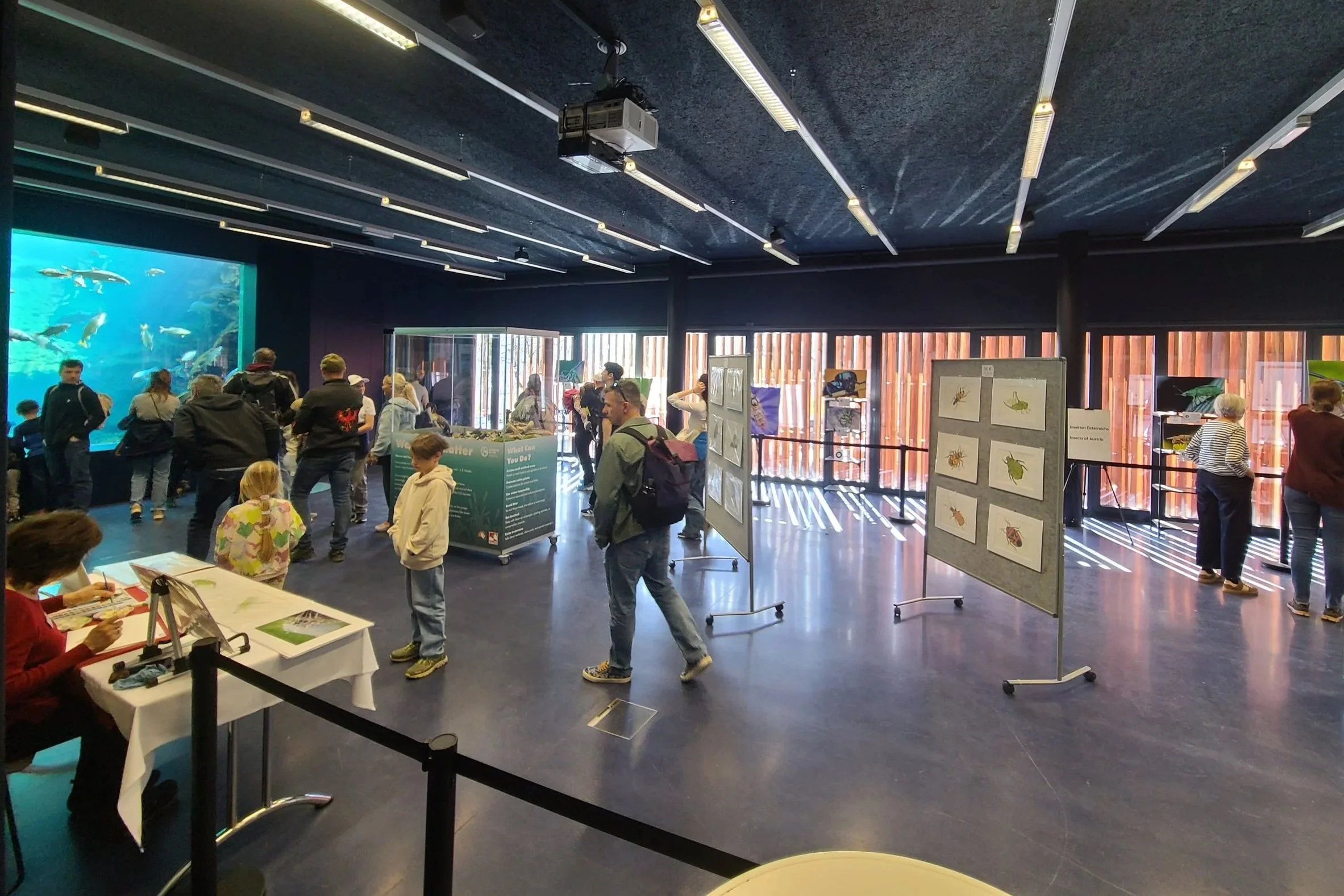
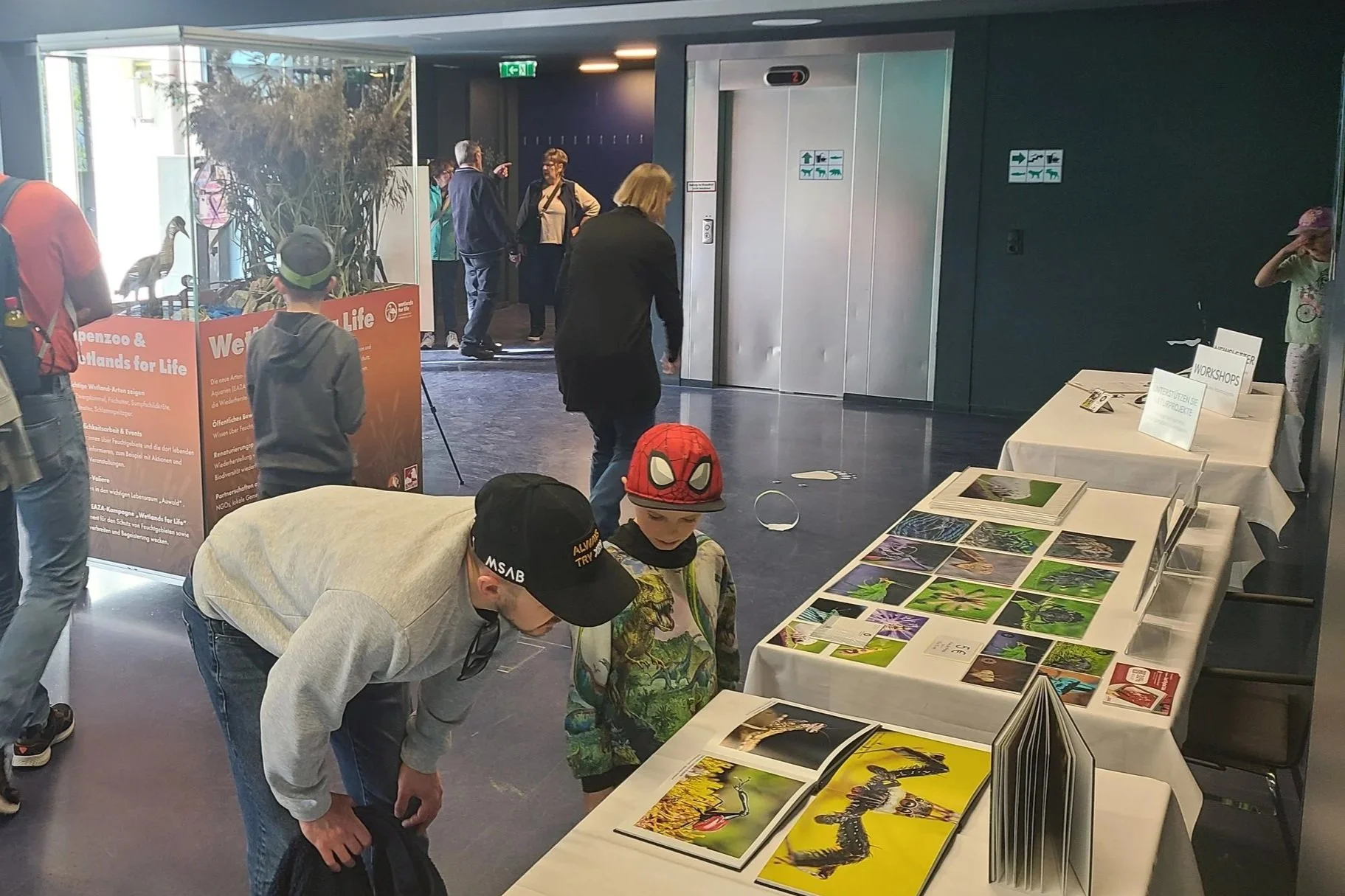
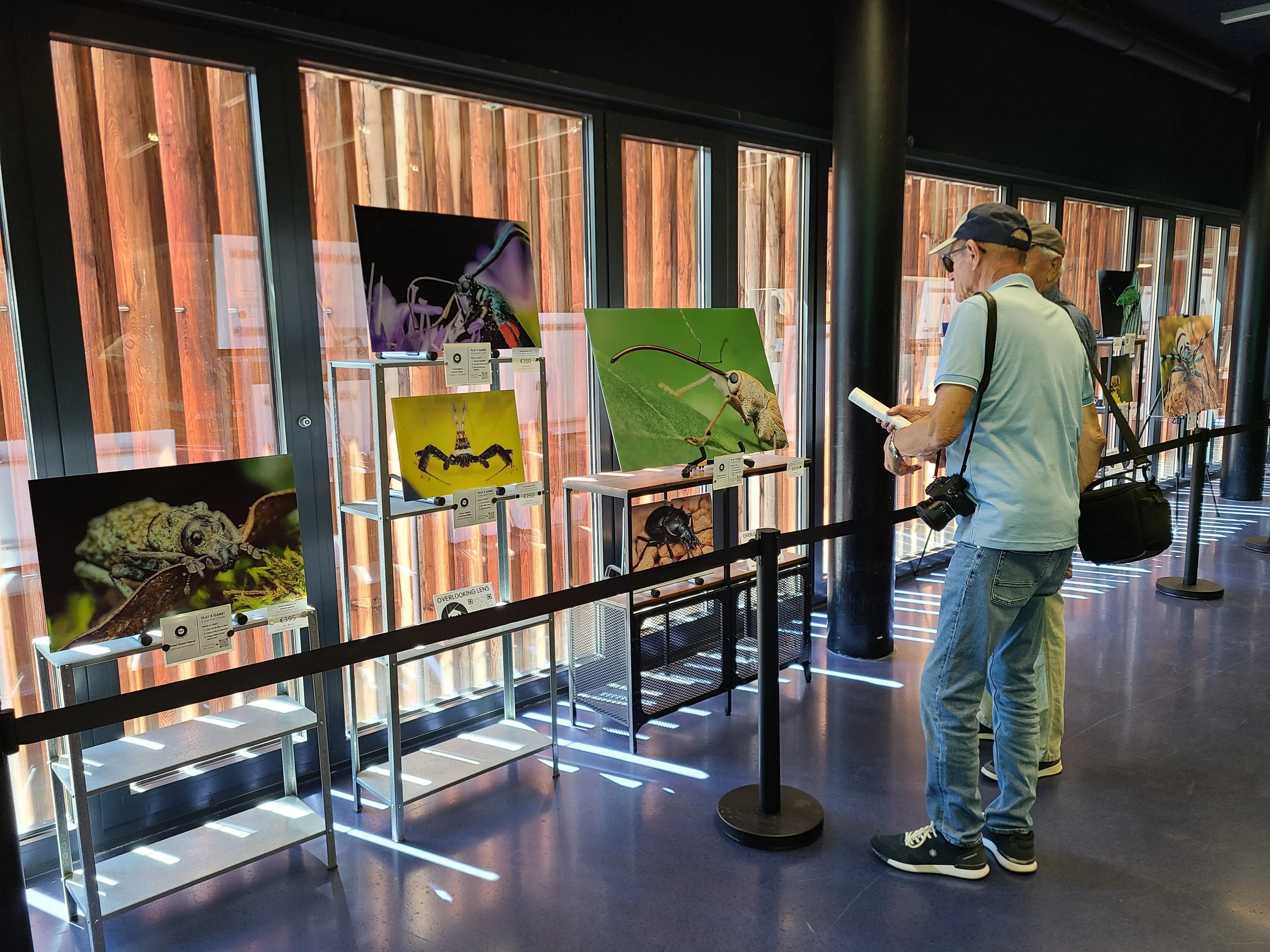
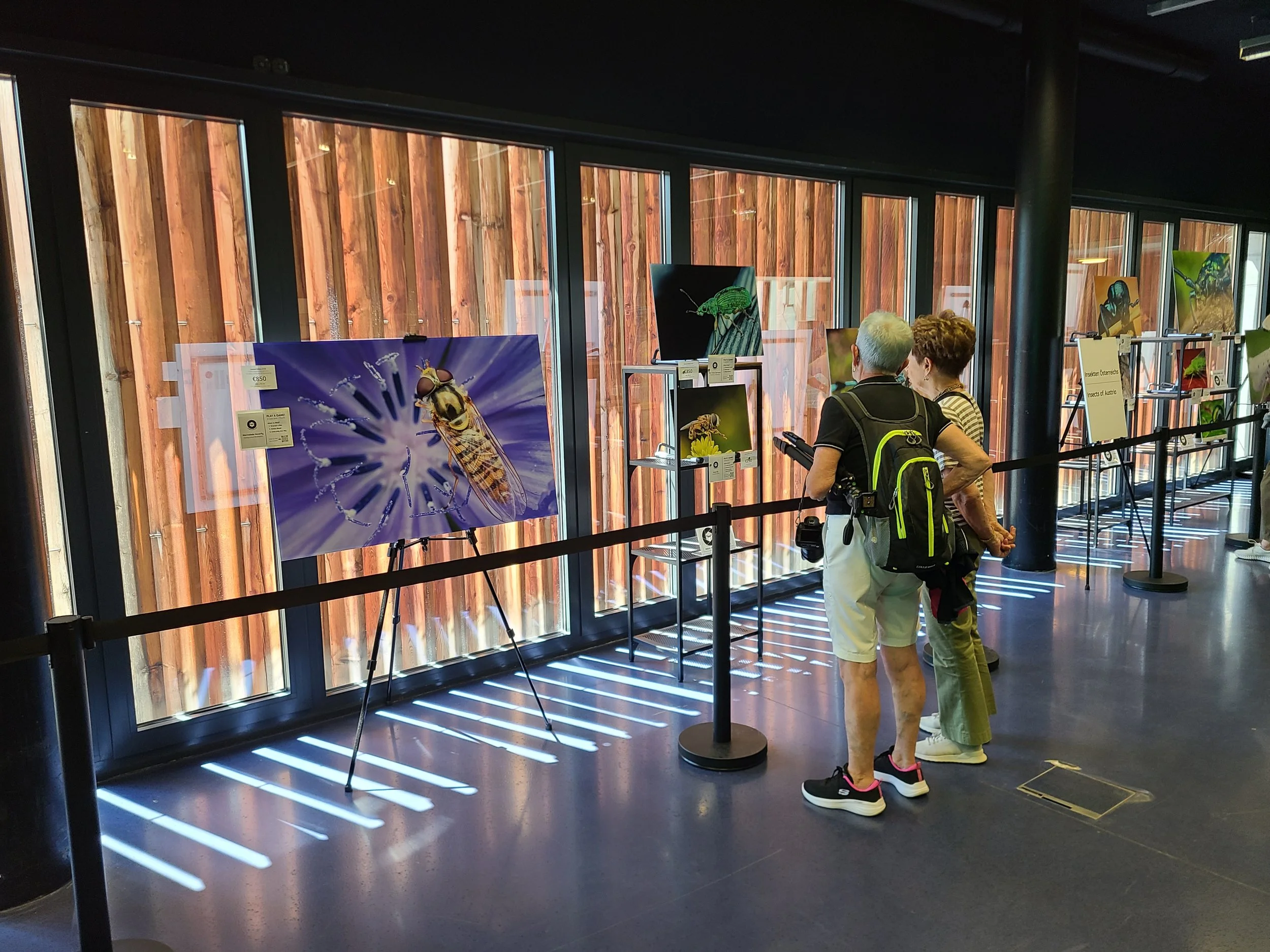
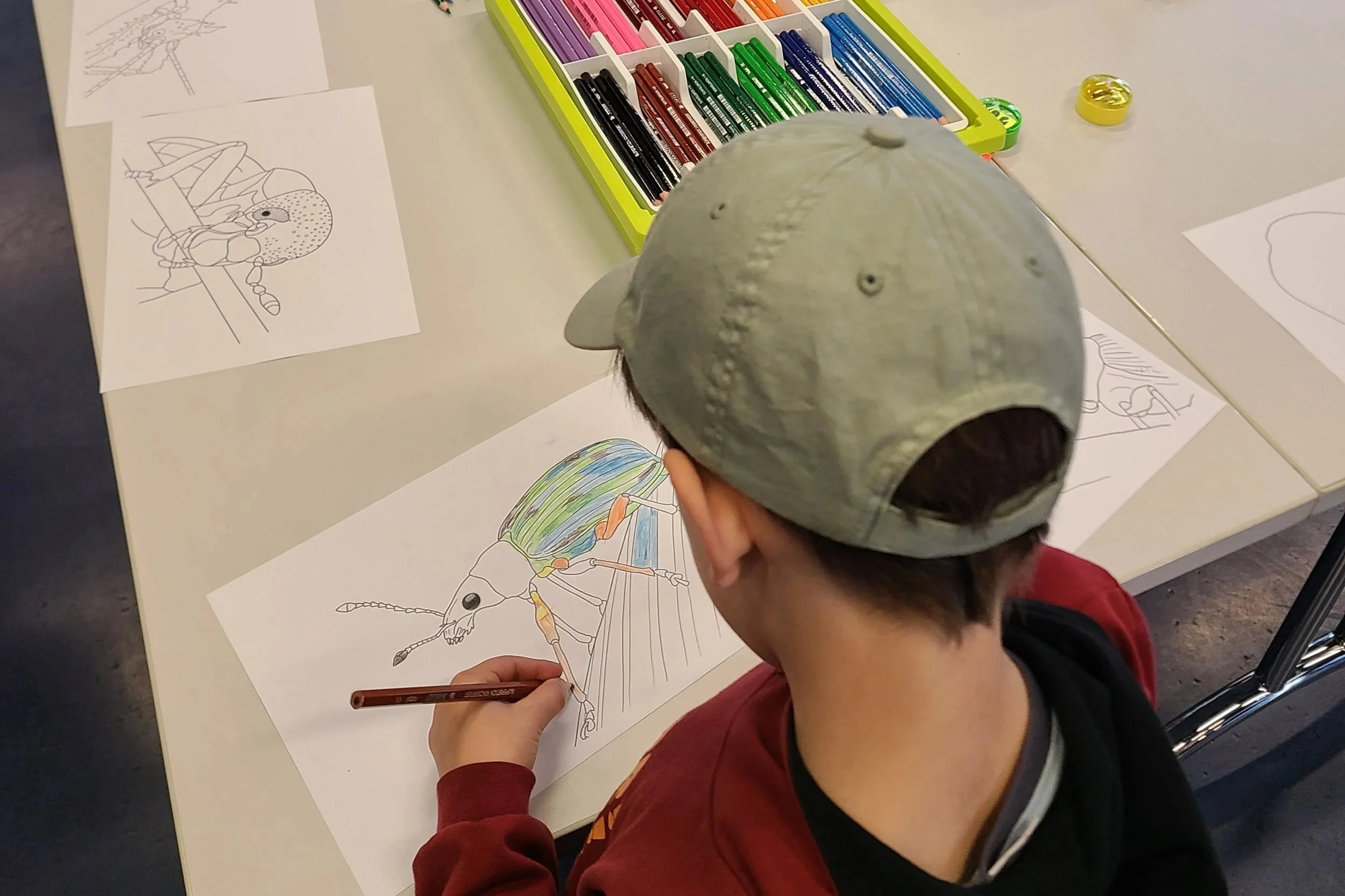
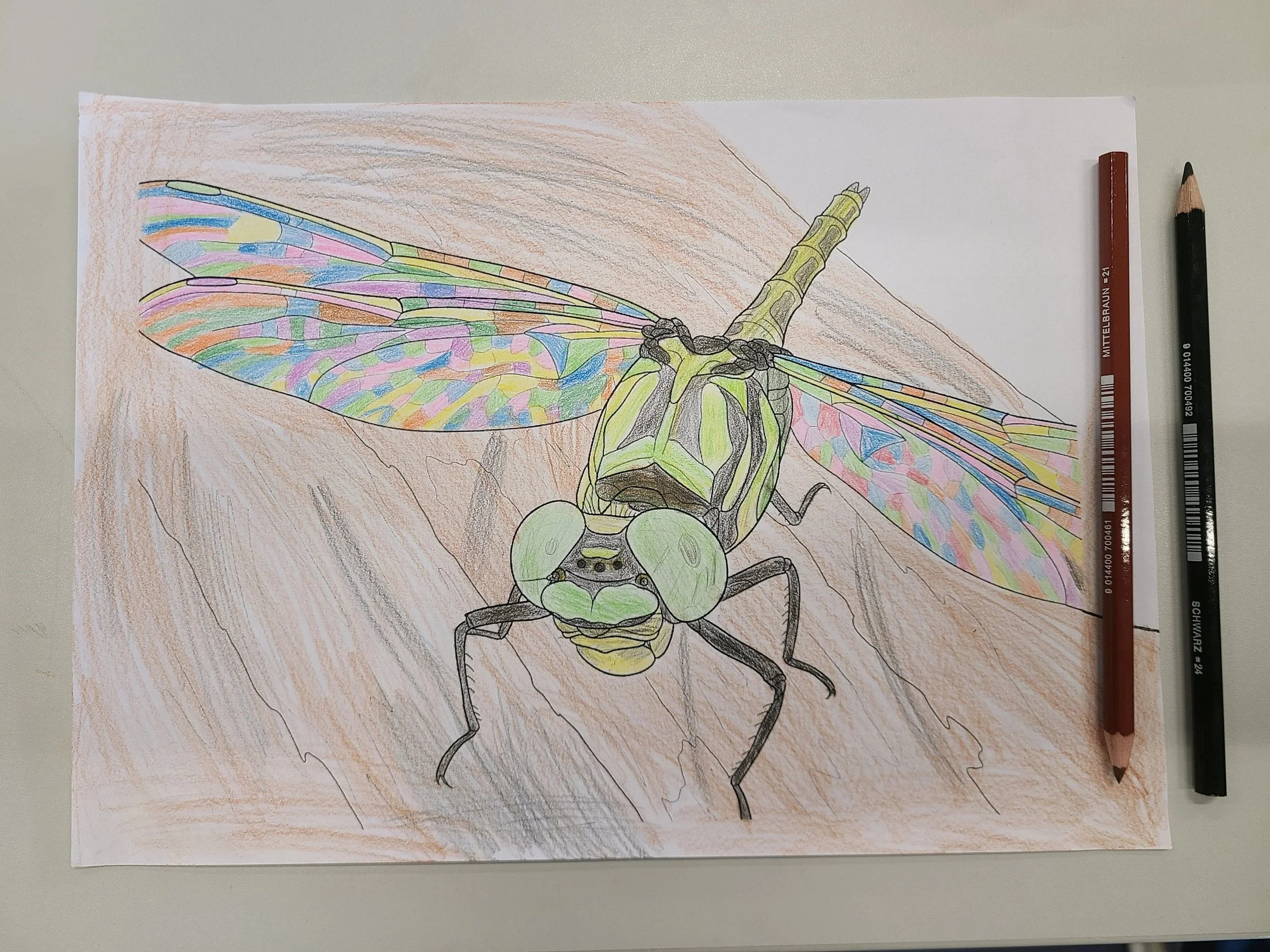
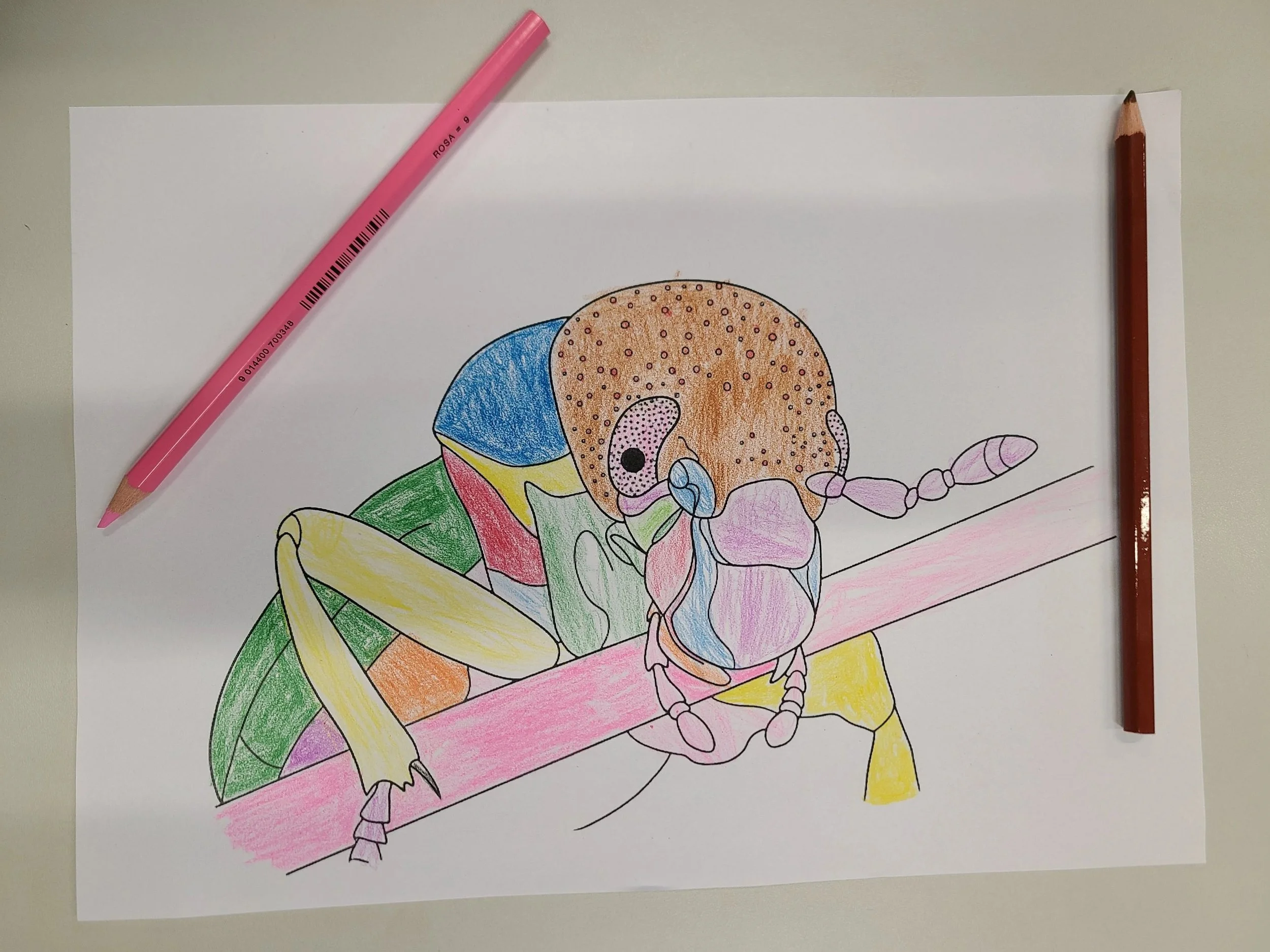
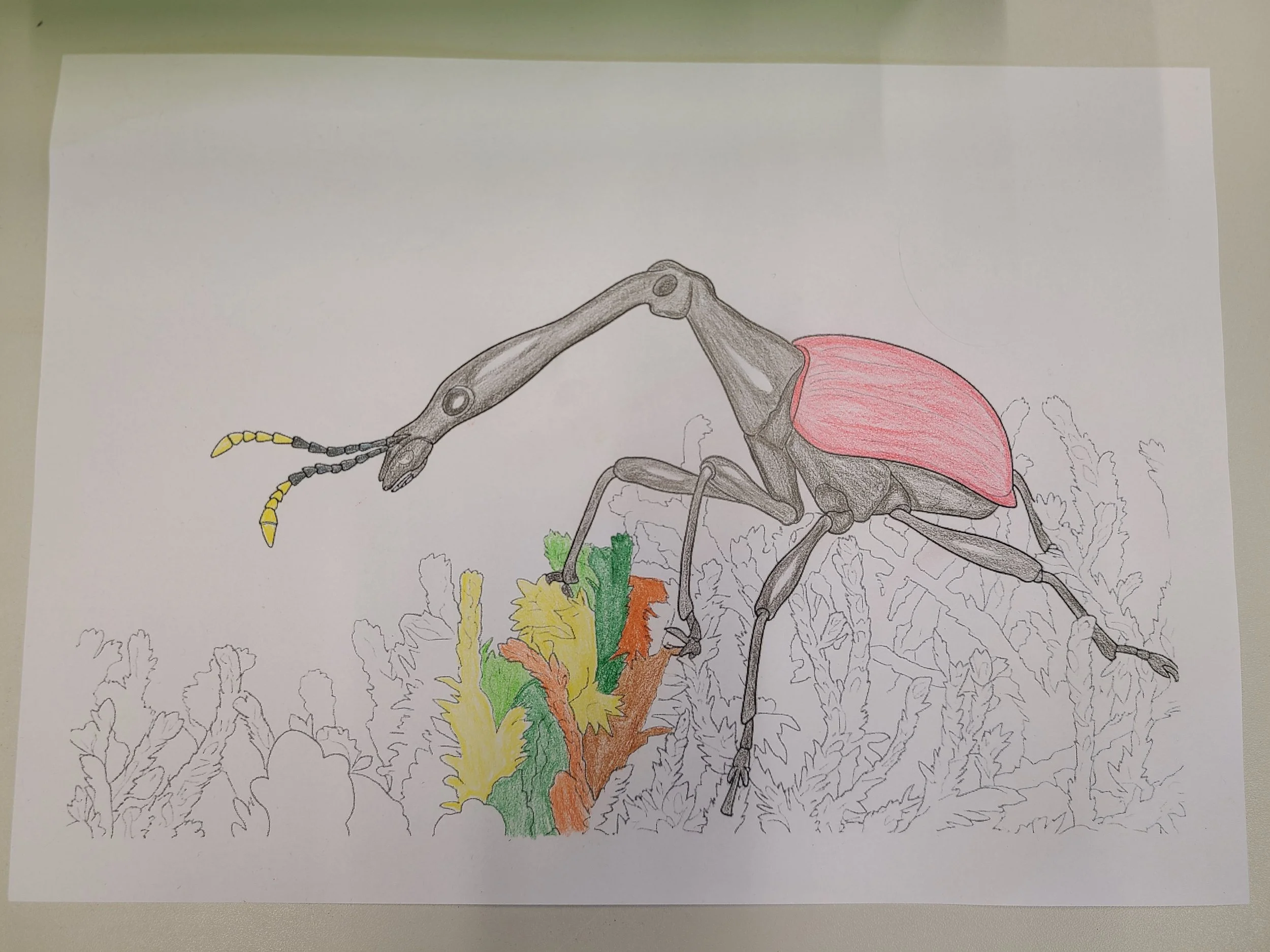
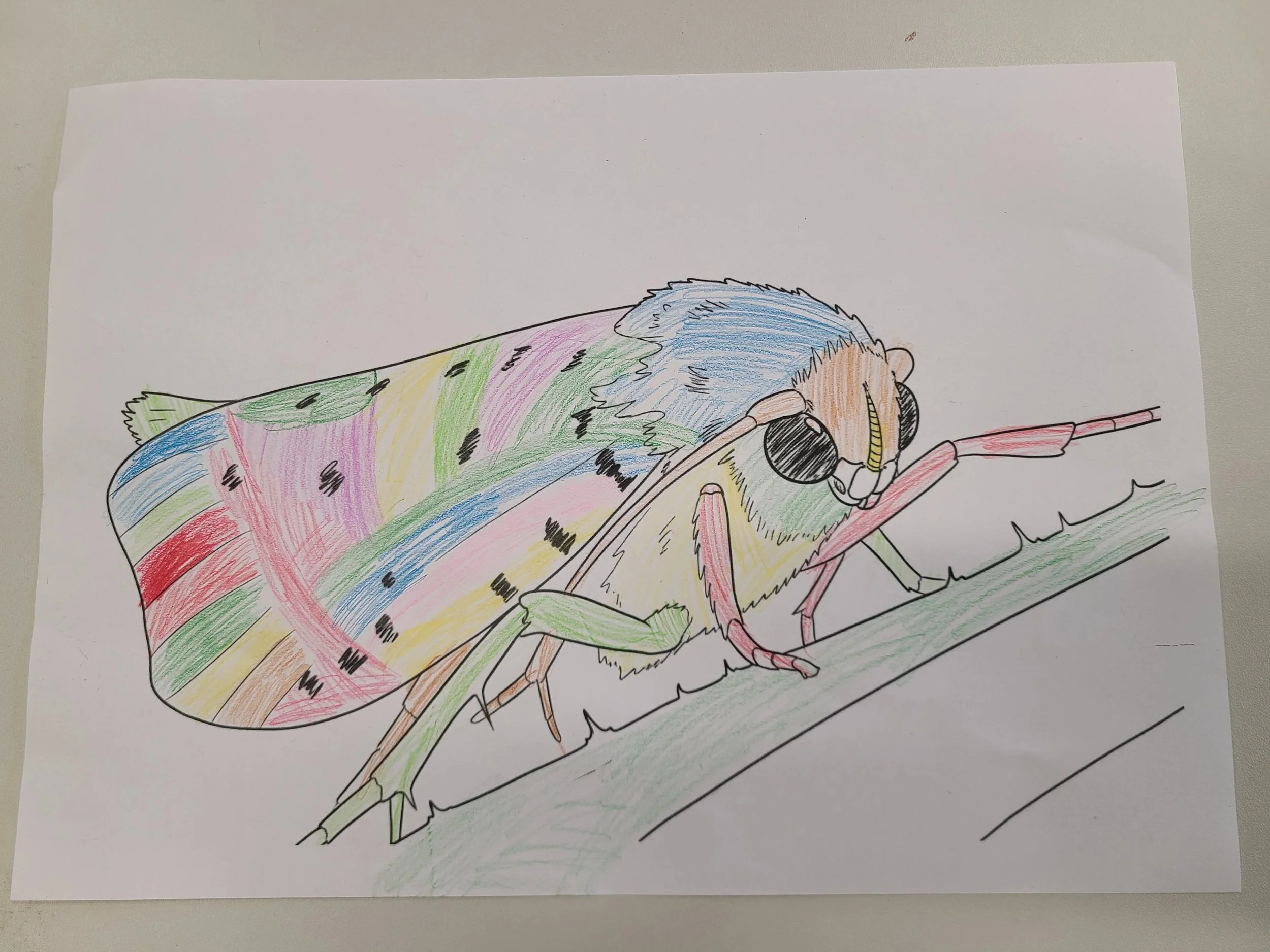
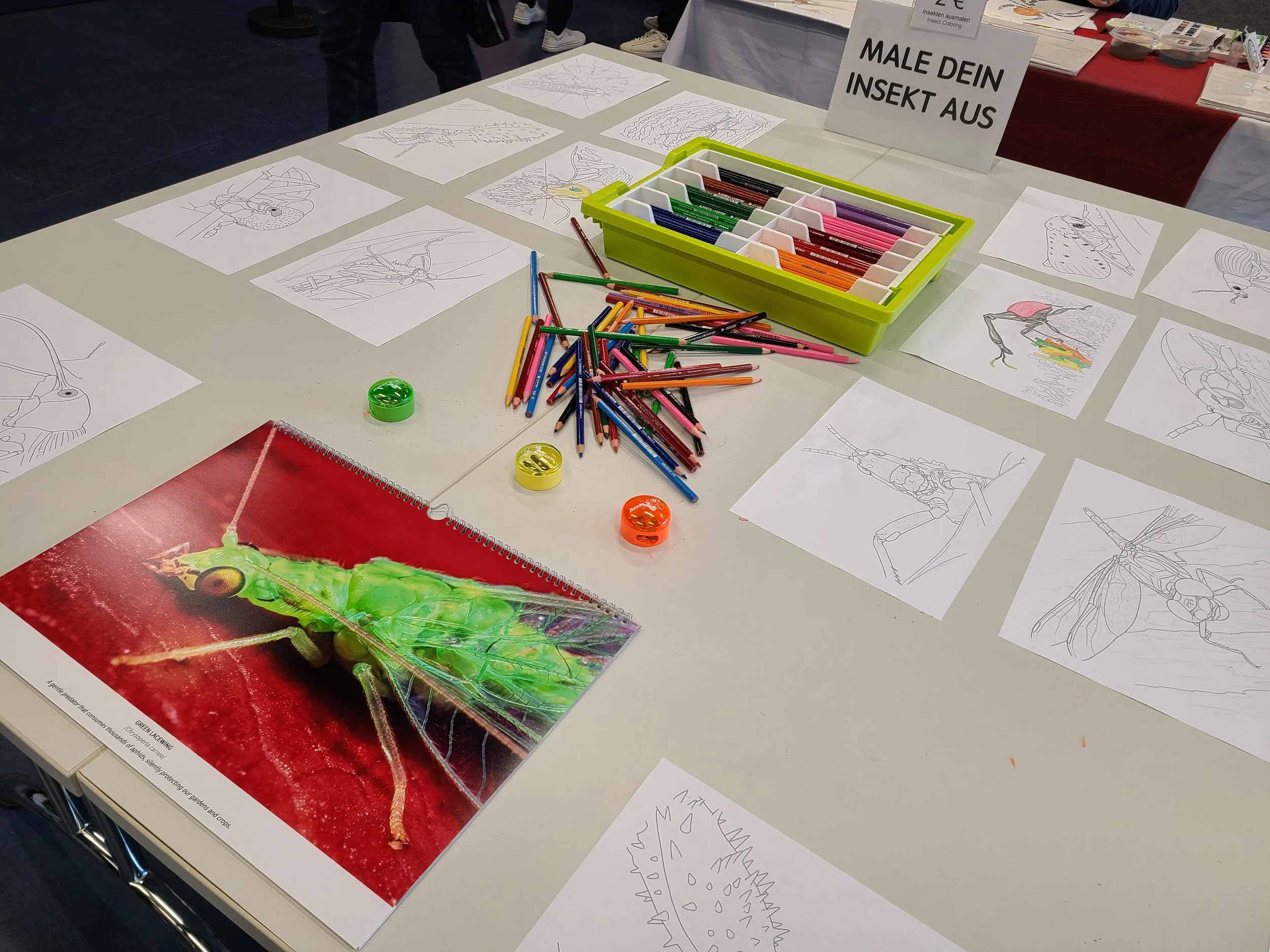
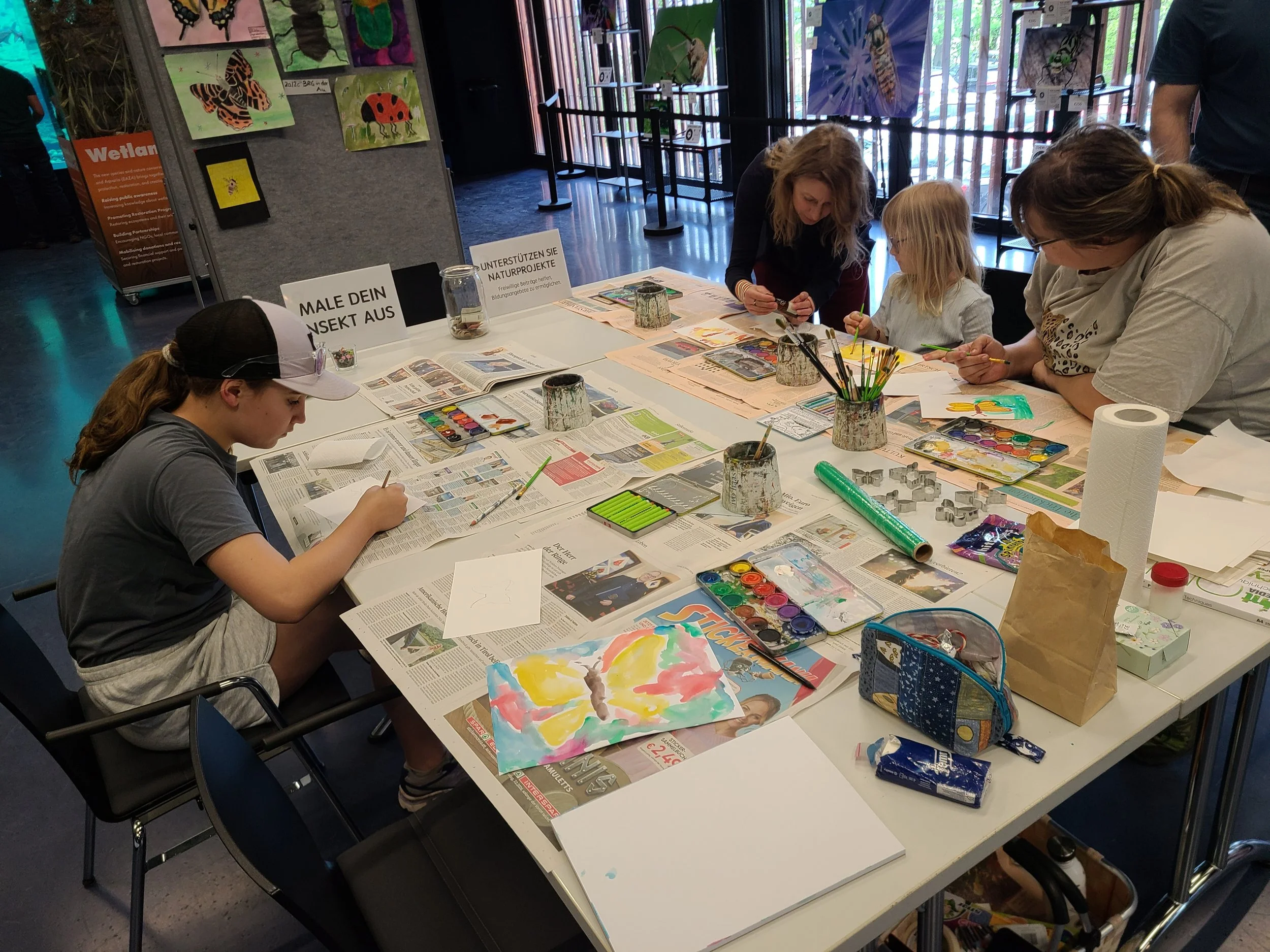
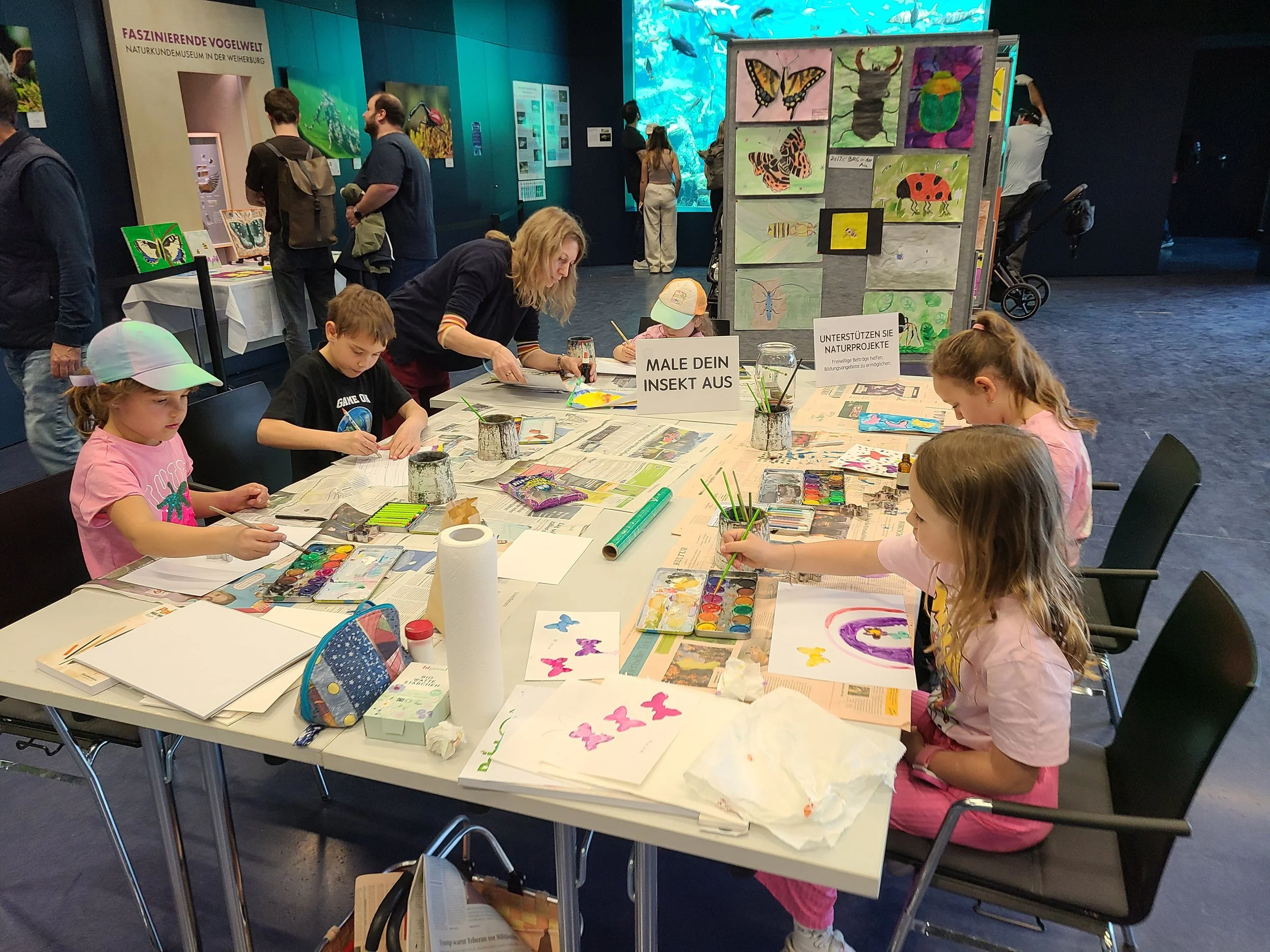
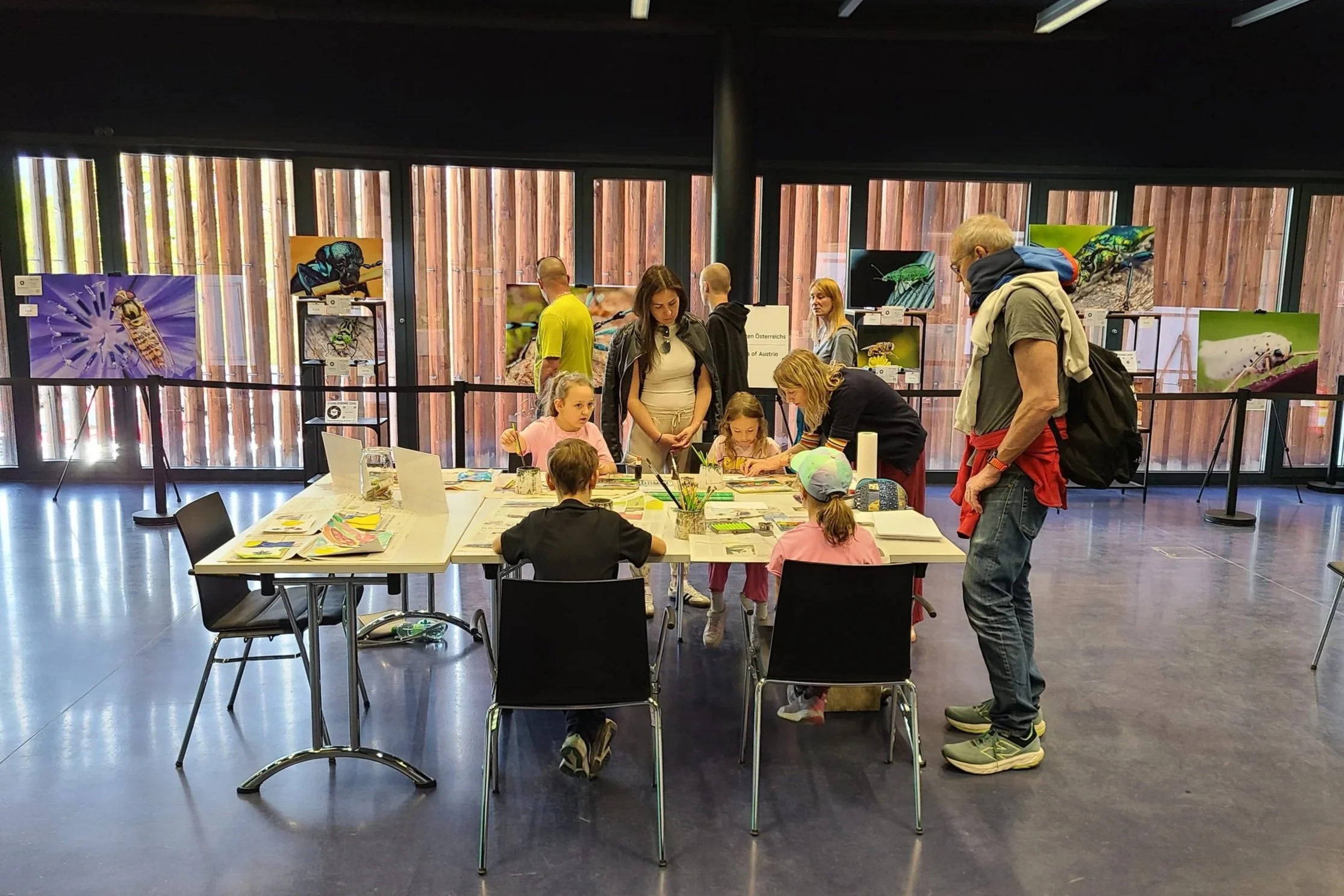
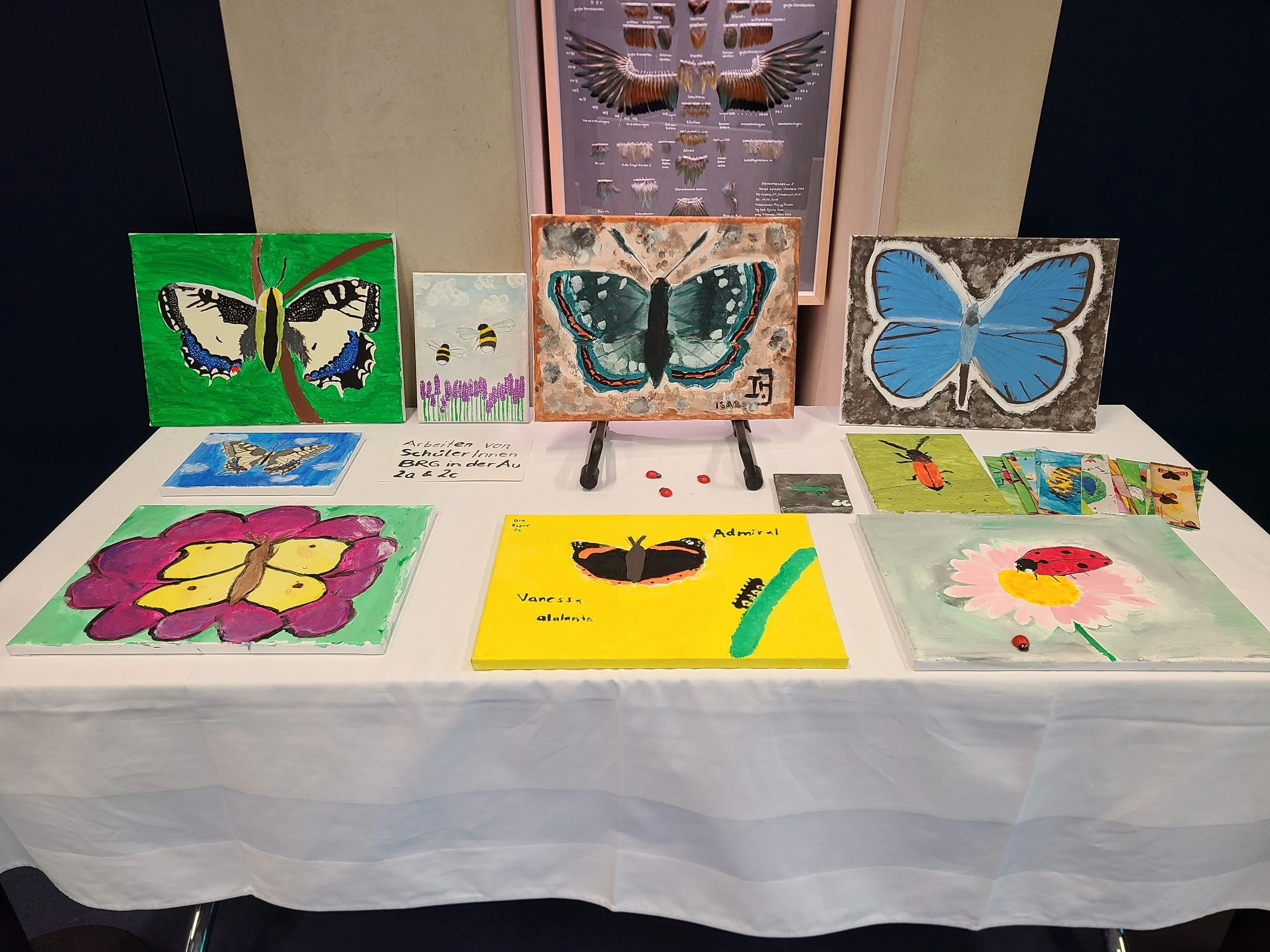
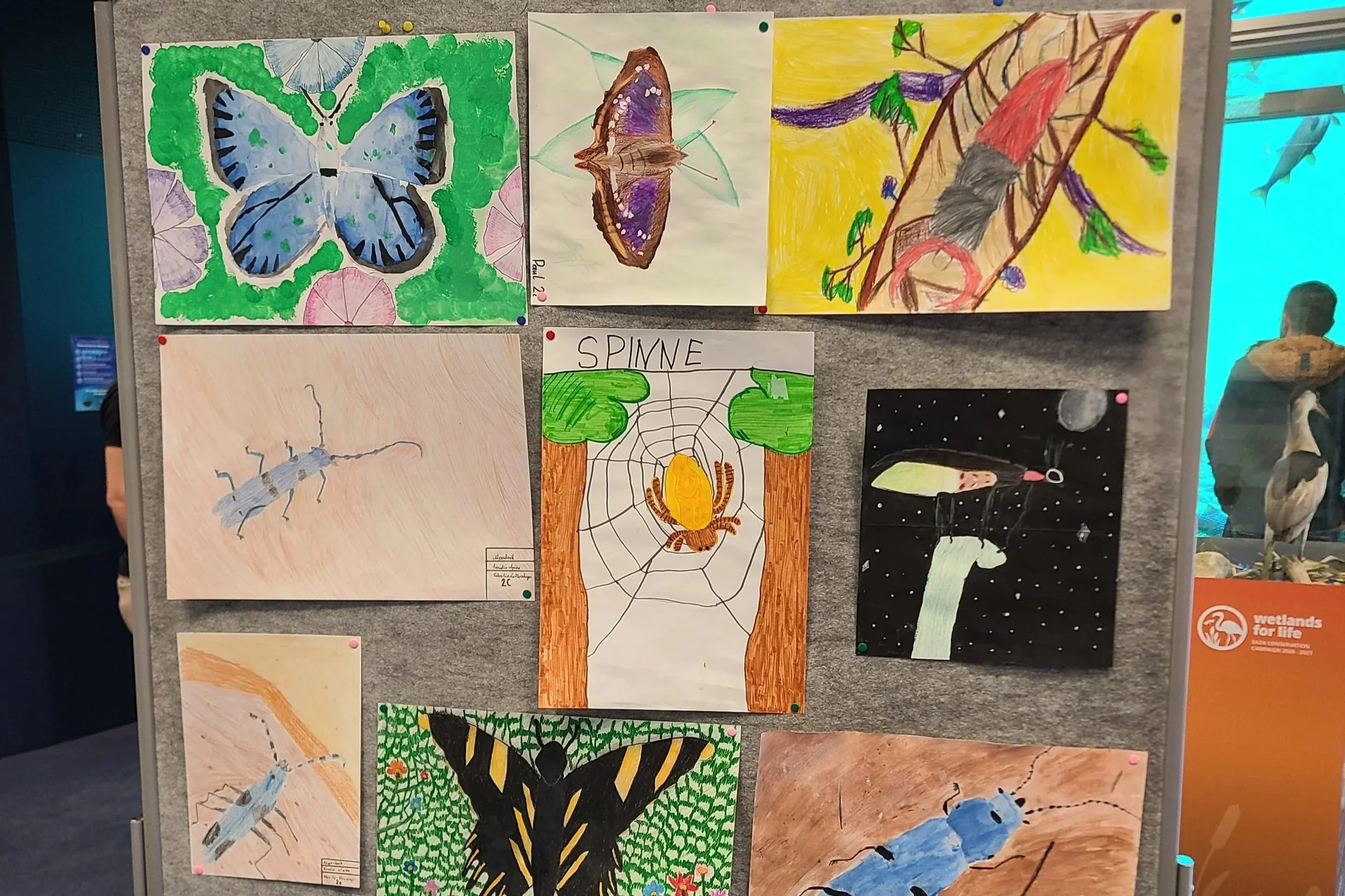
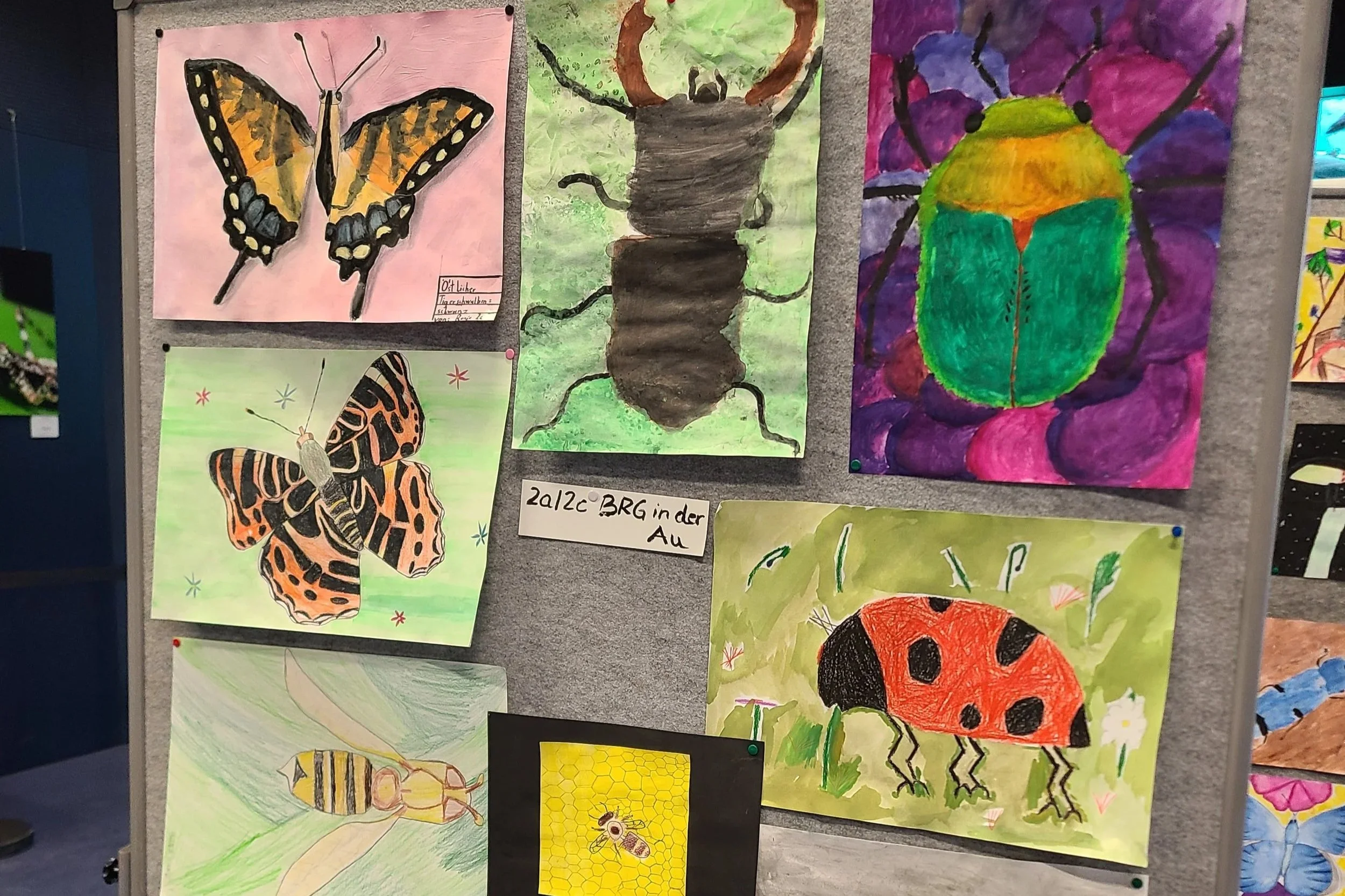
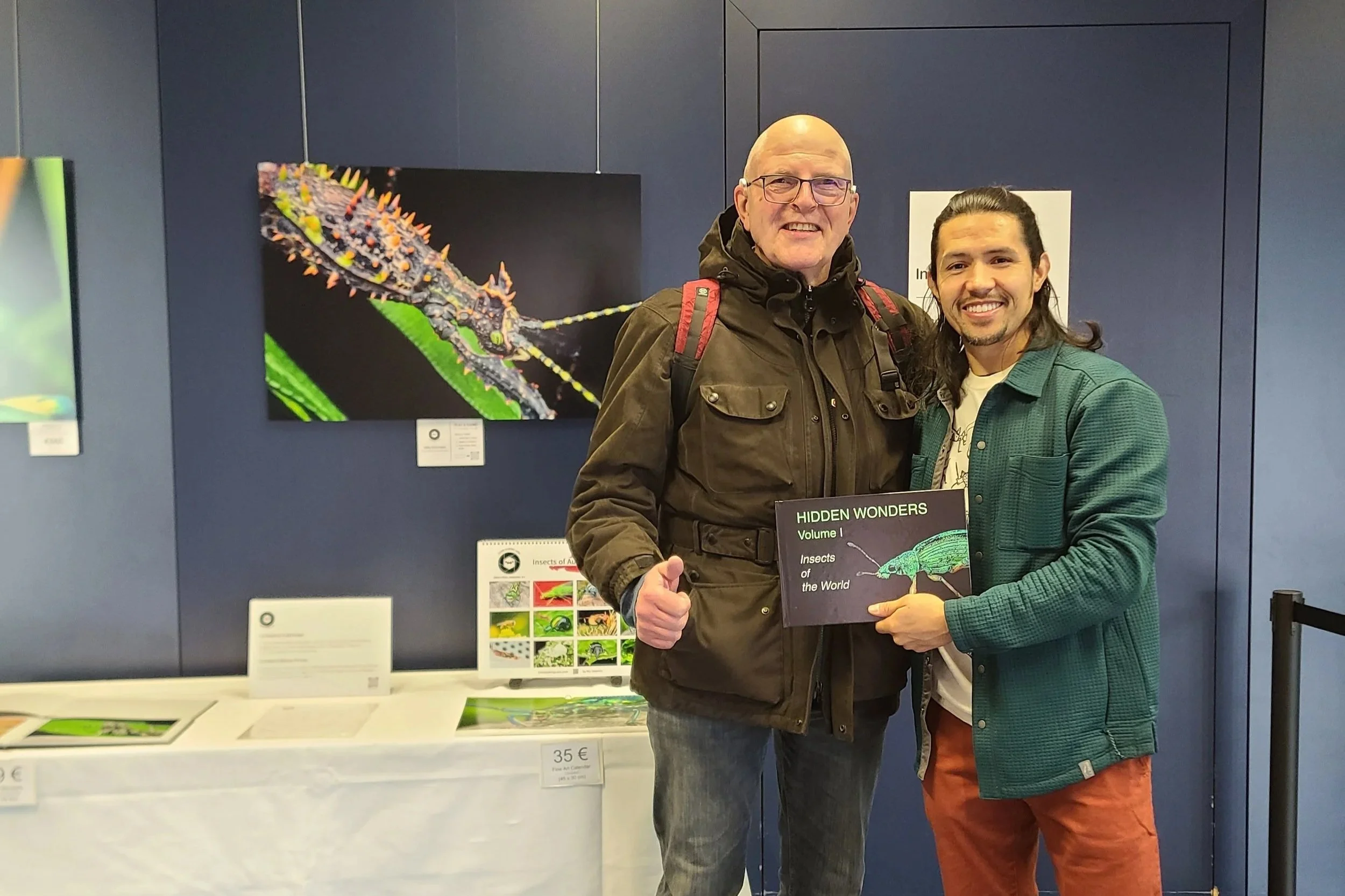
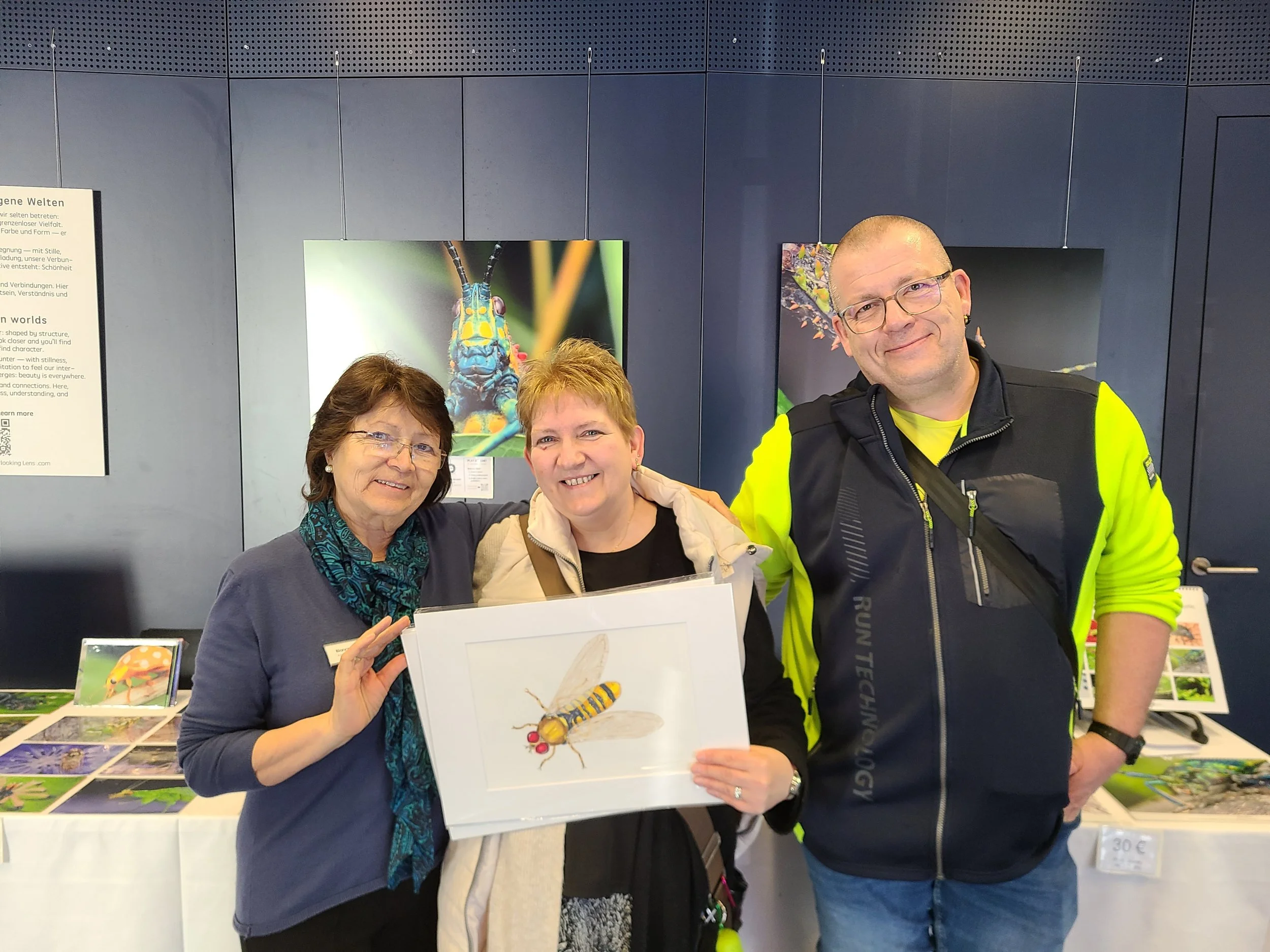
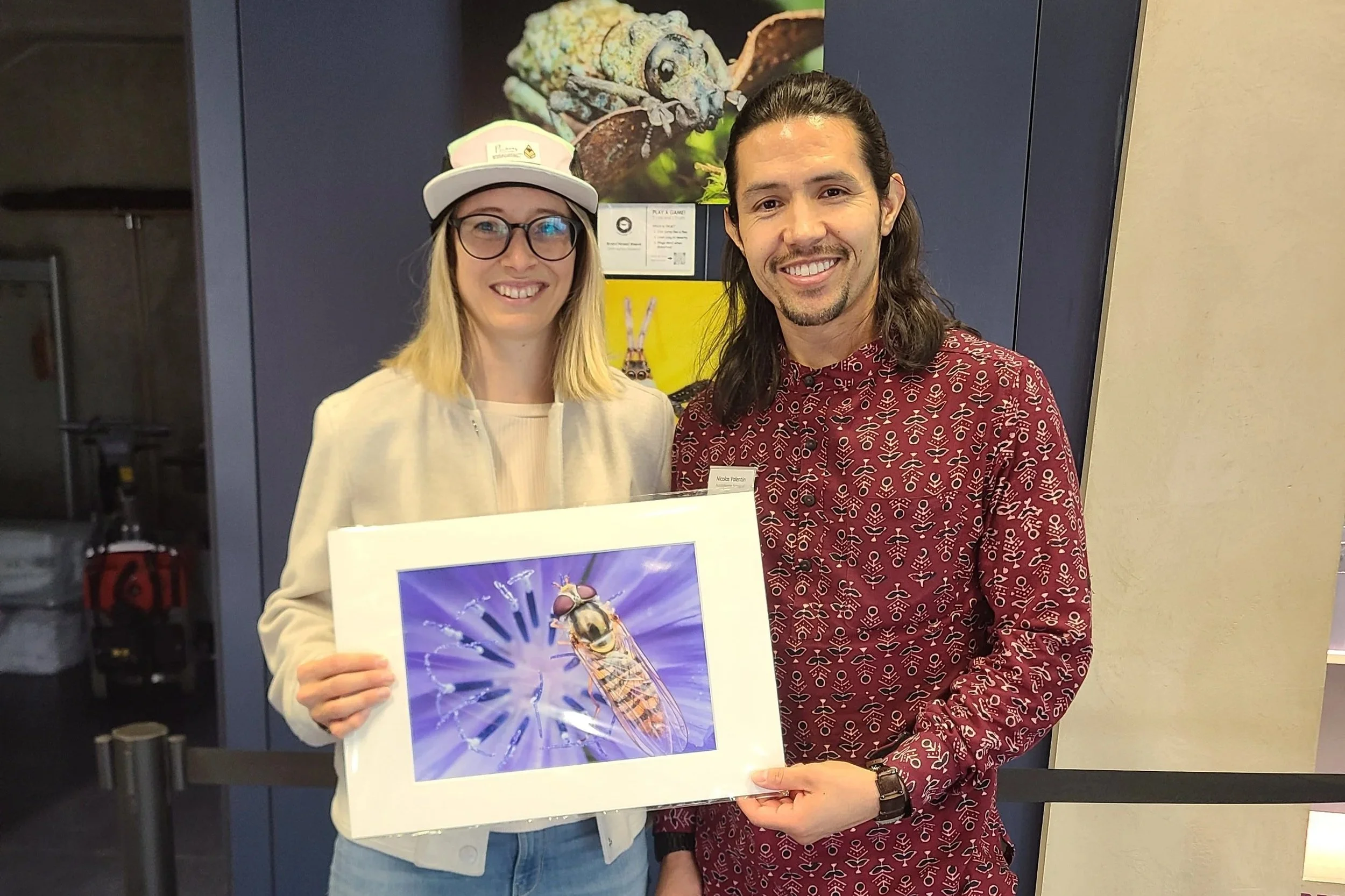
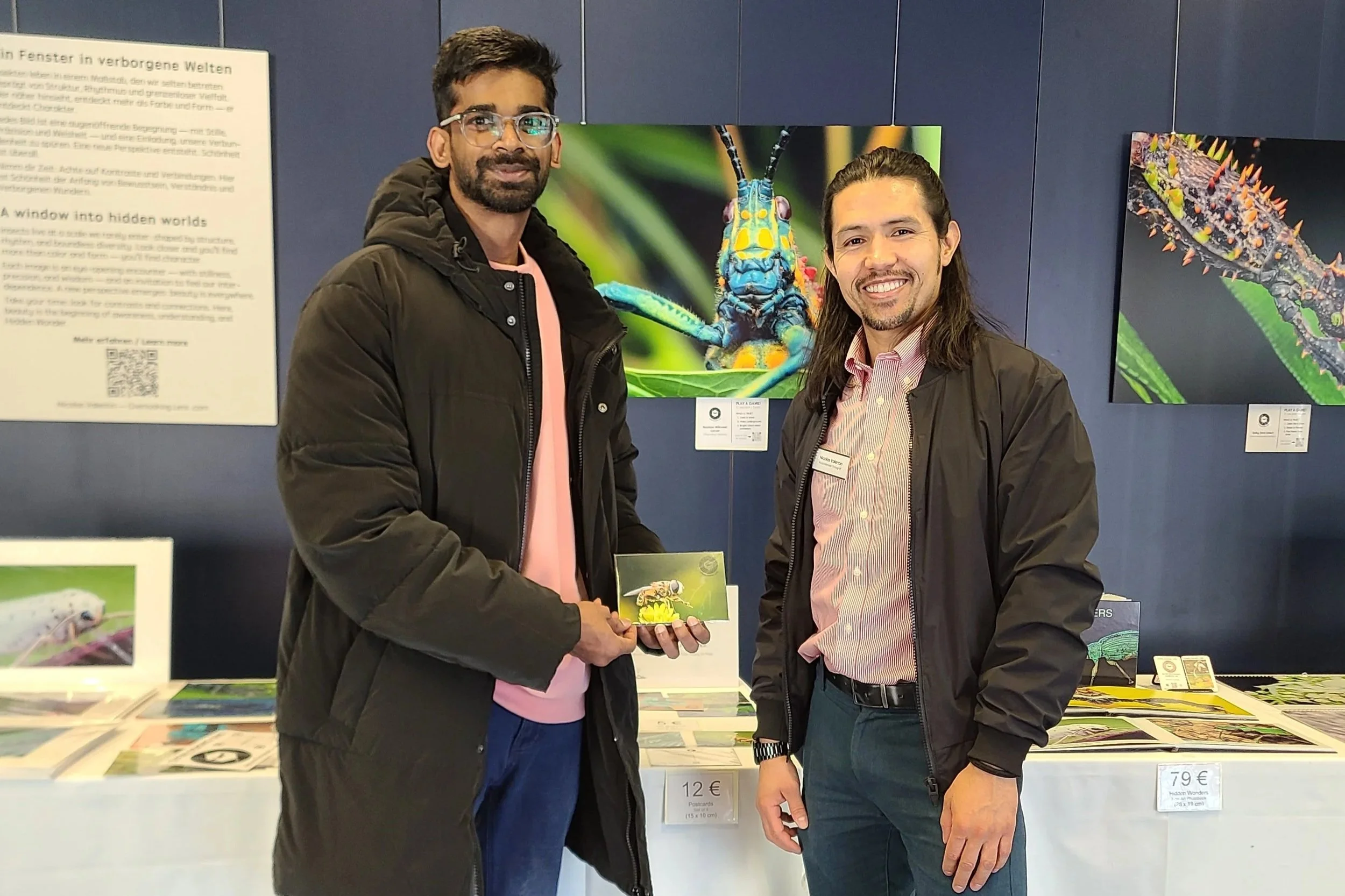
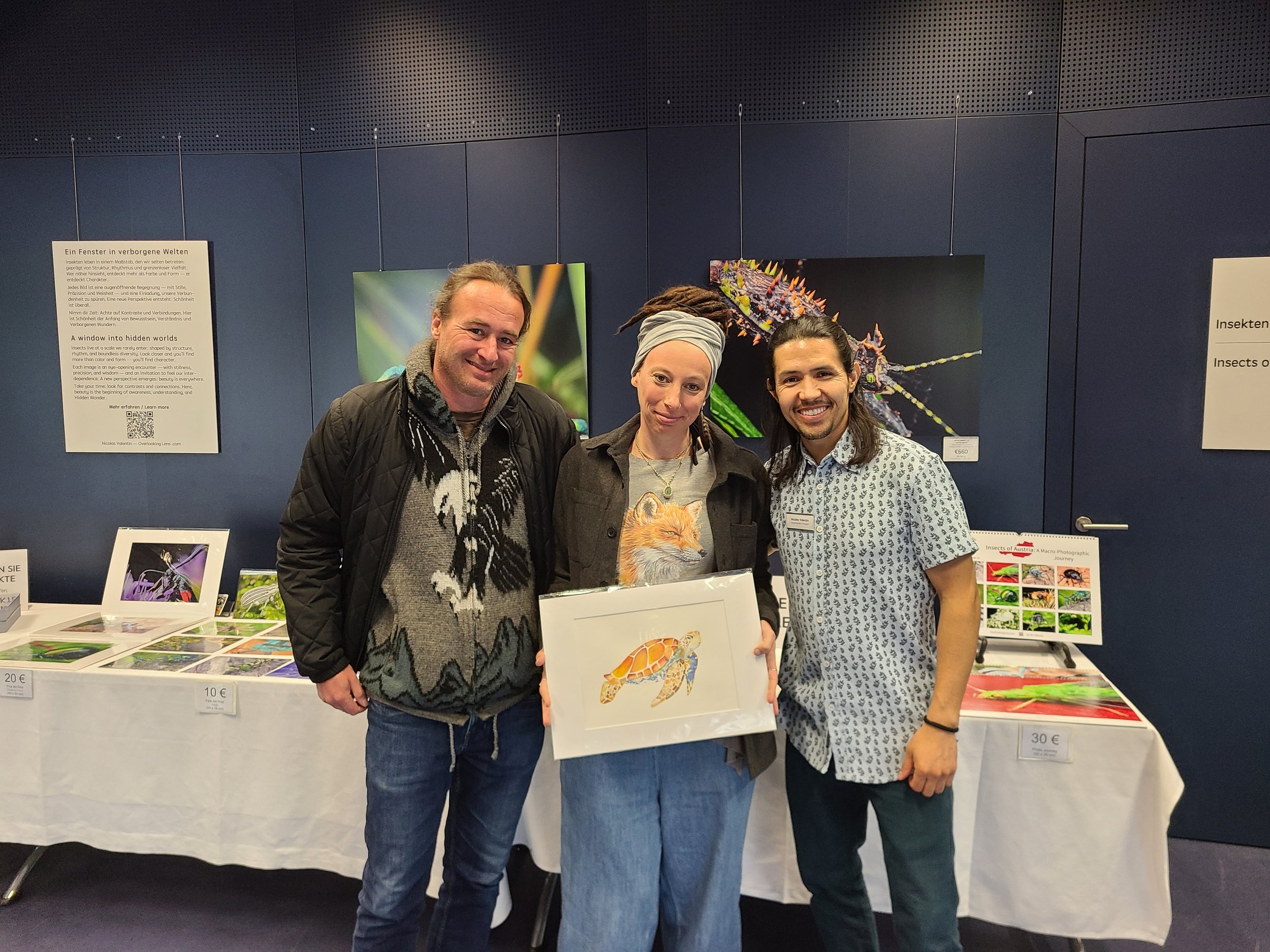
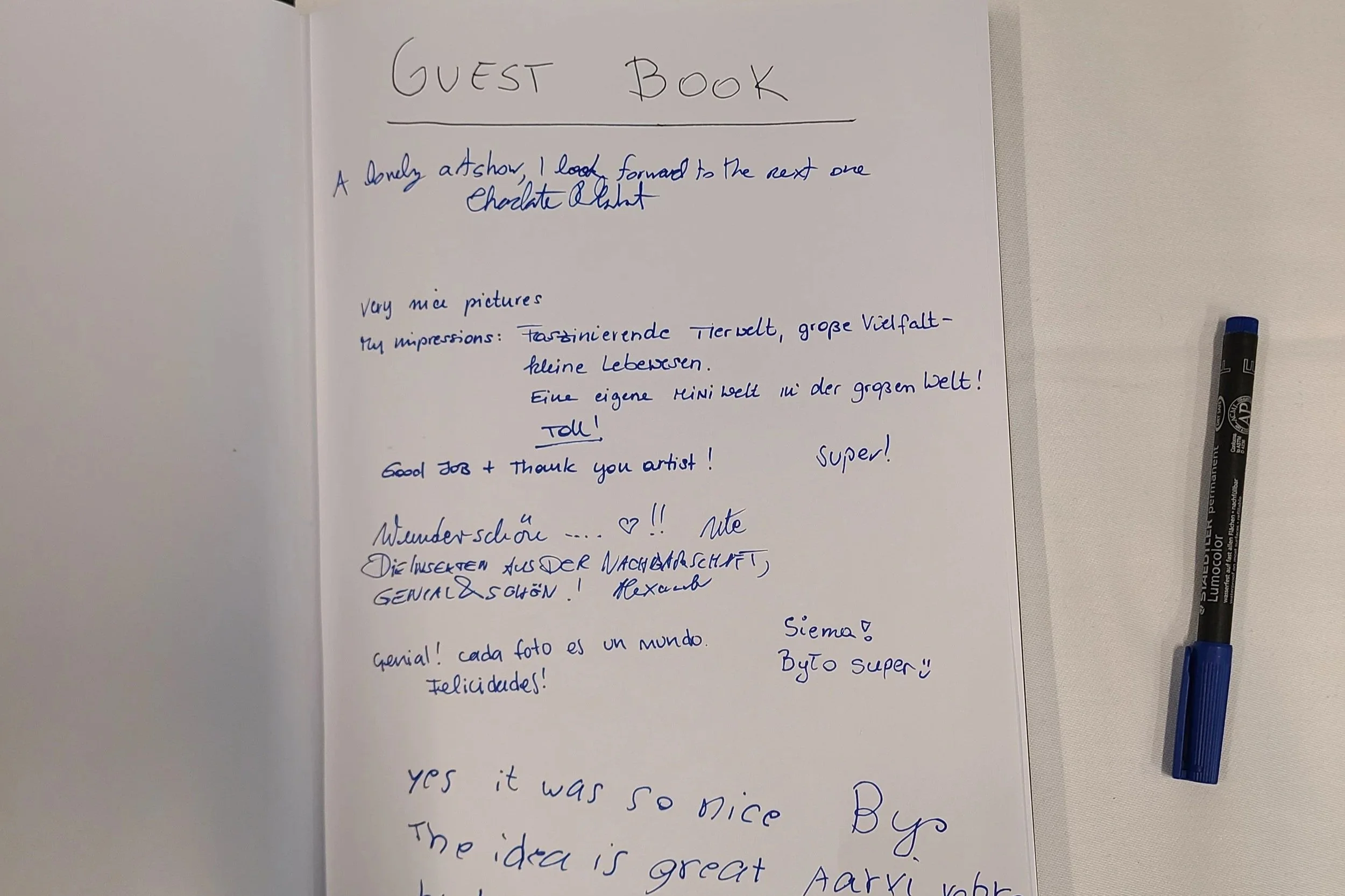
Each weekend, we had approximately 2,000 visitors to the exhibition. Everyone I spoke with was genuinely fascinated by the level of detail, the patience and difficulty behind the process, and the quality of the final prints. Some of my favorite guestbook lines were beautifully simple:
“Very nice pictures. My impressions: fascinating wildlife, great diversity, small living beings — a mini world inside the big world.”
“Wonderful ❤…Brilliant and beautiful.”
“Amazing! Each photo is a world. Congratulations!”
“The exhibit was so nice. The idea is great!”
That’s exactly the kind of response I hope for — not “wow, cool technique,” but a genuine shift in attention.
Workshops : where the energy was highest
Besides the exhibition itself, I created two special workshops for Alpenzoo — designed as a premium, high-quality experience, while staying genuinely accessible.
No prior knowledge was required, and you didn’t need expensive equipment. The only “requirement” was curiosity — and a willingness to slow down and try.
To keep the experience personal and hands-on, I ran the sessions in small groups so each participant could get real interaction, feedback, and time to practice.
Workshop A: Small Wonders, Great Stories
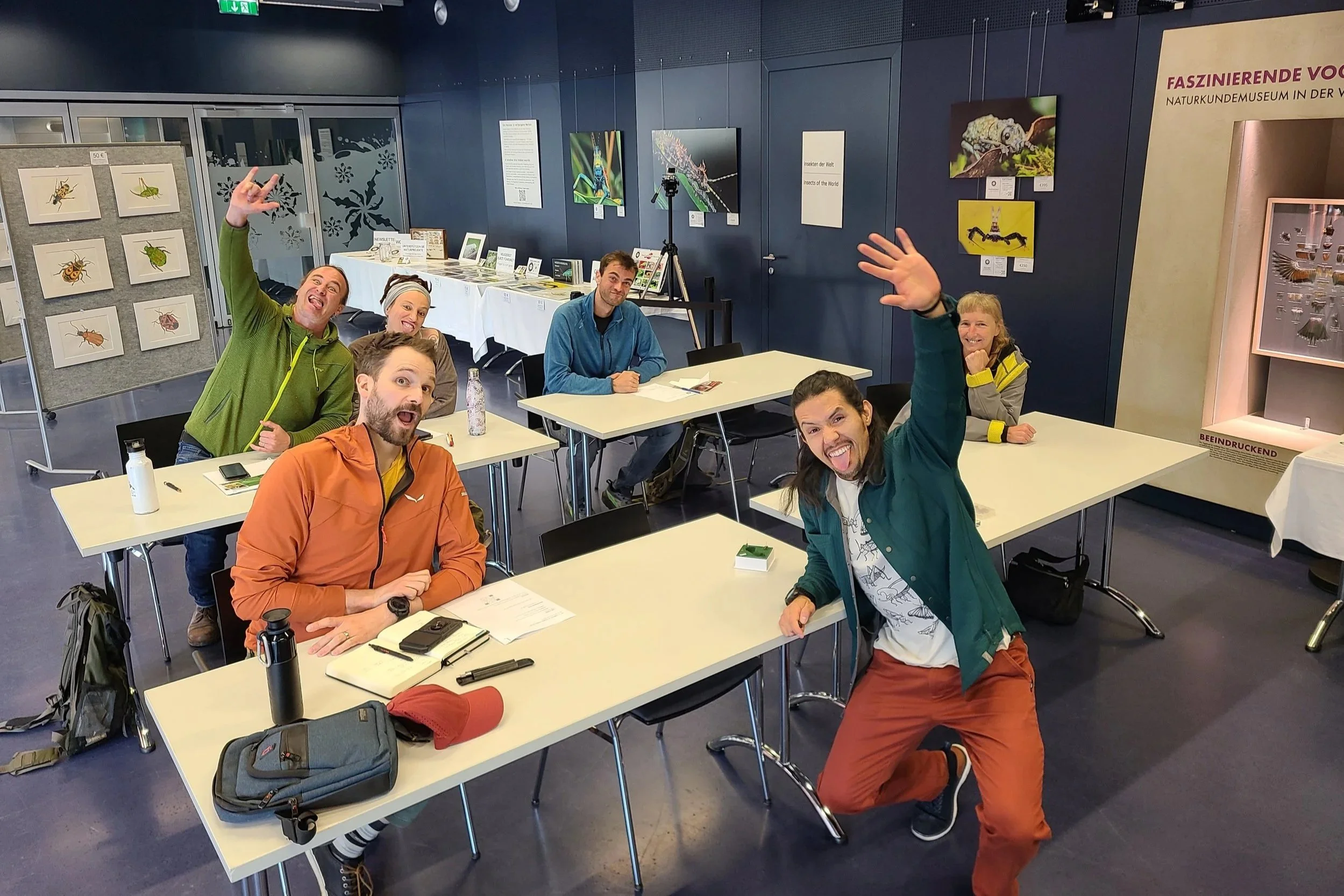
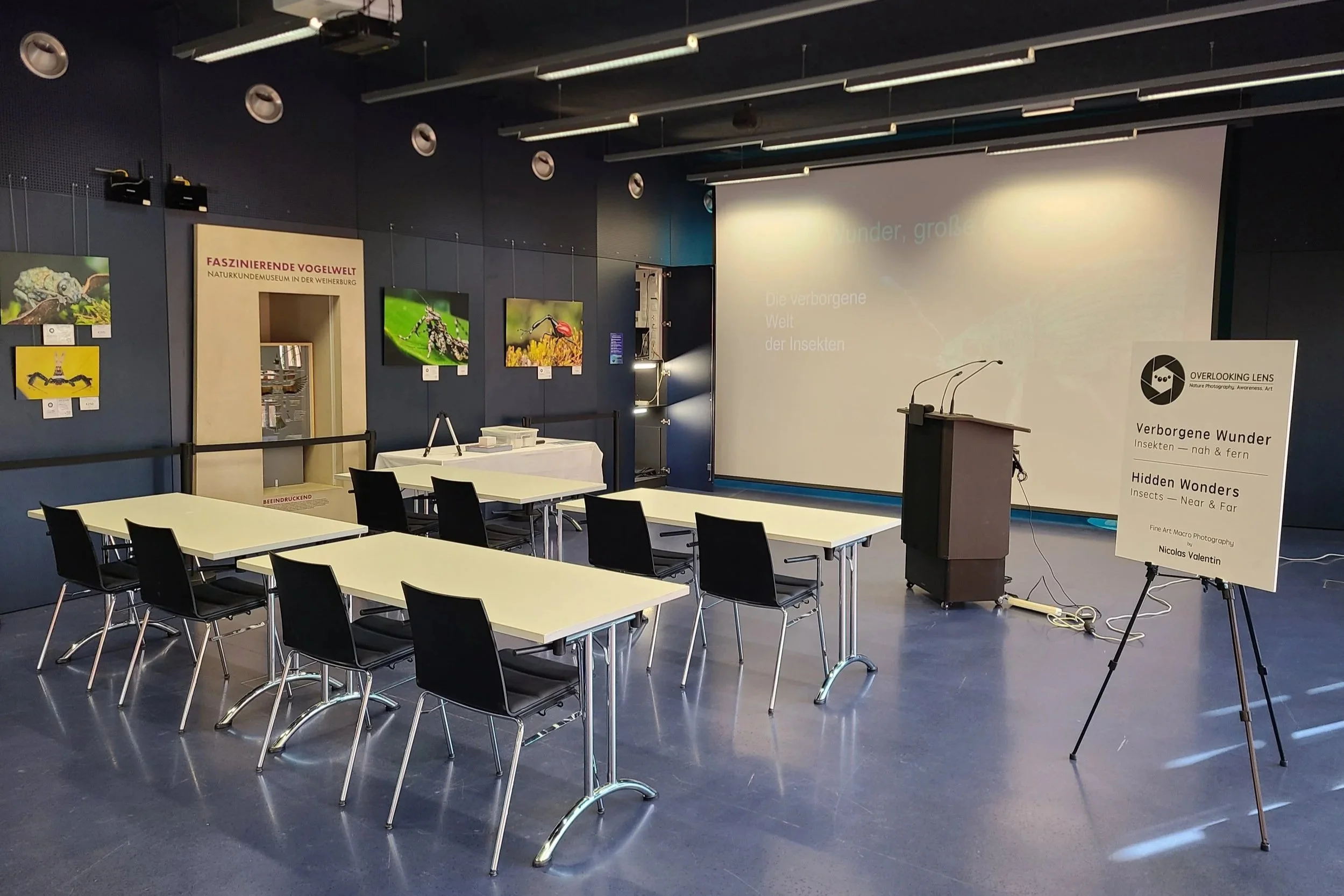
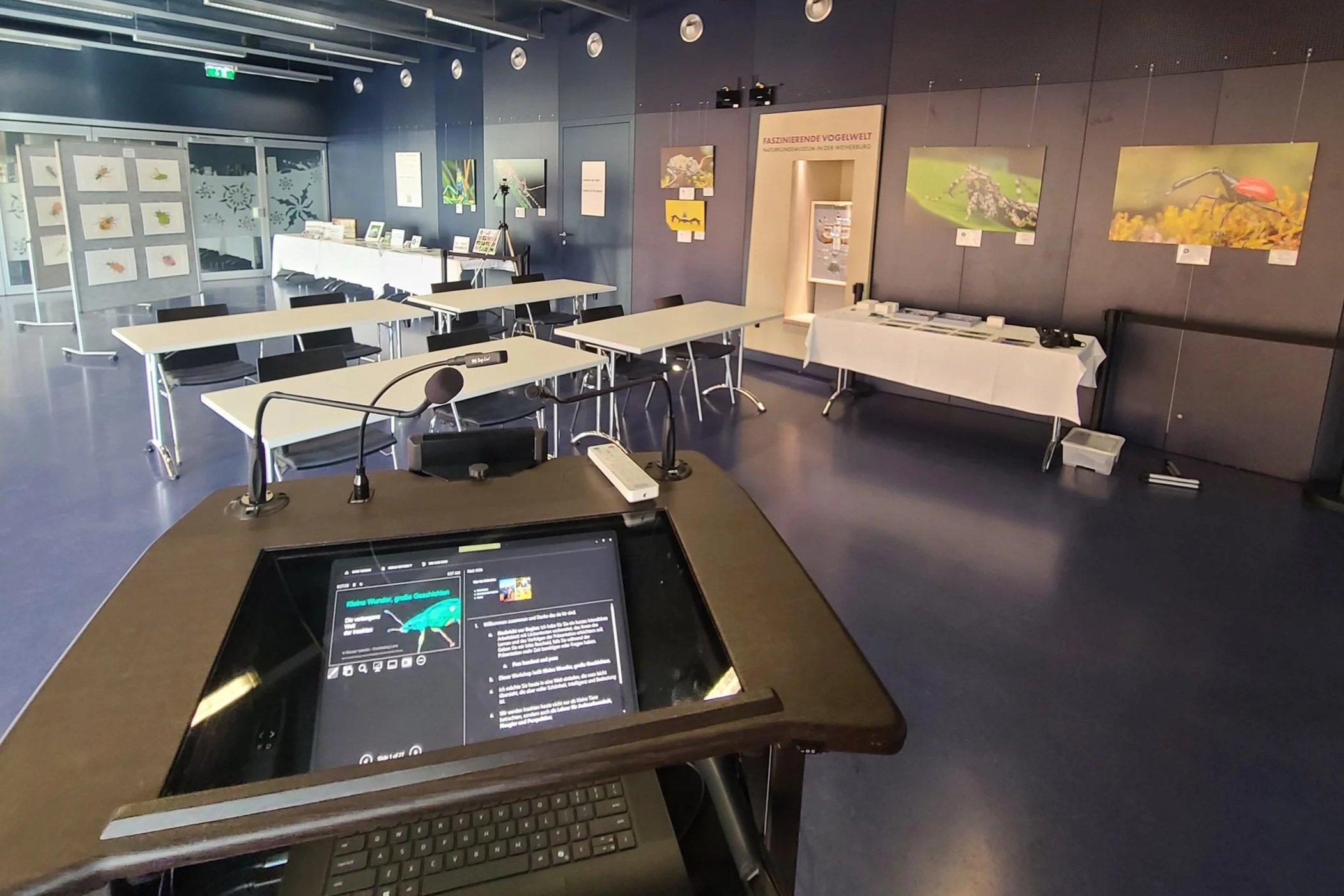
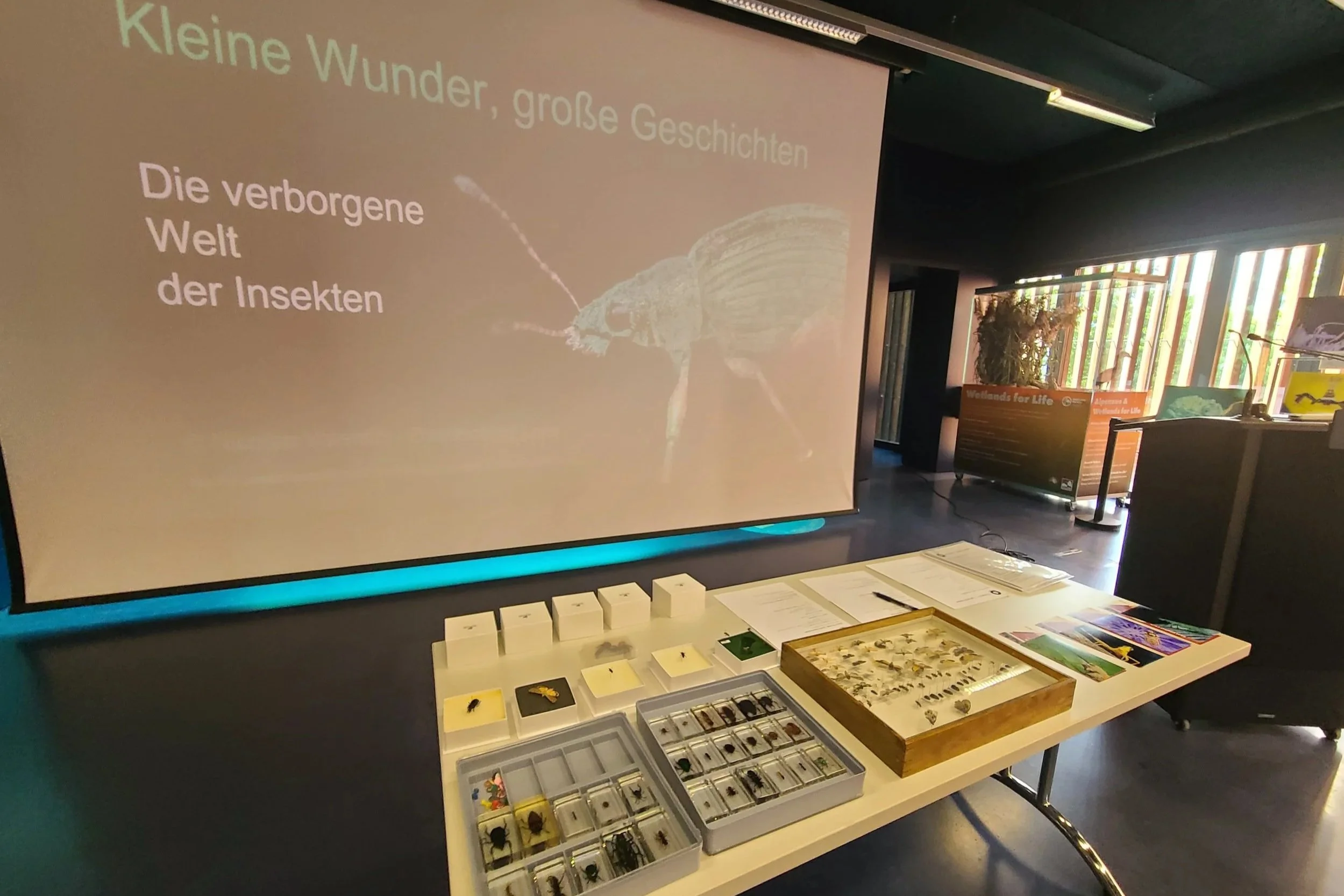
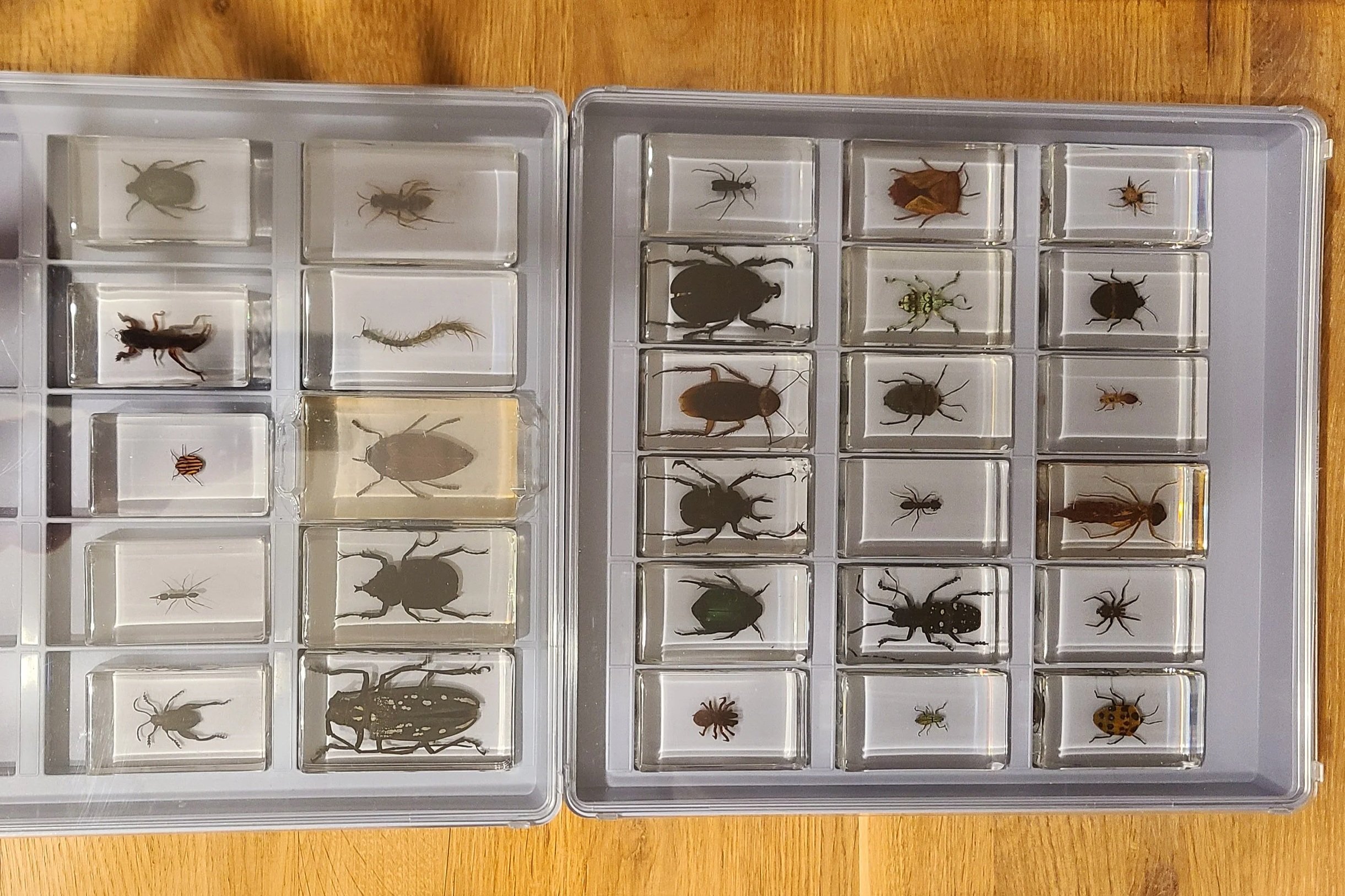
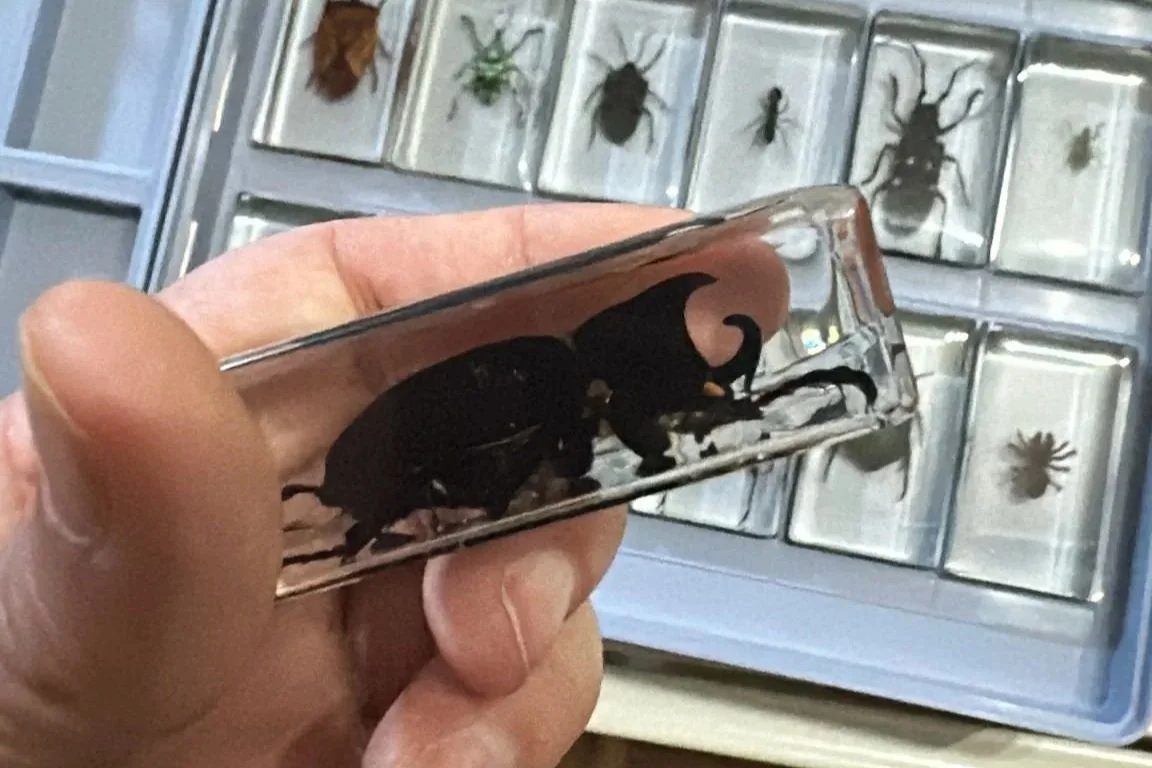
This workshop is about building a more curious relationship with insects.
We explored a few grounding ideas: what makes insects so remarkable, why they matter ecologically, and how deeply interconnected our lives are with theirs.
Then we practiced a framework I call the Five Lenses of Discovery:
Awareness — noticing consciously, slowing down, seeing what’s actually there
Aesthetics — recognizing beauty in form, color, texture, and pattern
Naturalist — reading form and behavior: what might this insect be doing, and why?
Systems — seeing relationships: habitat, season, food webs, interdependence
Wisdom — carrying meaning forward: what can this teach us about ourselves and our human experience — attention, patience, respect?
Participants consistently mentioned this framework as the most valuable takeaway — because it’s something you can use anywhere, long after the workshop ends.
Workshop B: Capturing Hidden Beauty (Macro Photography)
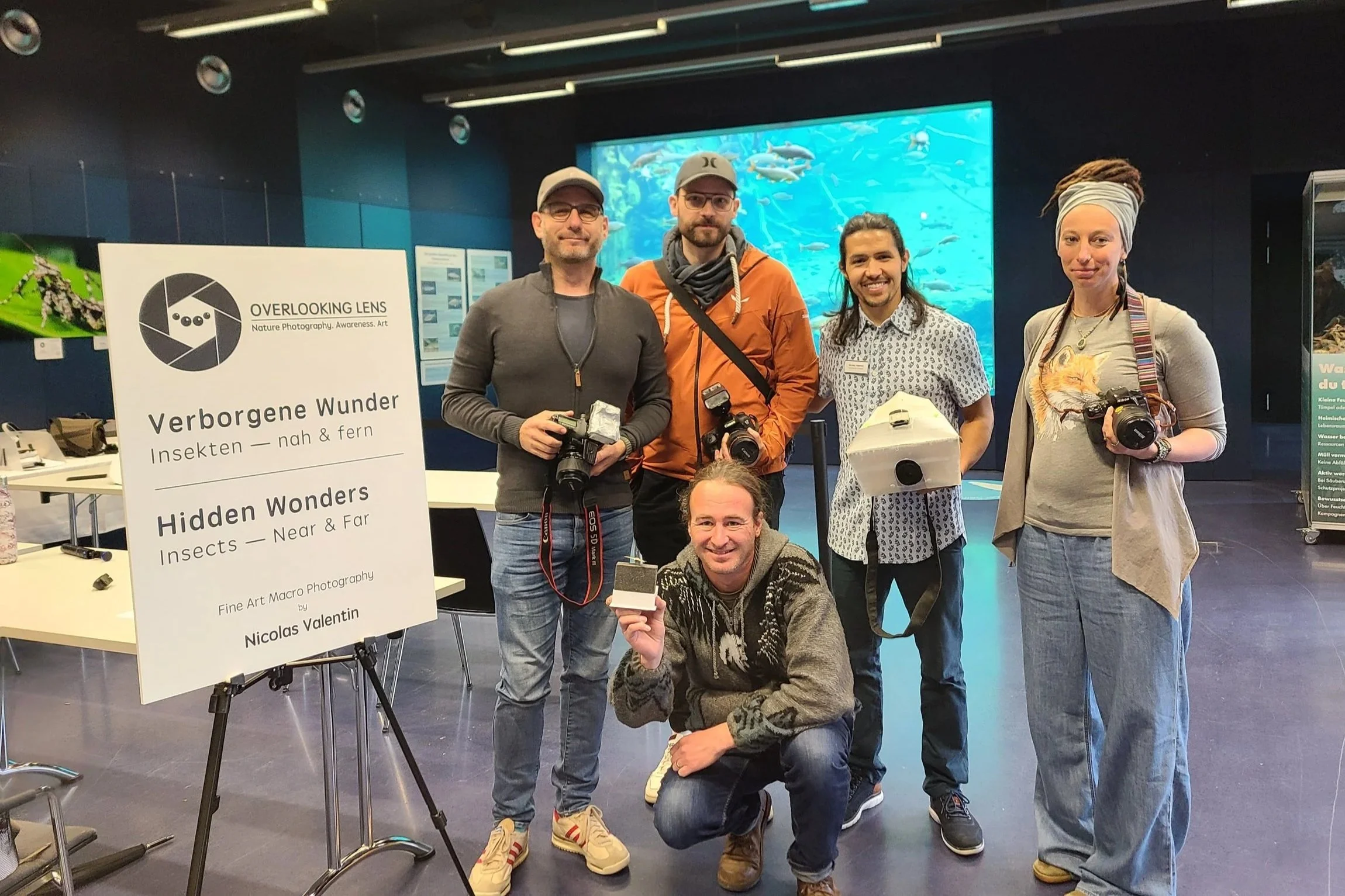
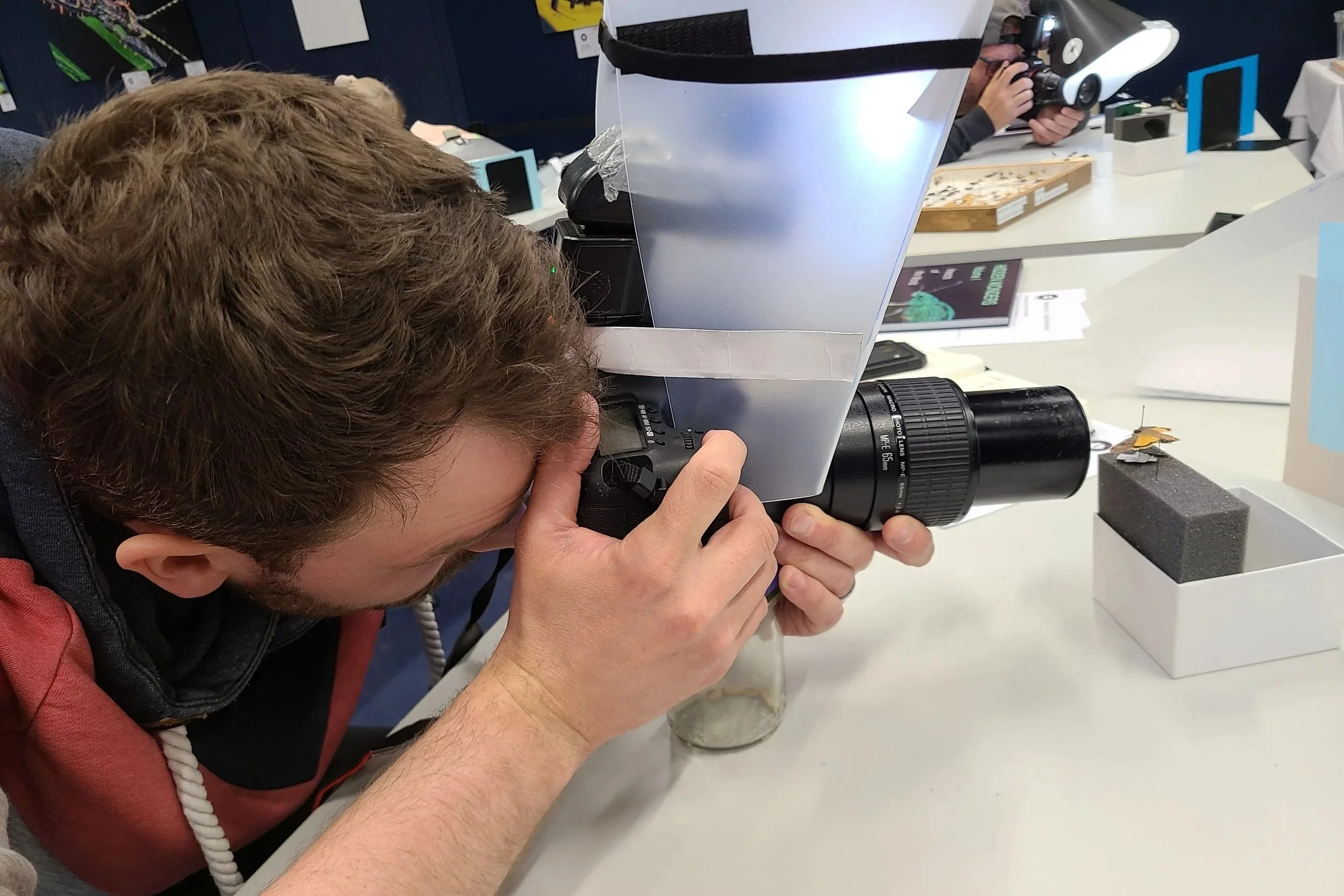
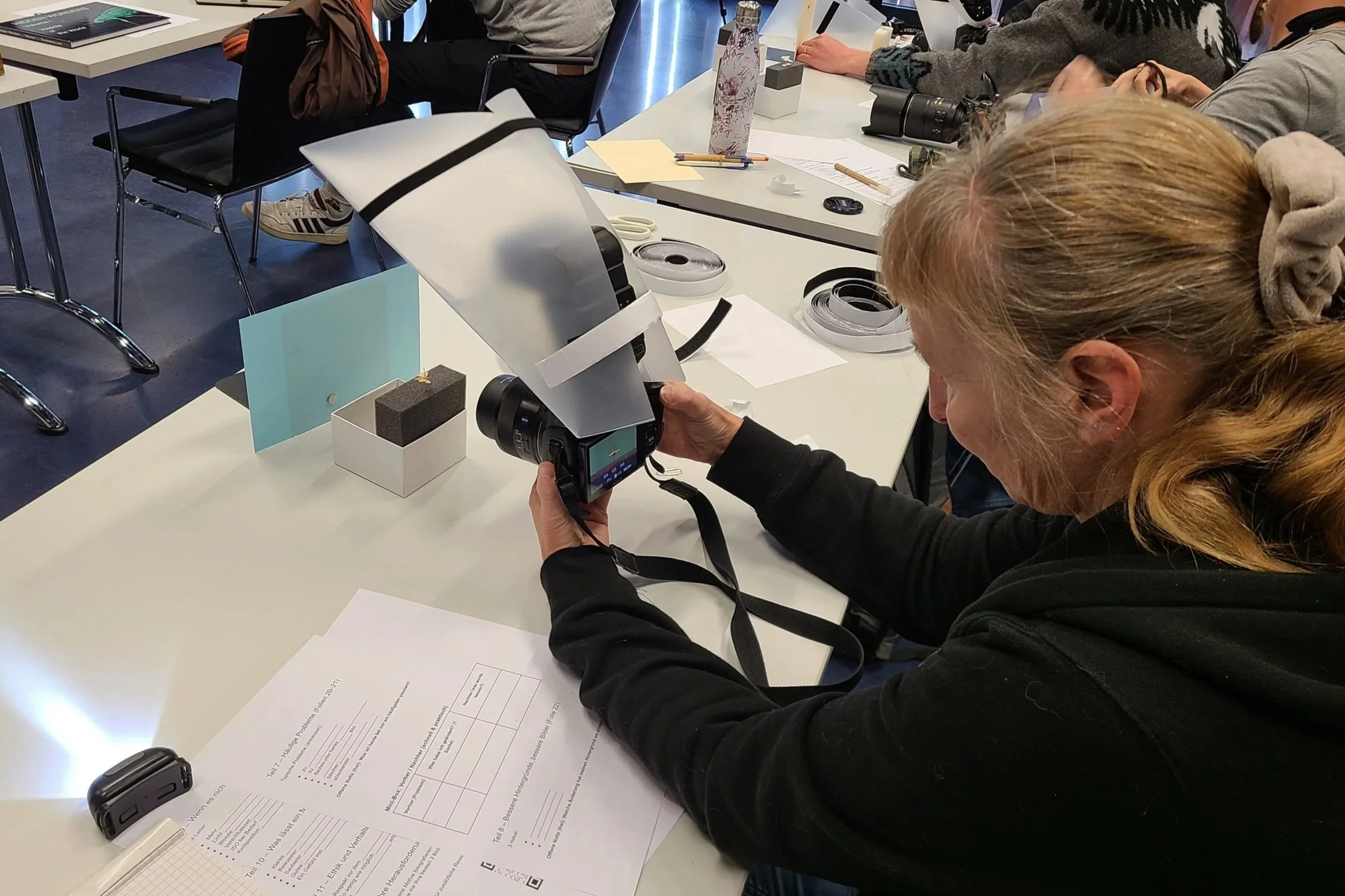
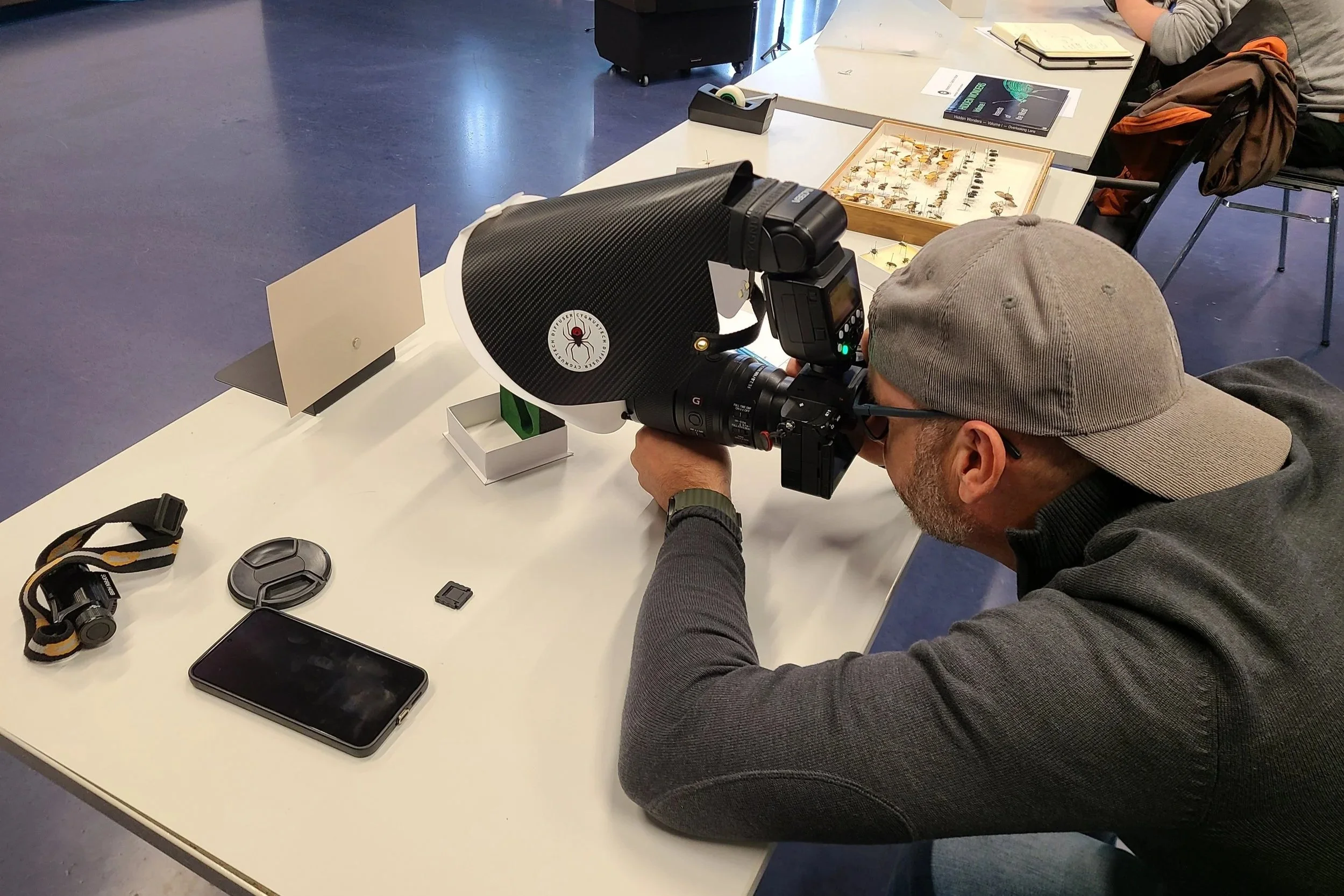
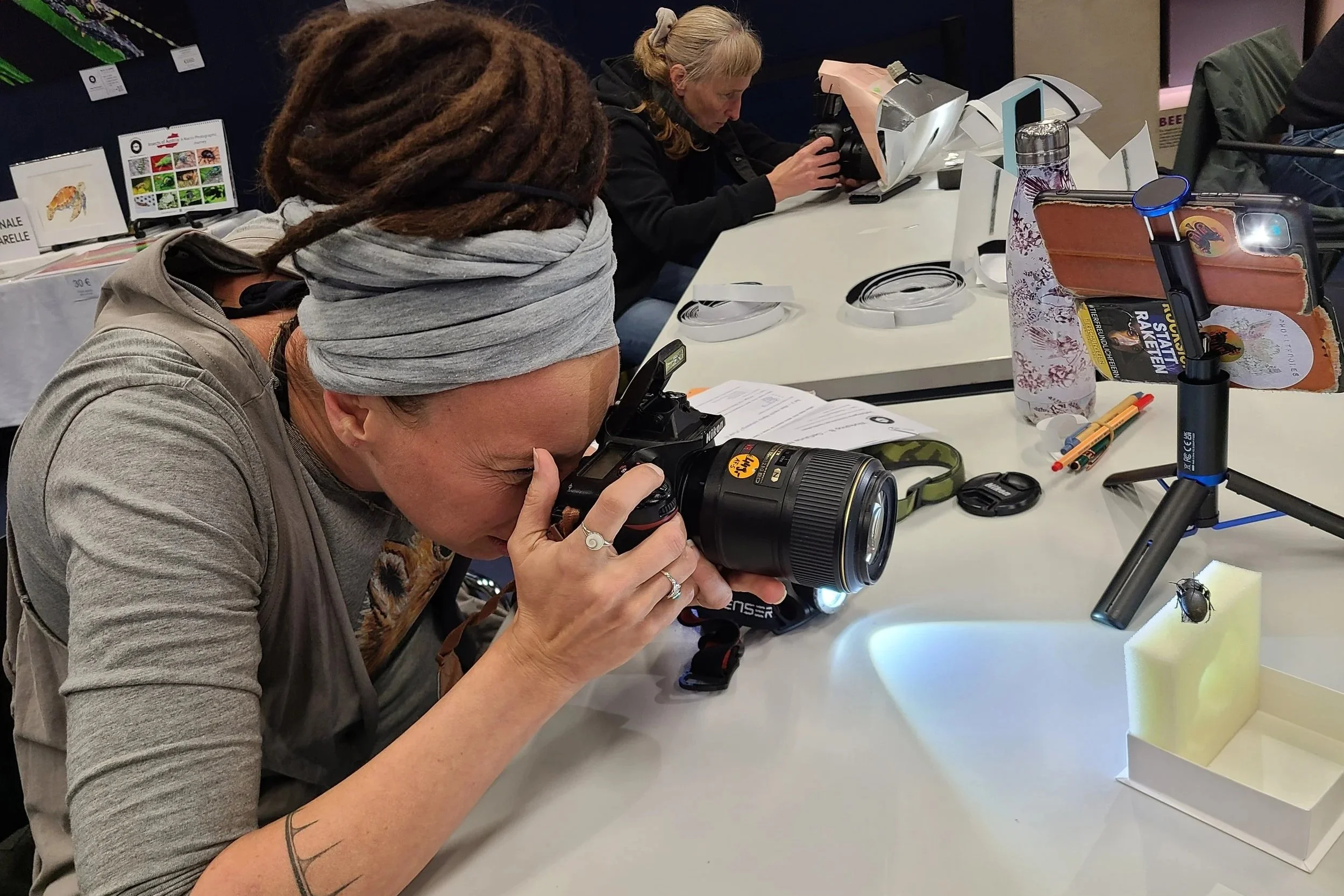
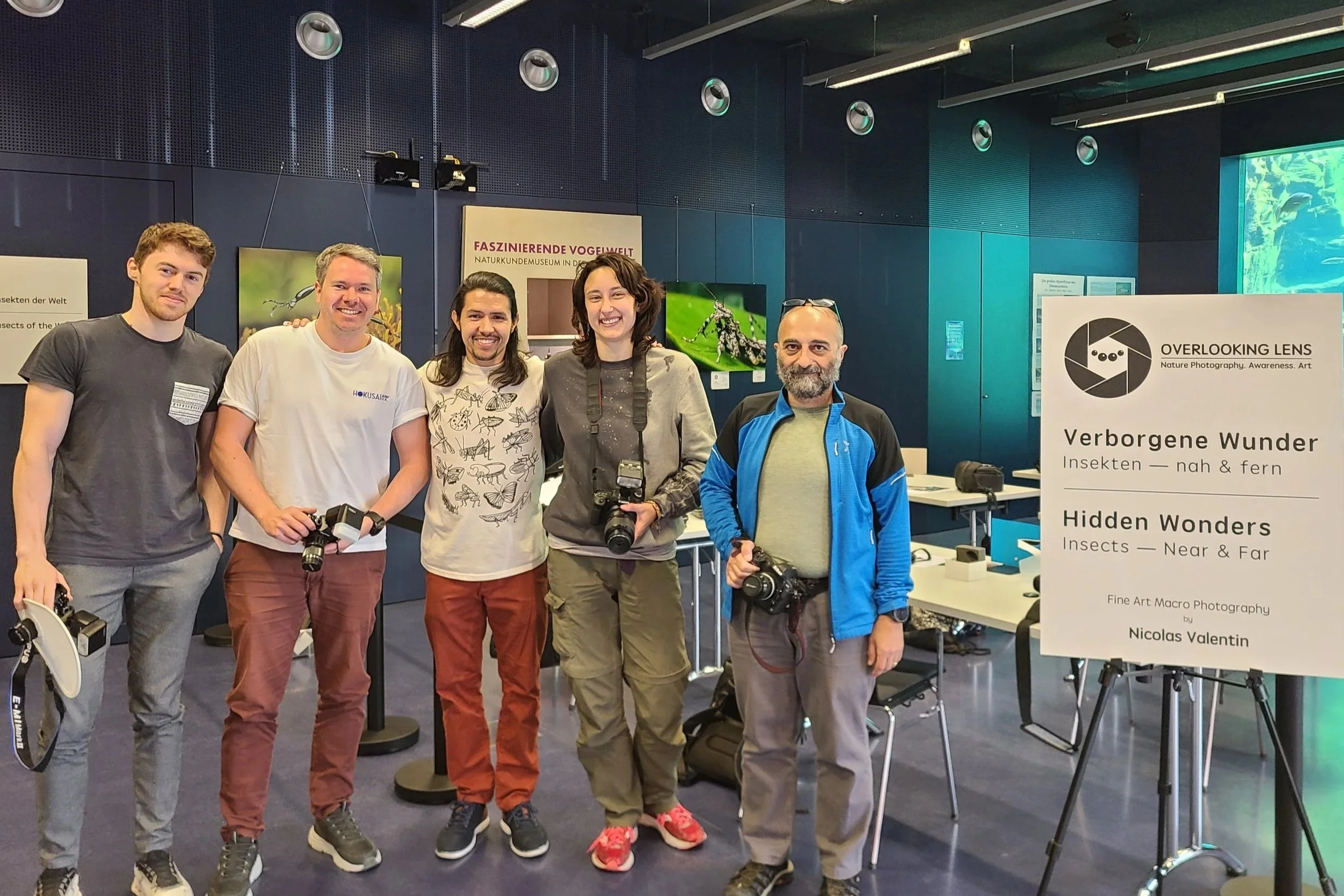
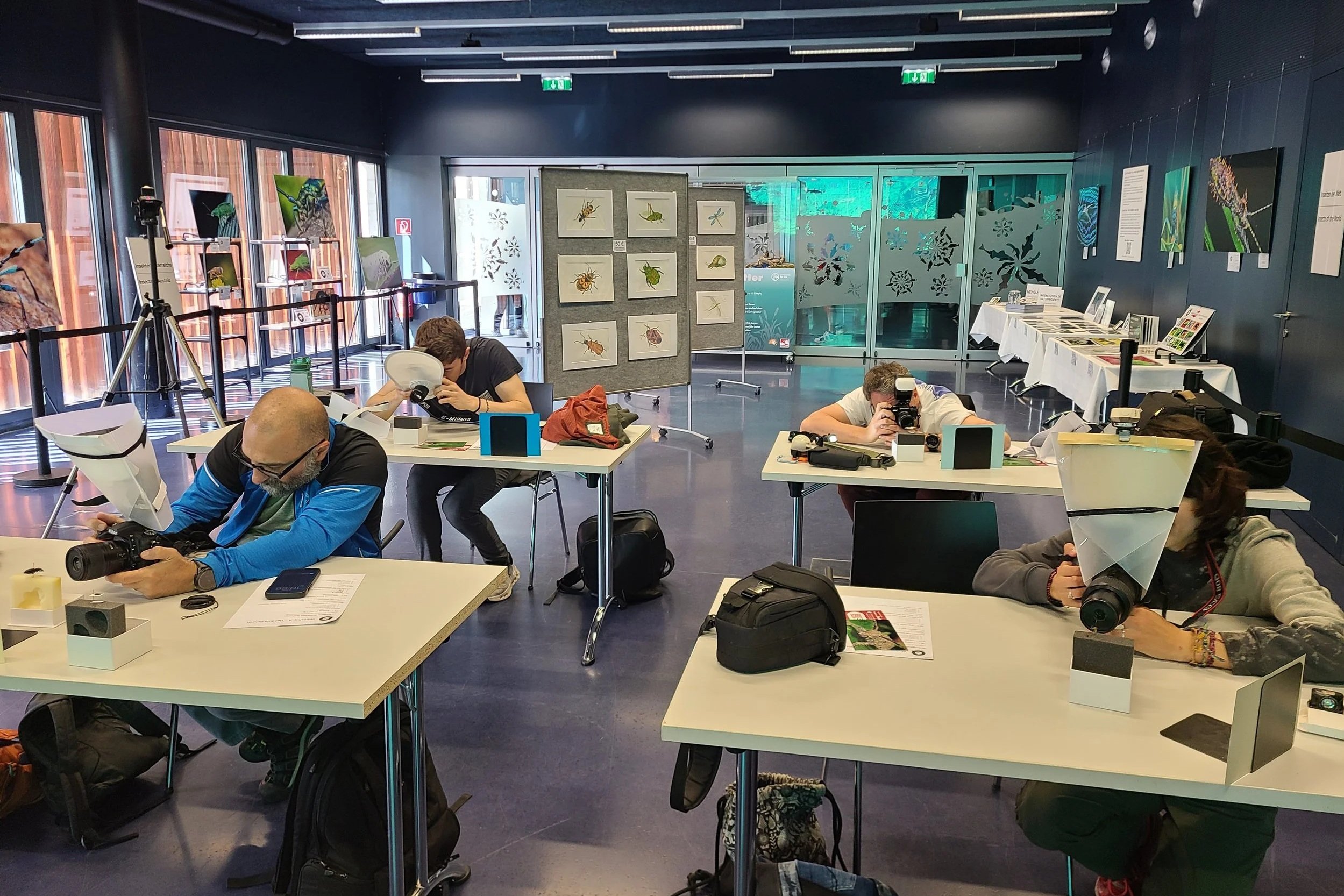
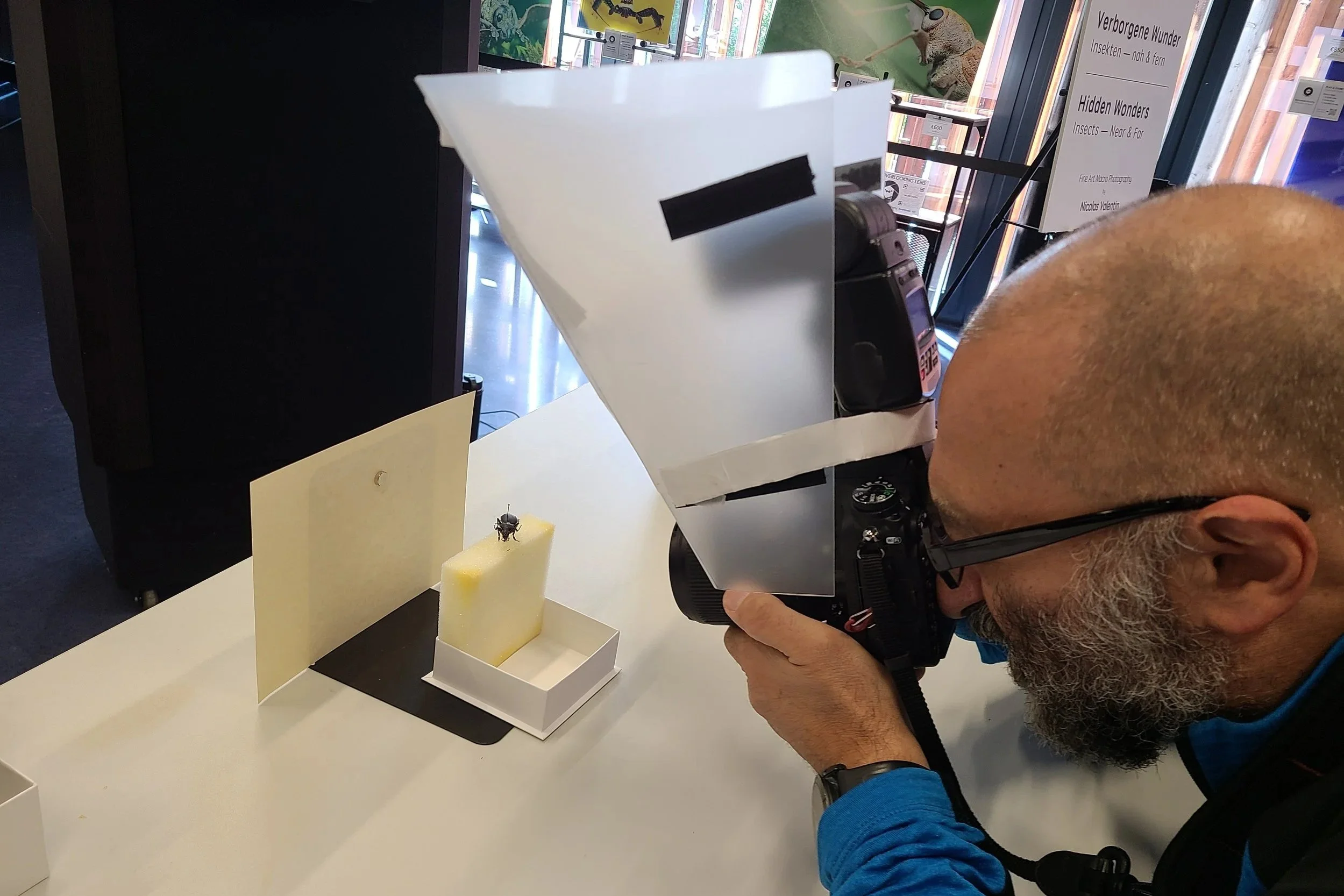
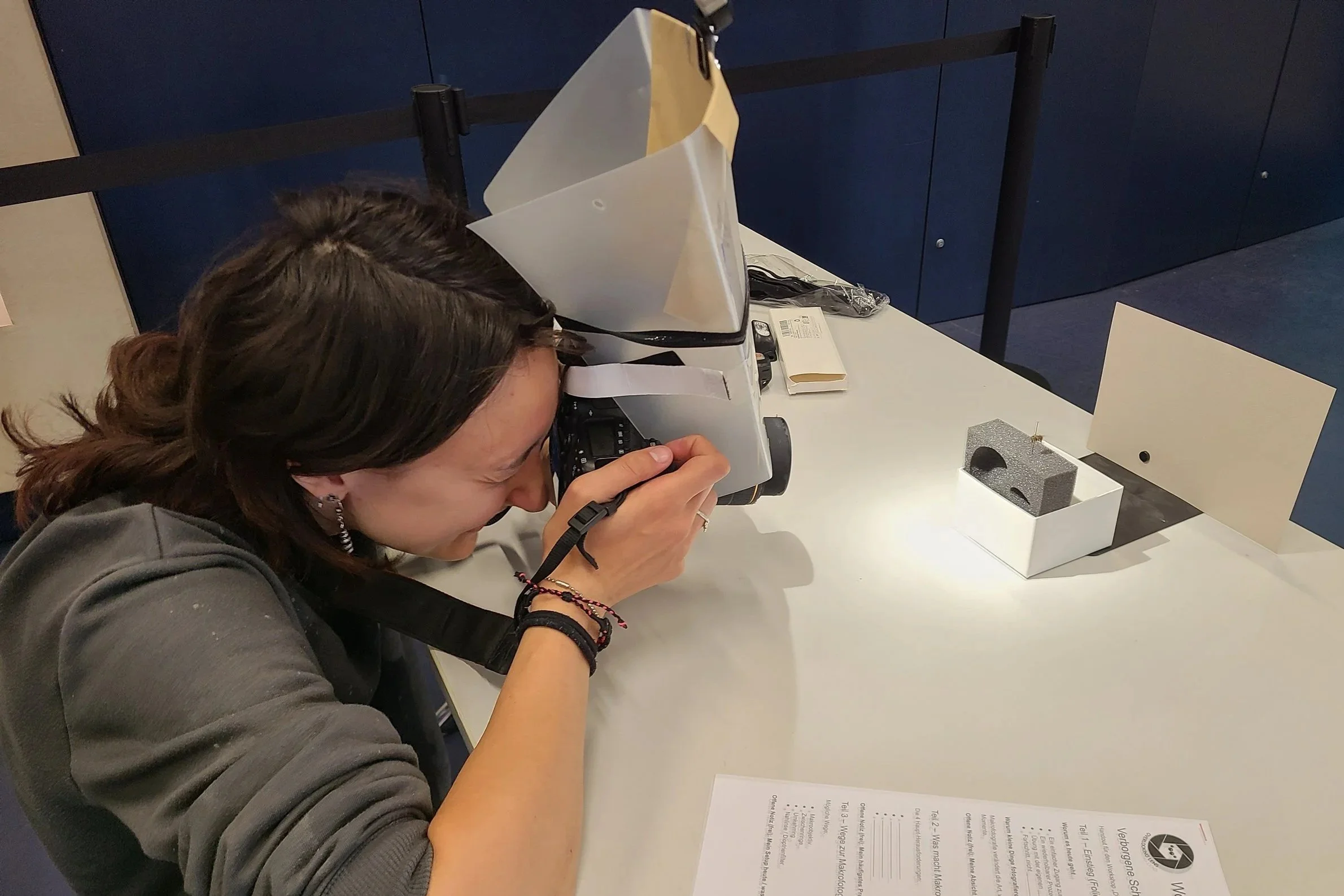
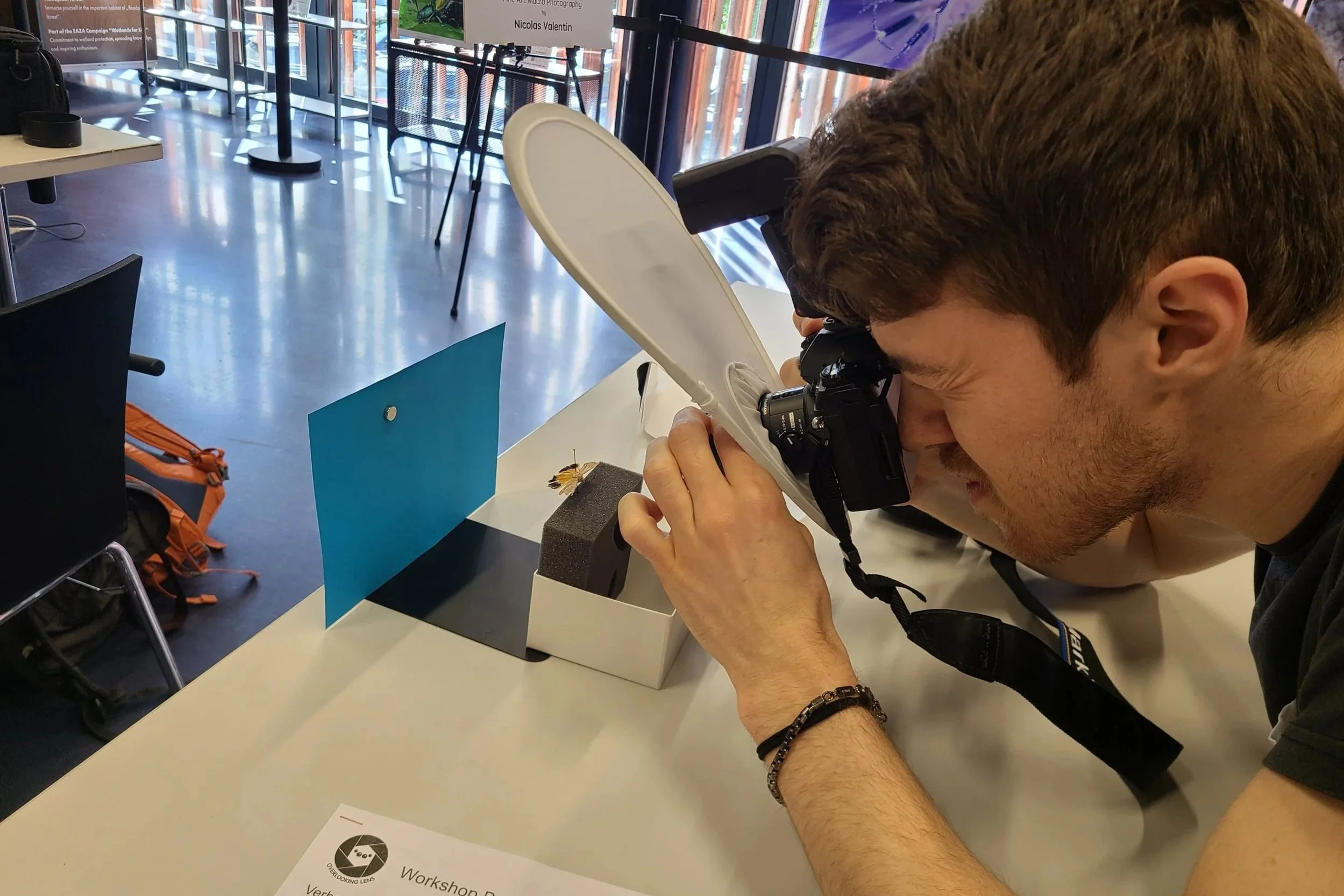
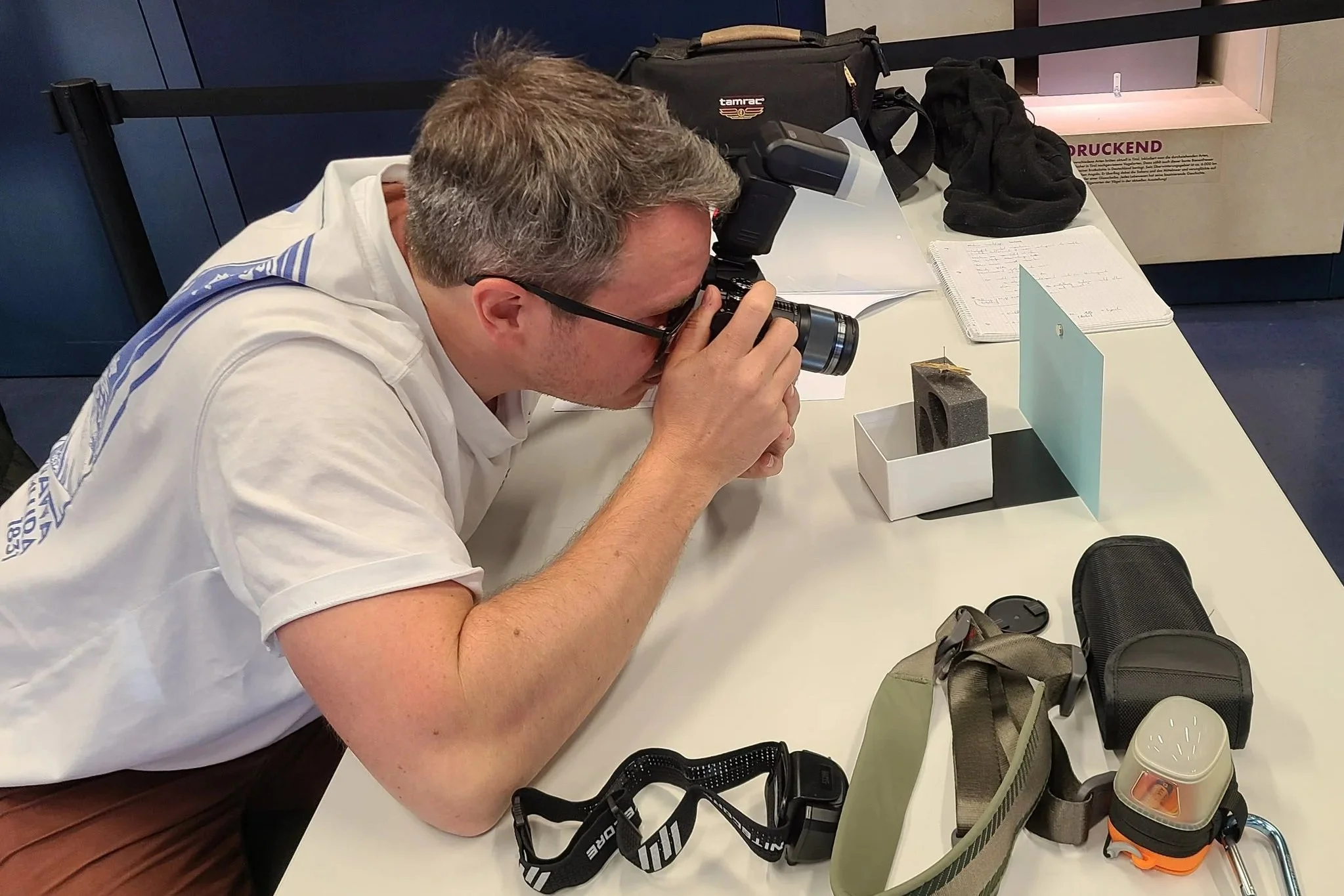
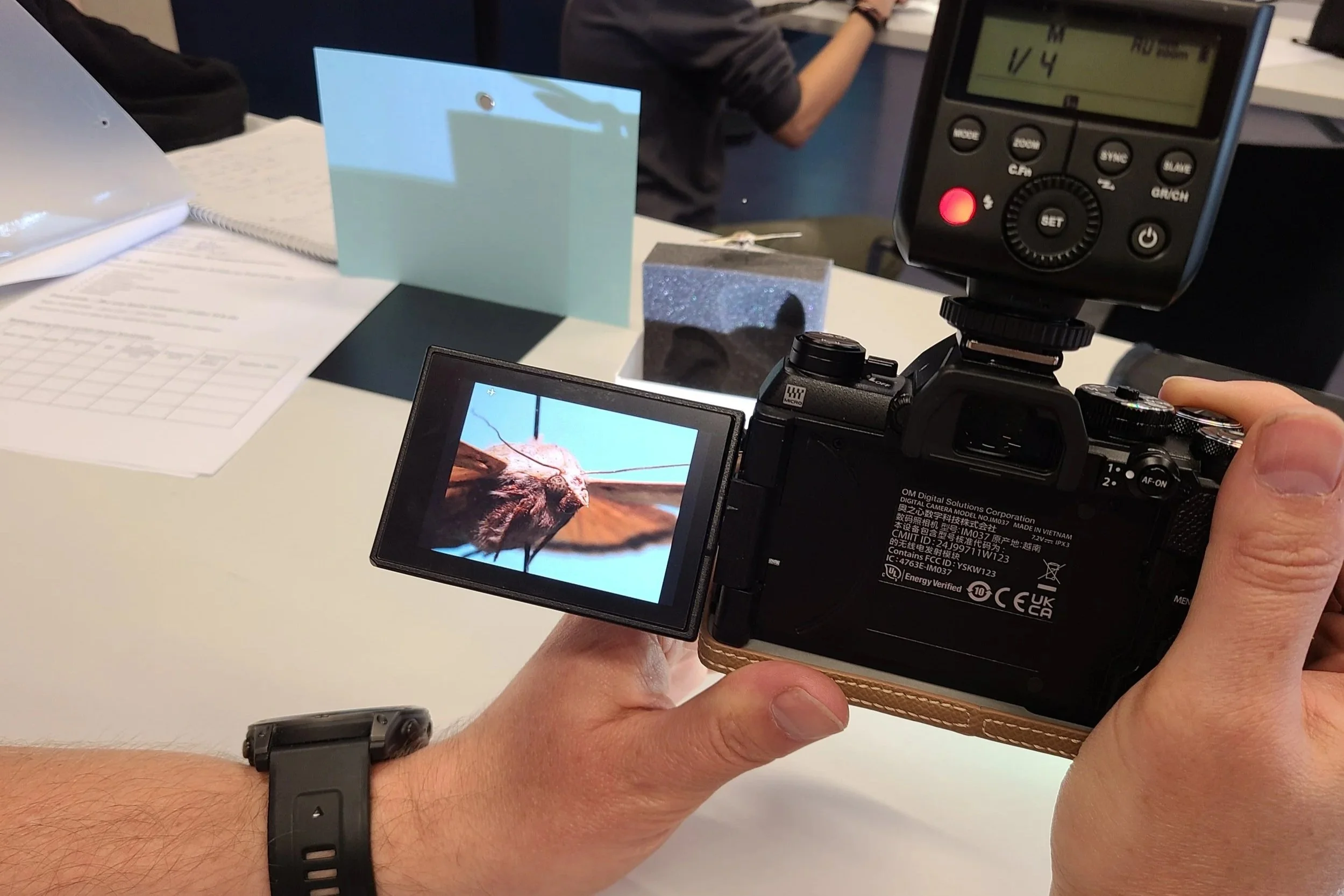
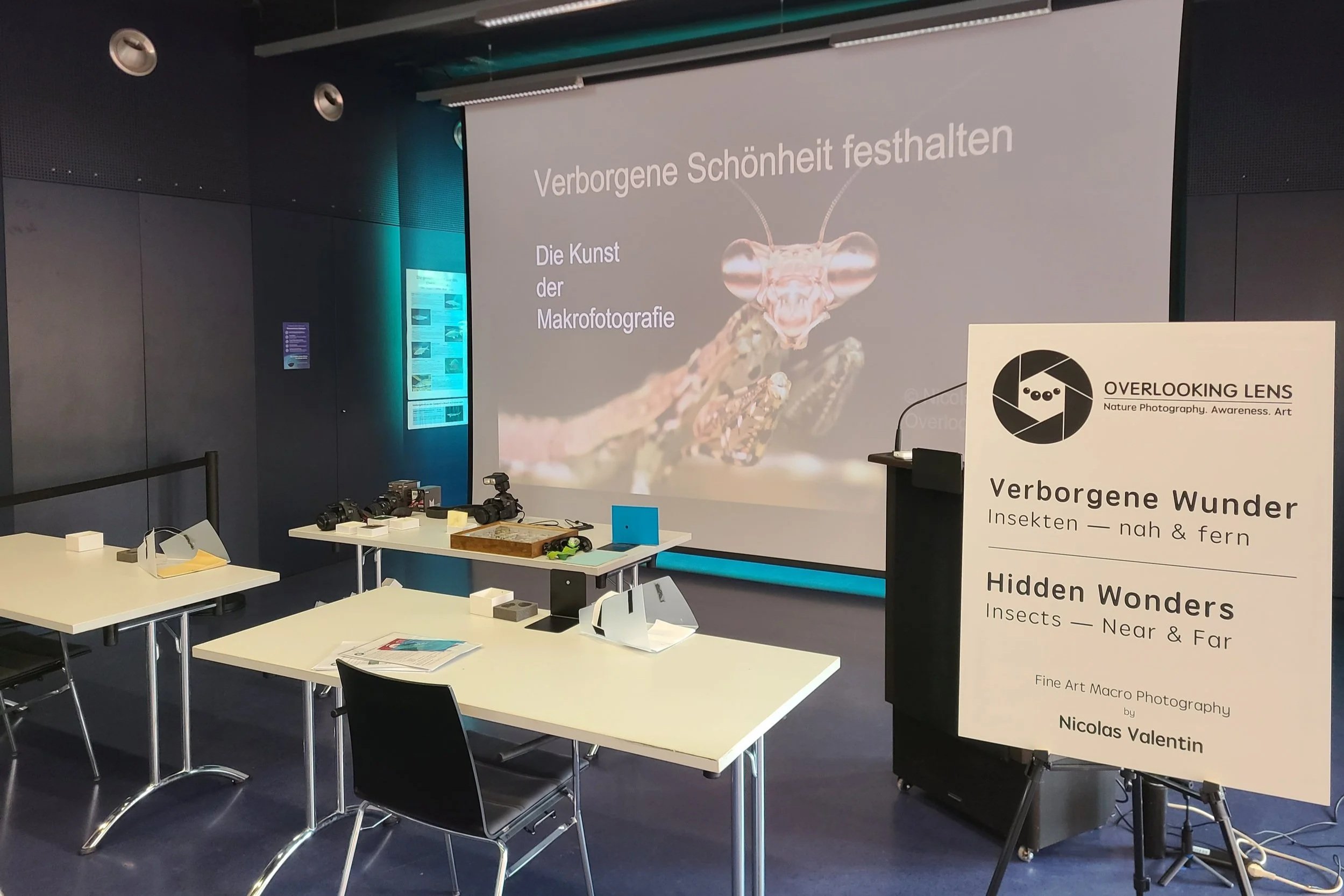
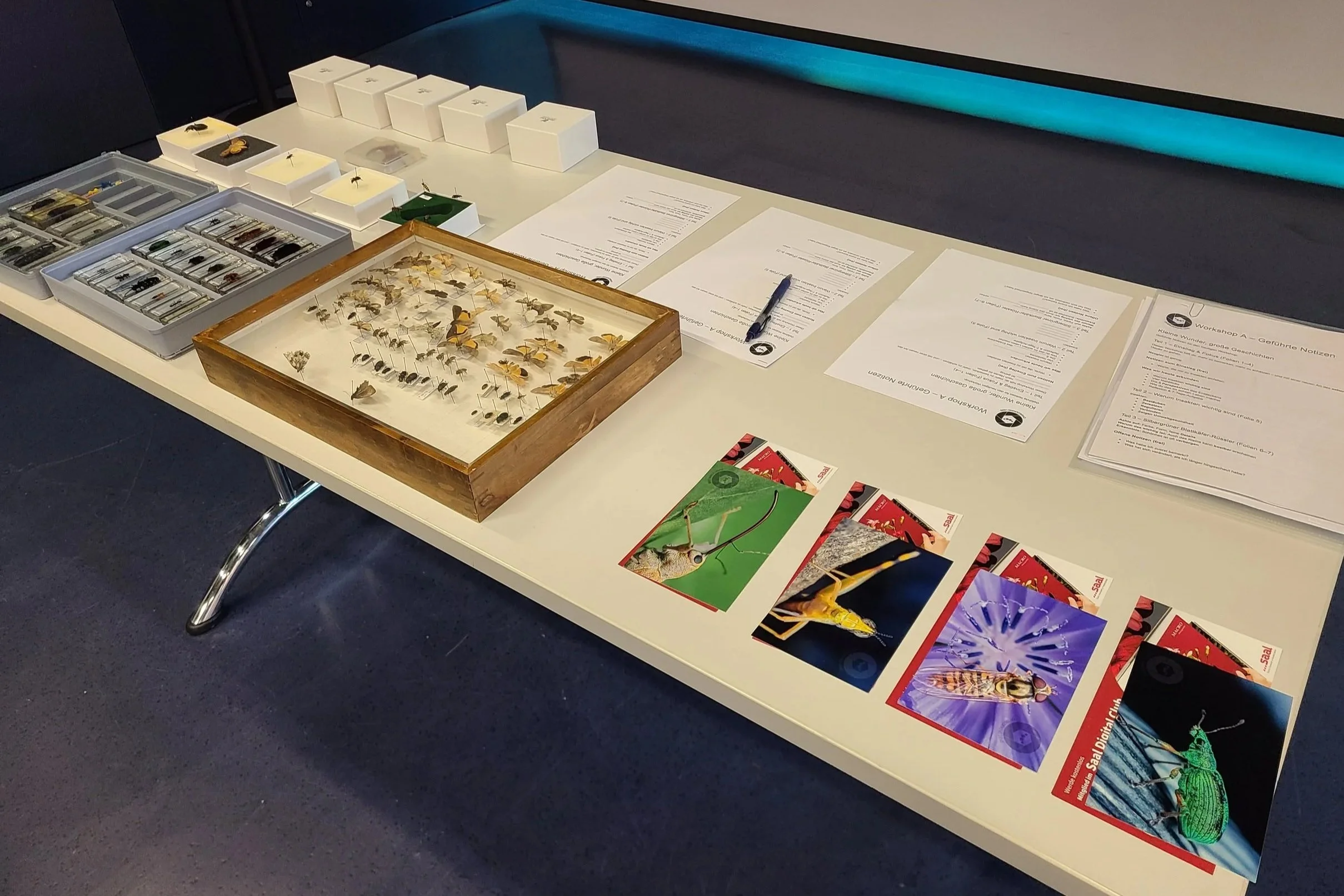
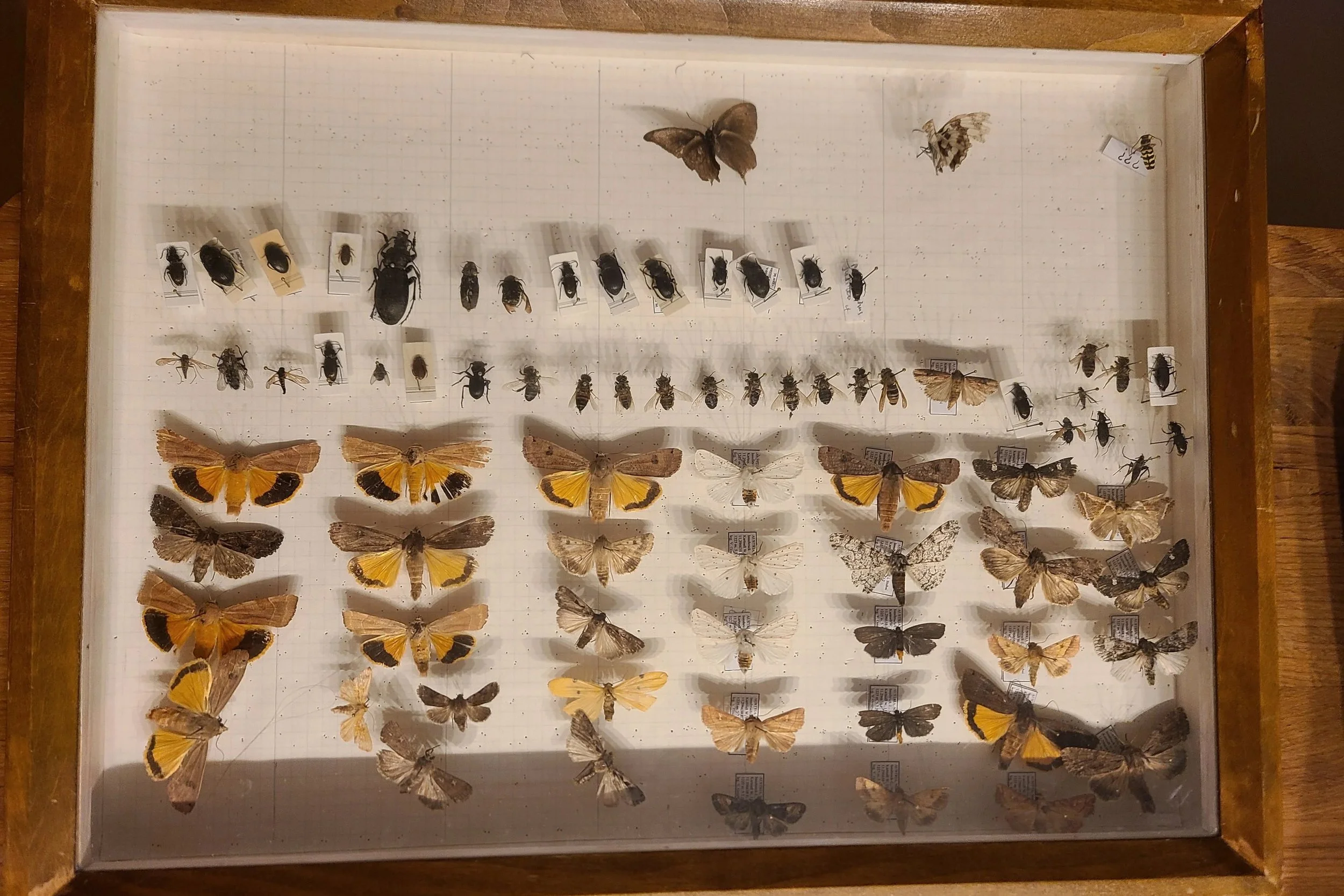
This workshop is practical and field-first: stability, light, focus, and ethical approach — with a strong emphasis on repeatable practice.
The goal wasn’t to “show off gear,” but to help participants build a workflow they can actually use.
We worked hands-on with real insect specimens and simple setups: building quick DIY diffusers, using interchangeable backgrounds, and experimenting with shooting distance, stability, light direction, and settings.
A big focus was learning how to troubleshoot — so participants left with a clear practice loop they could repeat at home, instead of a handful of “magic settings.”
One comment that summed up the tone I aim for:
“Extremely well done — great structure, clear setup, practical, and very likeable.”
The Alpenzoo shop
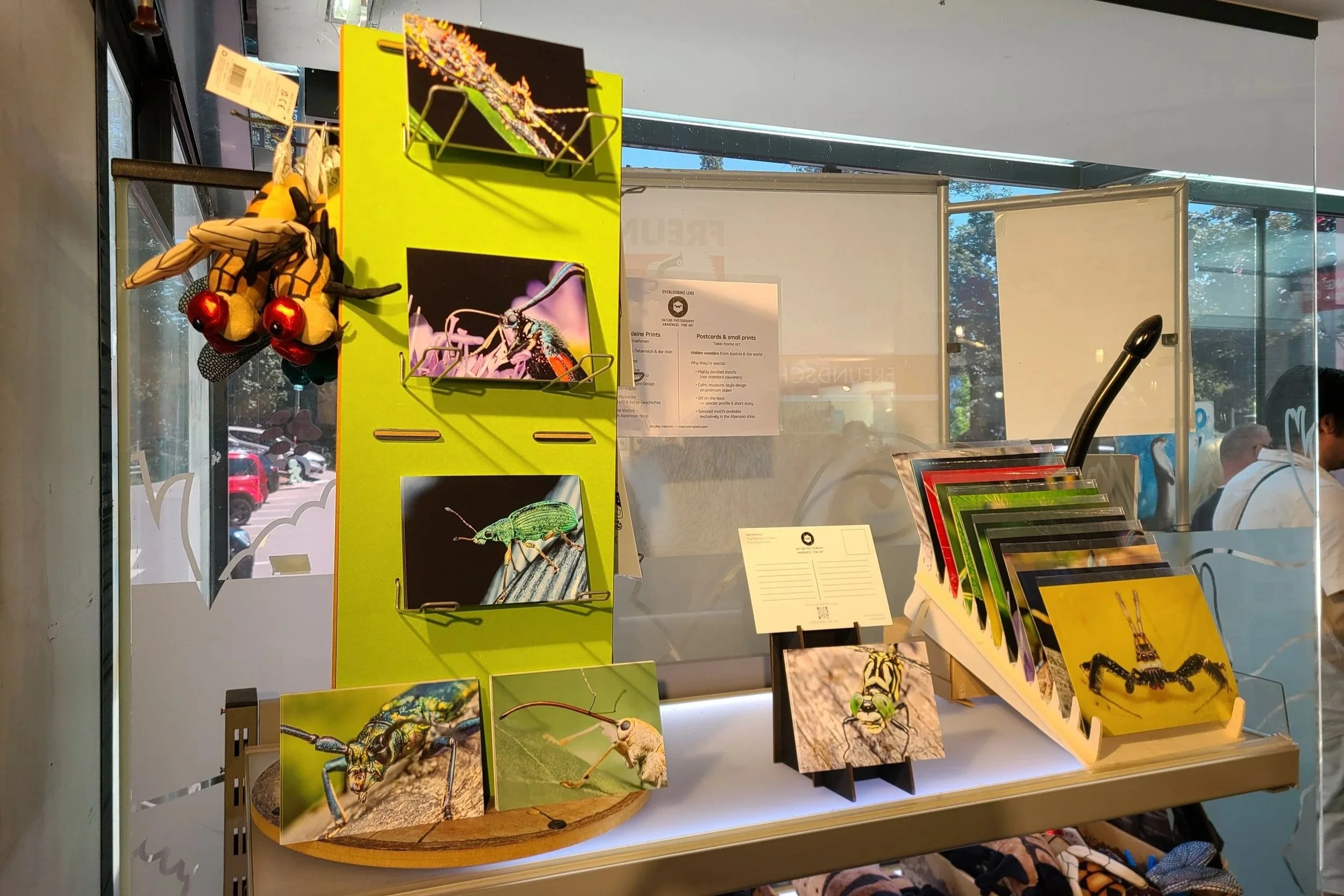
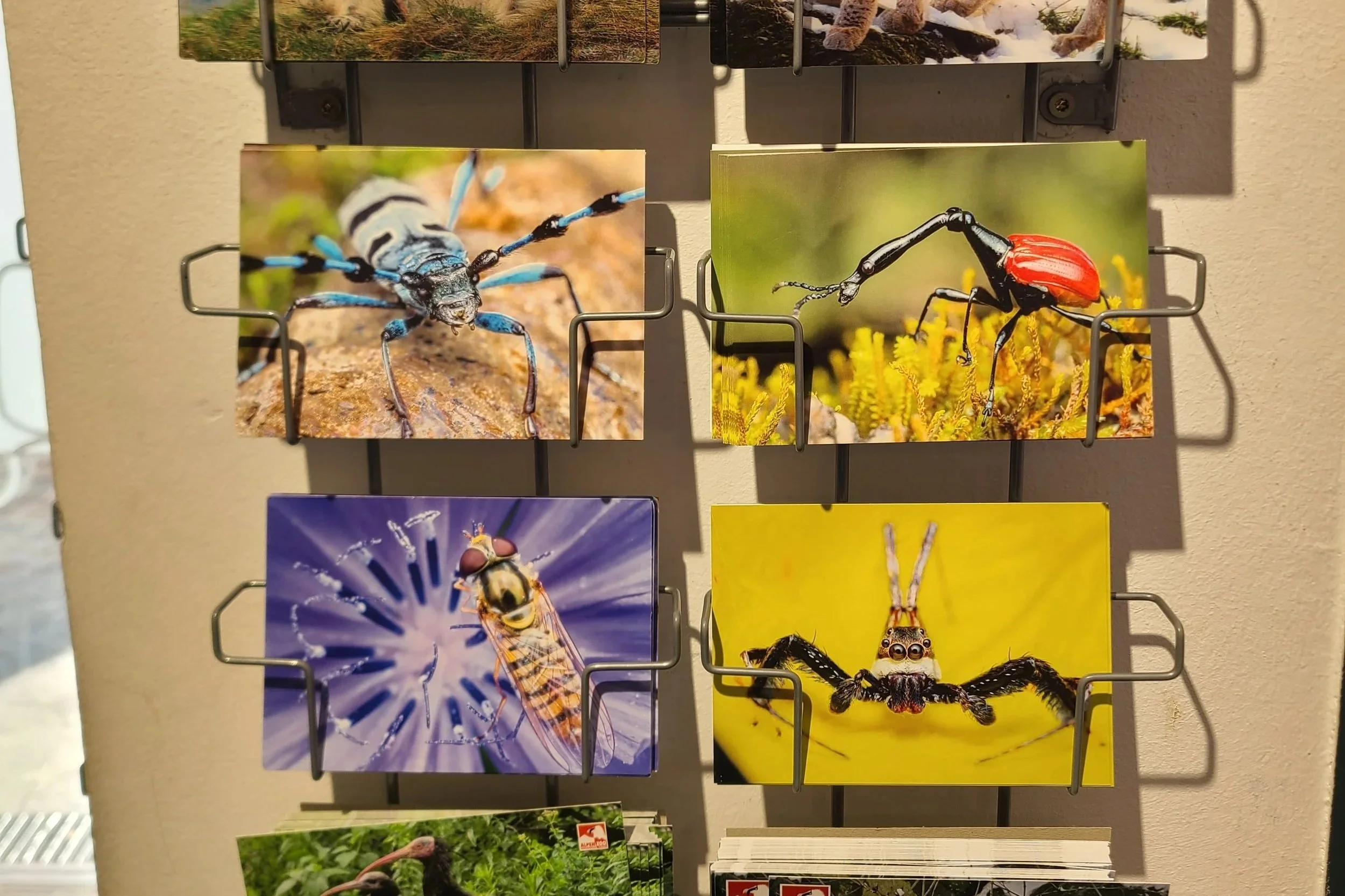
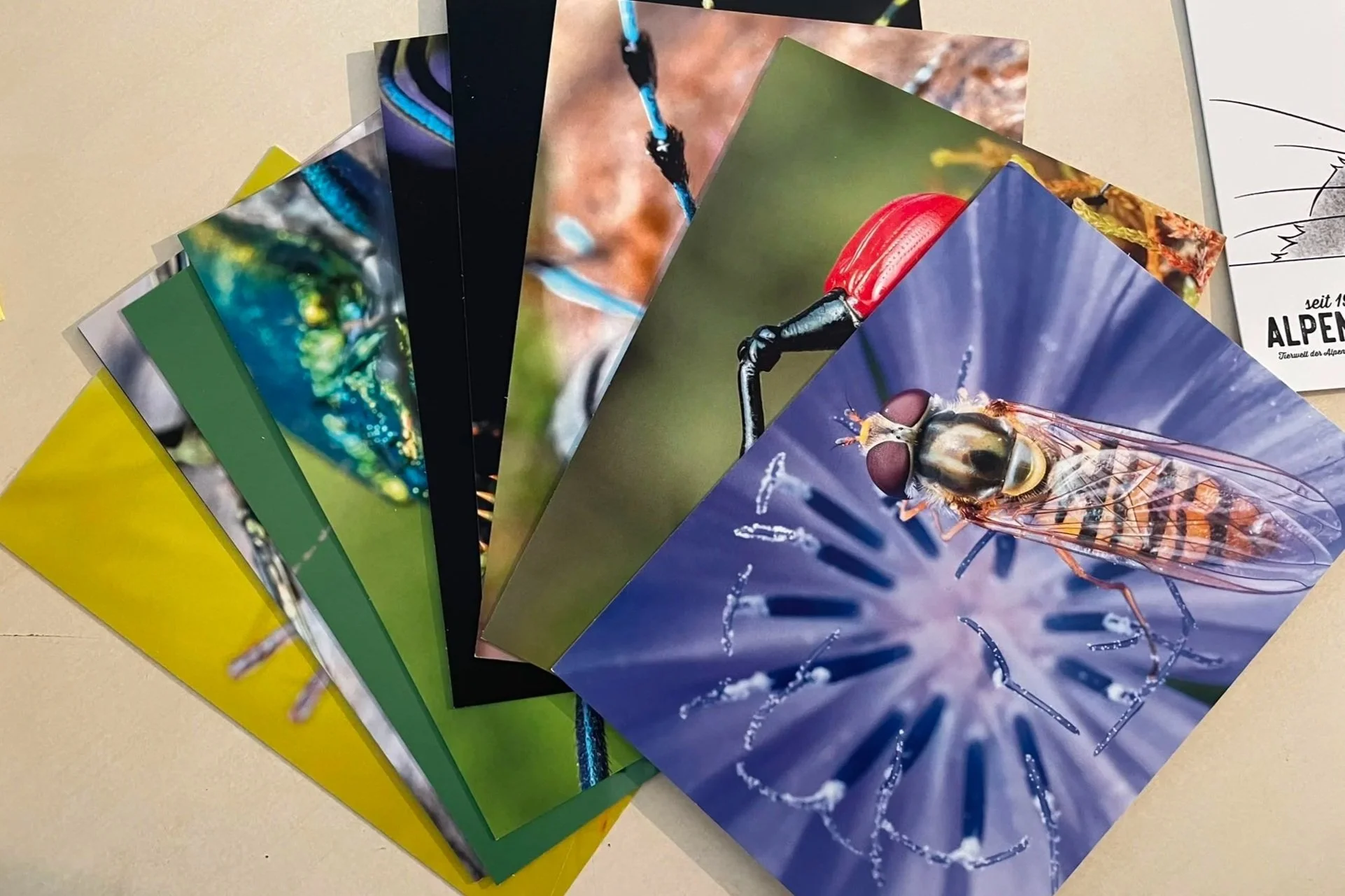
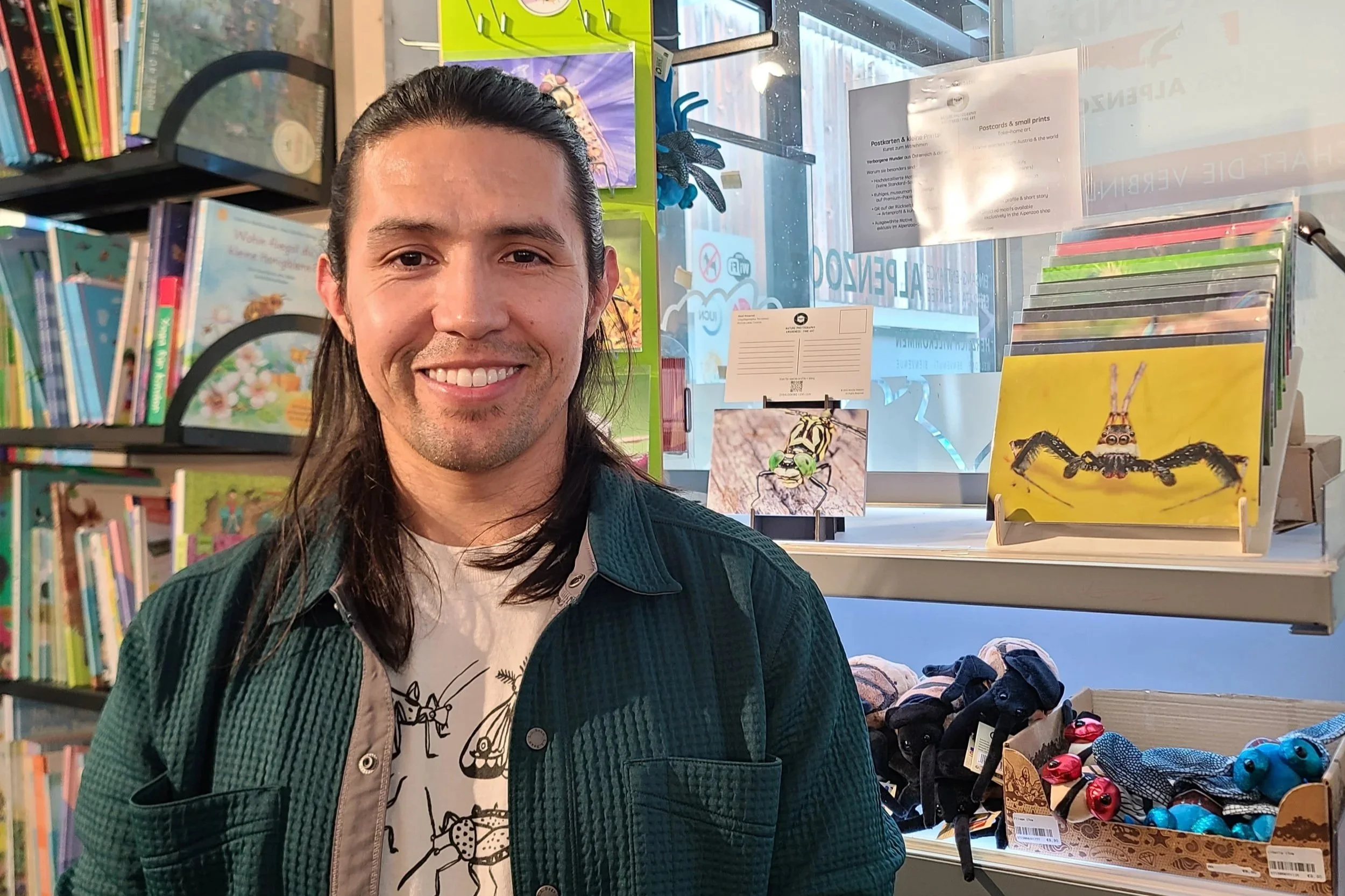
One of the nicest surprises of this project was how the relationship with the Alpenzoo shop grew over time.
I met Yorien when she was working at the cash register — and during the exhibition period she stepped into the role of shop manager. Through many small conversations, we started exchanging ideas and quickly realized there was a great opportunity to align our goals: education, appreciation, and giving visitors a way to take the experience home.
Together, we put together a small corner in the shop with postcards and small prints connected to the exhibition. I’m genuinely grateful for her openness, initiative, and the care she brought to making it work.
If you visited the exhibition and want to bring a small piece of it home, you can still find select products at the Alpenzoo shop and online.
👉 Small Prints & Gifts available here (calendars, photobooks, and original watercolors).
What I learned (and what I’d do differently next time)
This project taught me a lot — not only about exhibitions, but about context.
A zoo is a beautiful place for education, but it’s also a high-energy family environment. Many visitors are there to relax, manage kids, and move through a busy day — not necessarily to engage in long conversations. That doesn’t mean the work isn’t appreciated — many people told me they were blown away by the detail and uniqueness — but it does shape how you design the experience.
If I do a similar project again, I’d likely:
Create clearer “windows” for live presence (specific hours when I’m there), rather than trying to be present all day
Design even more intentionally for the venue context (what works in a gallery doesn’t always translate 1:1 to a zoo)
Build even stronger “set-and-forget” elements so the project can run smoothly even when I’m not in the room
Create more interactive sections or events tailored to specific audiences — for example children, or visitors who are primarily interested in larger animals like mammals, reptiles, or birds
Want to collaborate or join a workshop?
If you’re an institution, museum, zoo, festival, or educational program and you’d like to collaborate on an exhibition, a workshop series, or a hybrid format, I’d love to hear from you.
And if you’re an individual who’d like to join a future workshop — in person or live online — you’re welcome too.
If this journey resonates with you, I invite you to:
📸 Explore Limited Edition Prints – Bring hidden beauty into your space
🦋 Follow on Instagram – Join the journey as it unfolds
✉️ Sign up for updates – Be the first to know about future exhibitions and collaborations
Thank you for being part of this story!
– Nicolas Valentin

The Artist and His Masterpiece - Scale and Quality Revealed
Nicolas is the founder of Overlooking Lens, specializing in fine art macro photography that bridges science and art. His work has been featured in publications such as Kompass Travel Guide and in exhibitions throughout Innsbruck.
#AlpenzooInnsbruck #HiddenWonders #MacroPhotography #InsectPhotography #InsectConservation #BiodiversityMatters #NatureAwareness #ArtMeetsScience #OverlookingLens #InsectsOfAustria #Innsbruck #LimitedEditionArt #INFF #InnsbruckNatureFilmFestival #Polyphonix #JawHarpMusic #PabloGaleazzi #DominikaGroz #EnvironmentalEducation #ConservationSeries